
Long Island Sound
We had a great run from Buzzards Bay to Fishers Island. Aside from the big pod of porpoises the ride to Fishers was uneventful. The seas were calm, we had a fair tide until the last hour or so, there wasn’t much traffic to worry about, and it is so much fun to captain a tugboat to new places on the ocean!
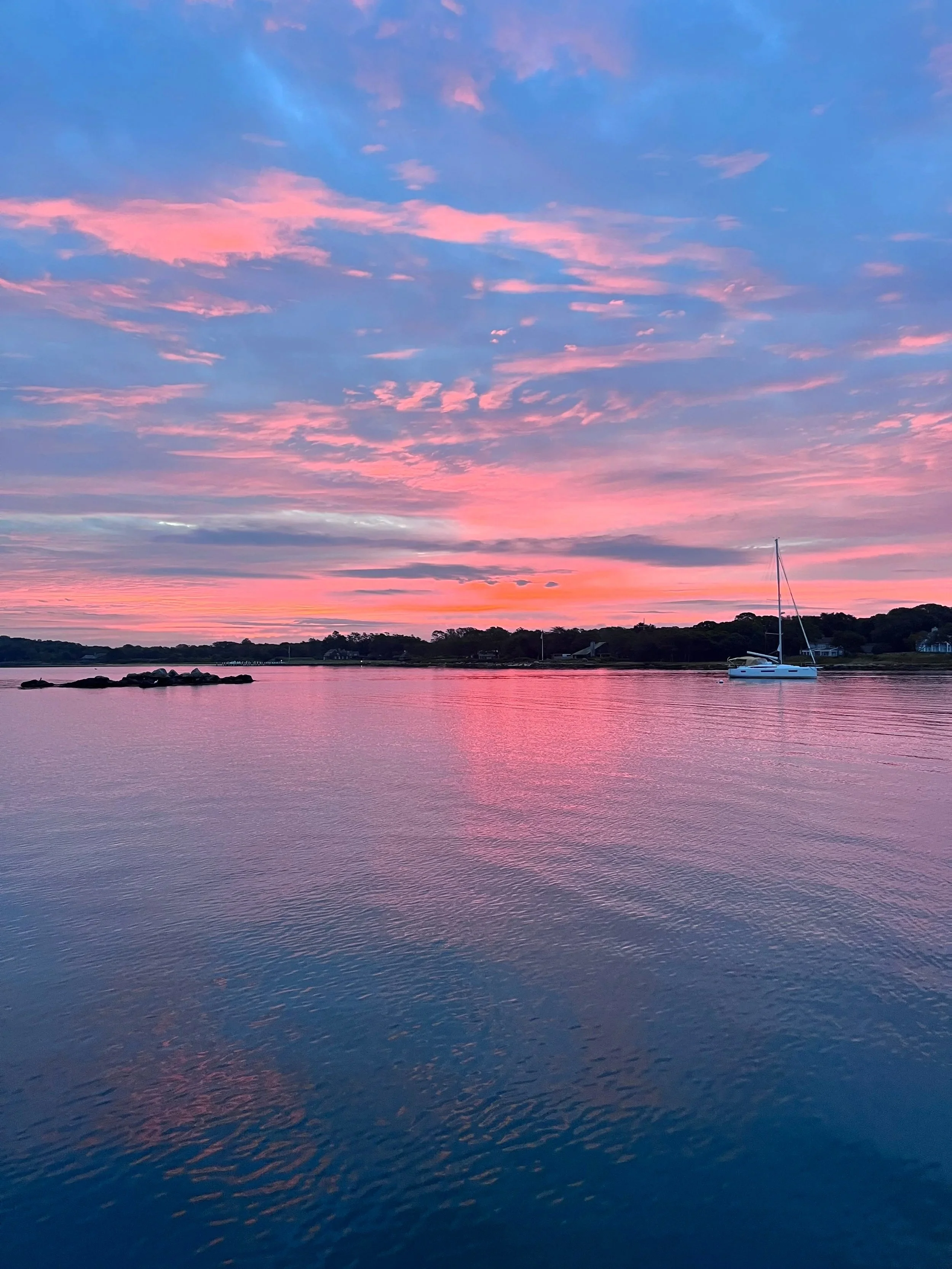
Fishers Island sunrise.
Two long days covering ground is a lot, and after we anchored at Fishers we didn’t have the energy to launch the dinghy or the kayaks. Just went to bed and enjoyed a pretty calm night. Woke up early and did it all over again to run about half-way down Long Island Sound to Port Jefferson. The day got warm enough for me to put on shorts and a t-shirt for the first time in a while. The water on the Sound was exceptionally flat, so we opened hatches and portholes for fresh air underway.
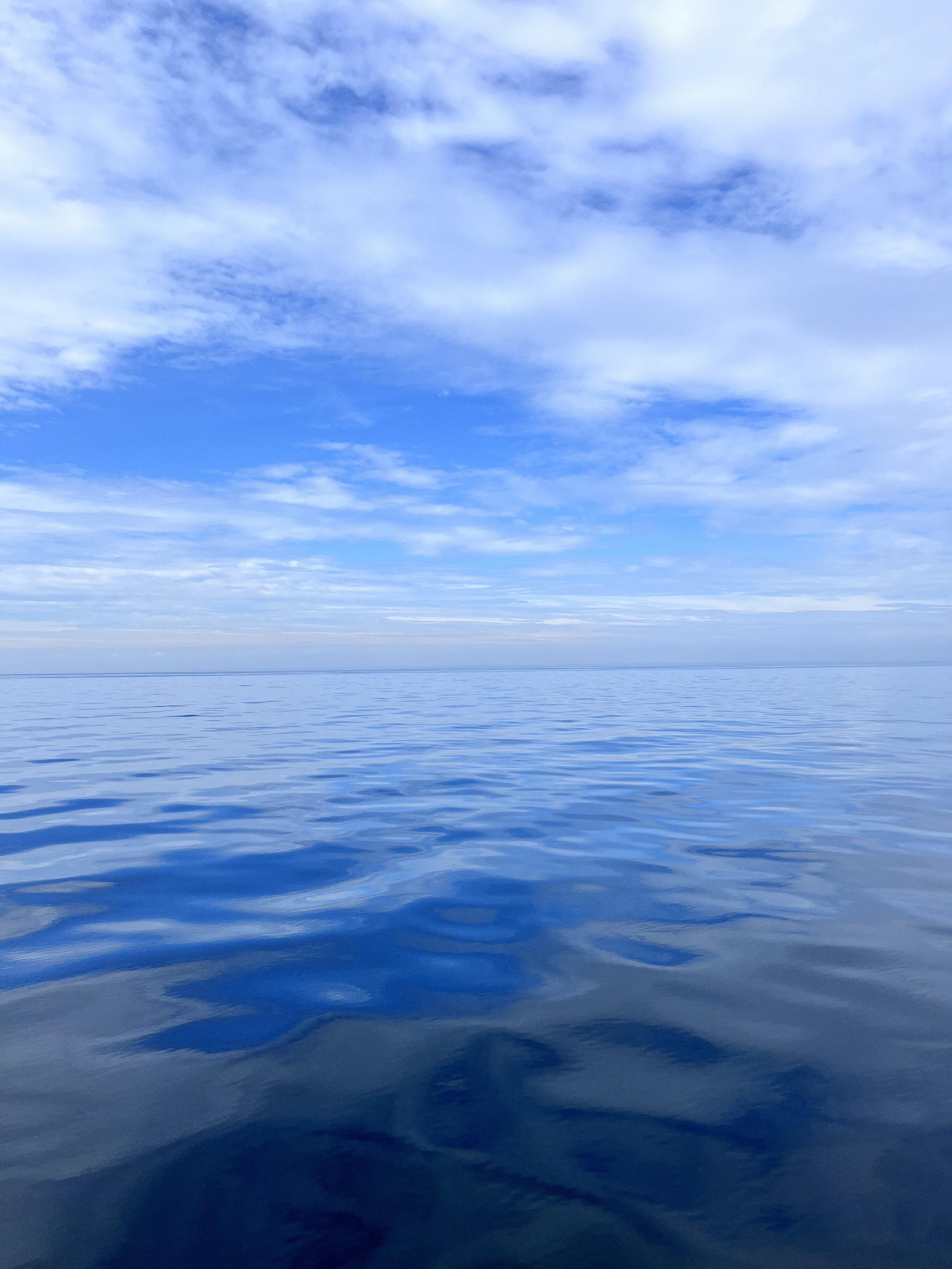
Glassy Long Island Sound.
After leaving Fishers Island we had a foul tide for about an hour, but once the current turned enjoyed an ever increasing boost all the way to Port Jefferson. The route was about 12 miles shorter than what we did either of the previous two days, so we reduced throttle as low as we could to still arrive by 2:30. It is a joy having the flexibility to take our time when the opportunity presents. Cyclops is by no means a quick boat, but she is big and steady enough to give us options.
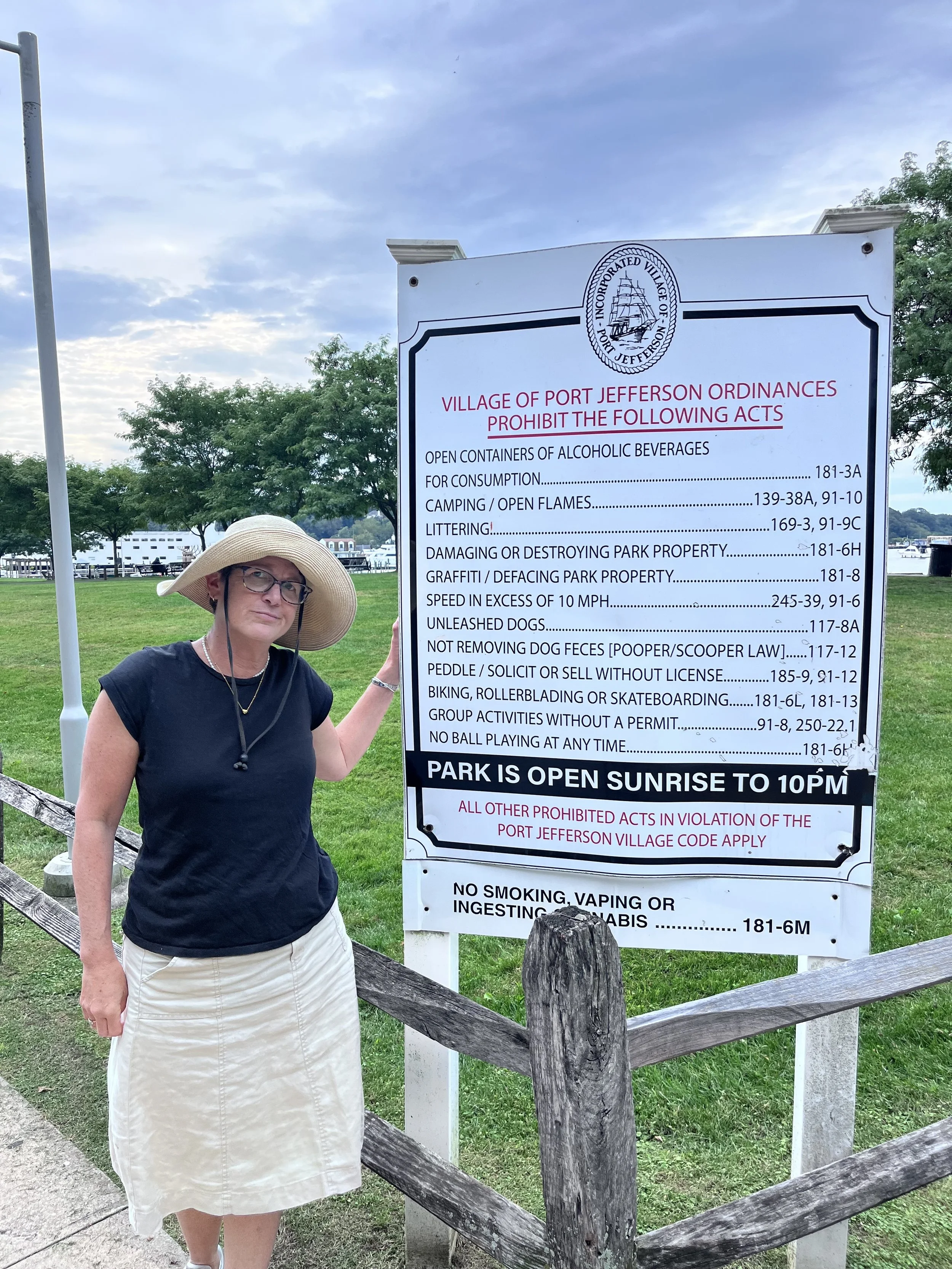
Port Jefferson had several signs like this one scattered around town. We don’t remember seeing any signs with words like “Welcome” printed on them.
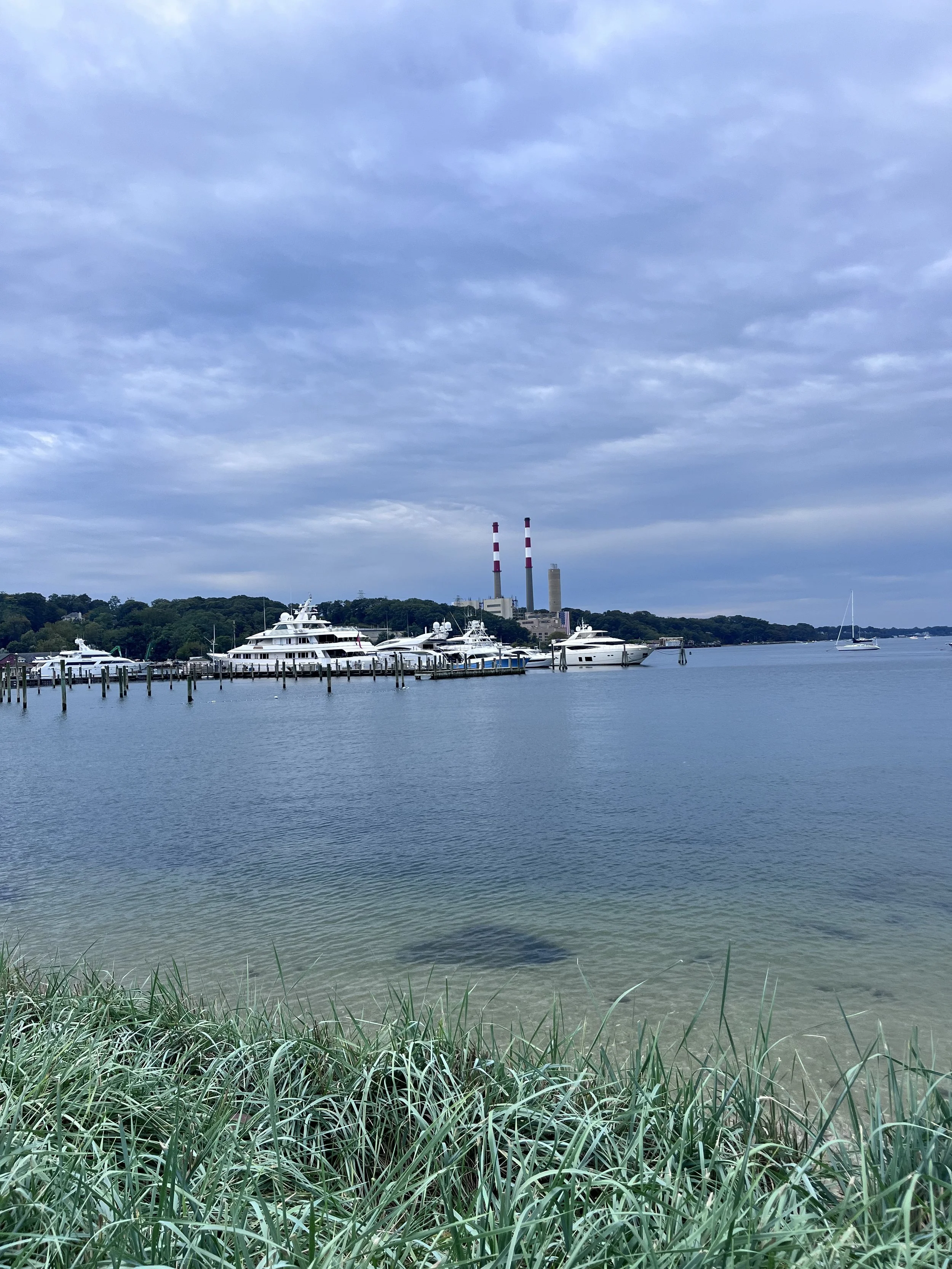
Port Jefferson. You can’t see the enormous ferries or their enormous wakes. The ferries run every half hour or so until nine at night. Hold onto your hat!
One of the options we are going to exercise is jumping another 20 miles towards NYC for a stop at Northport. There are a couple of reasons for just moving a couple of hours down the Sound. Port Jefferson is not a particularly easy place to land a dinghy. There’s no town landing and none of the marinas or yacht clubs have dinghy docks. Well, the one place that did have a dinghy dock wanted $23/hour and to hold onto our driver’s license until we returned. No. Also, our anchor light stopped working, which is a relatively easy thing to fix, but is going to be aesthetically traumatic for me. I’ve rigged a temporary light but it is in no way an acceptable long-term solution. Northport may have some marine stores with replacement lights.
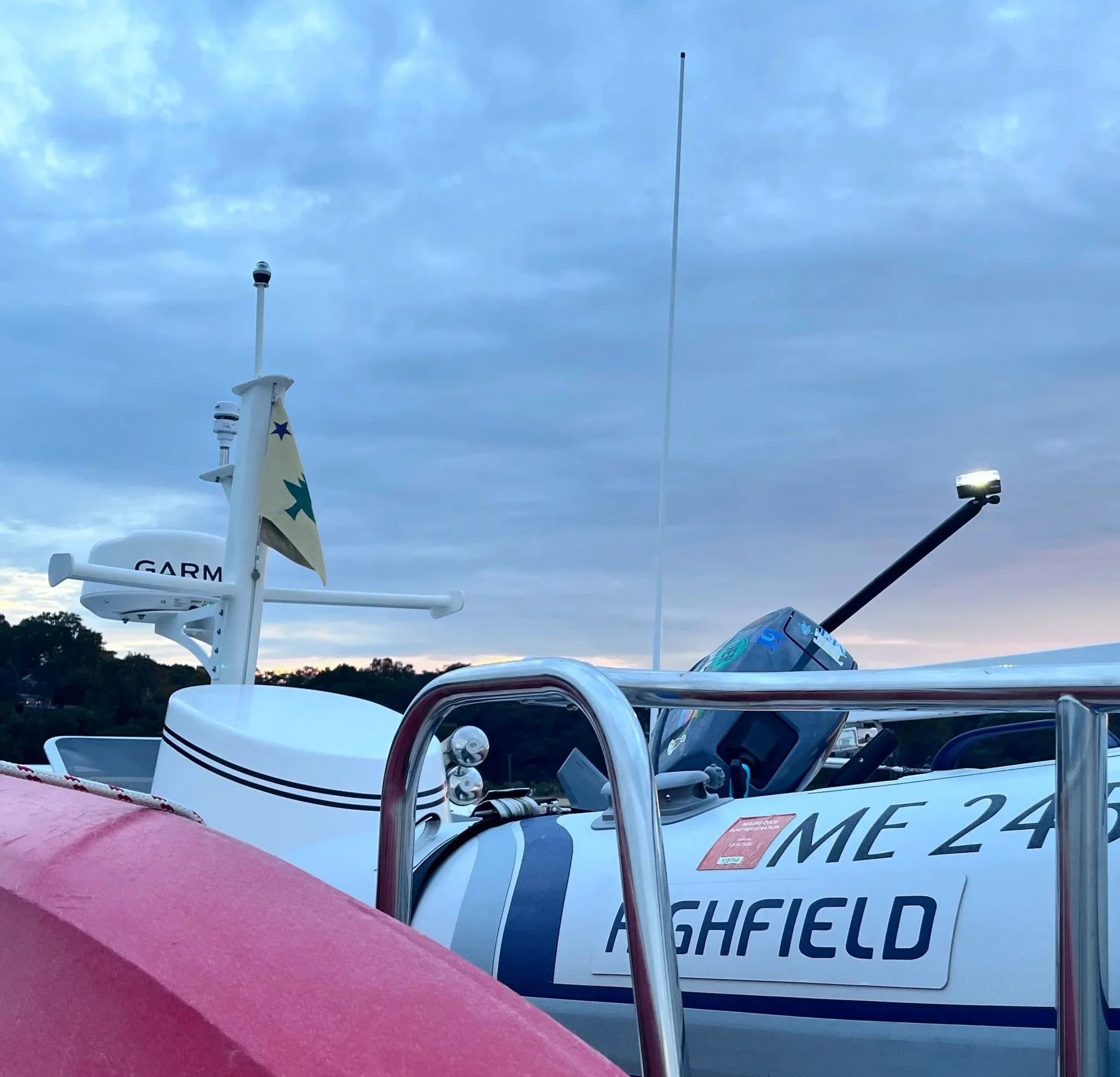
I stuck the dinghy’s night light on the motor mount to make up for the beautiful but broken light at the top of the mast. Stay tuned.
The current light (really it’s a “dark”) is mounted on a stainless steel pole I had custom welded and powdercoated. Lots of thought, planning, and effort went into what looks to me like a tidy, elegant, efficient way to display the required 360 degree light at night. The light itself has a photocell so it turned on at dusk and off at dawn. And it used practically no power because it is an LED bulb. But it doesn’t work and the company lists the replacement part as unavailable.
It is surprisingly difficult to find another LED dusk-to-dawn anchor light that doesn’t cost $180 or more. I wrote to the company that made the light asking if perhaps they had just one more sitting in a desk somewhere, but I’ve not heard back.
That leaves me with a fun puzzle: replace the non-working light with one as soon as possible but also leave room to have it be dusk-to-dawn in the future when I figure out what bulb fits, who makes a photocell version of that bulb, and get it shipped to us wherever we happen to be. When it can be pulled off, this kind of problem-solving is tremendously satisfying.
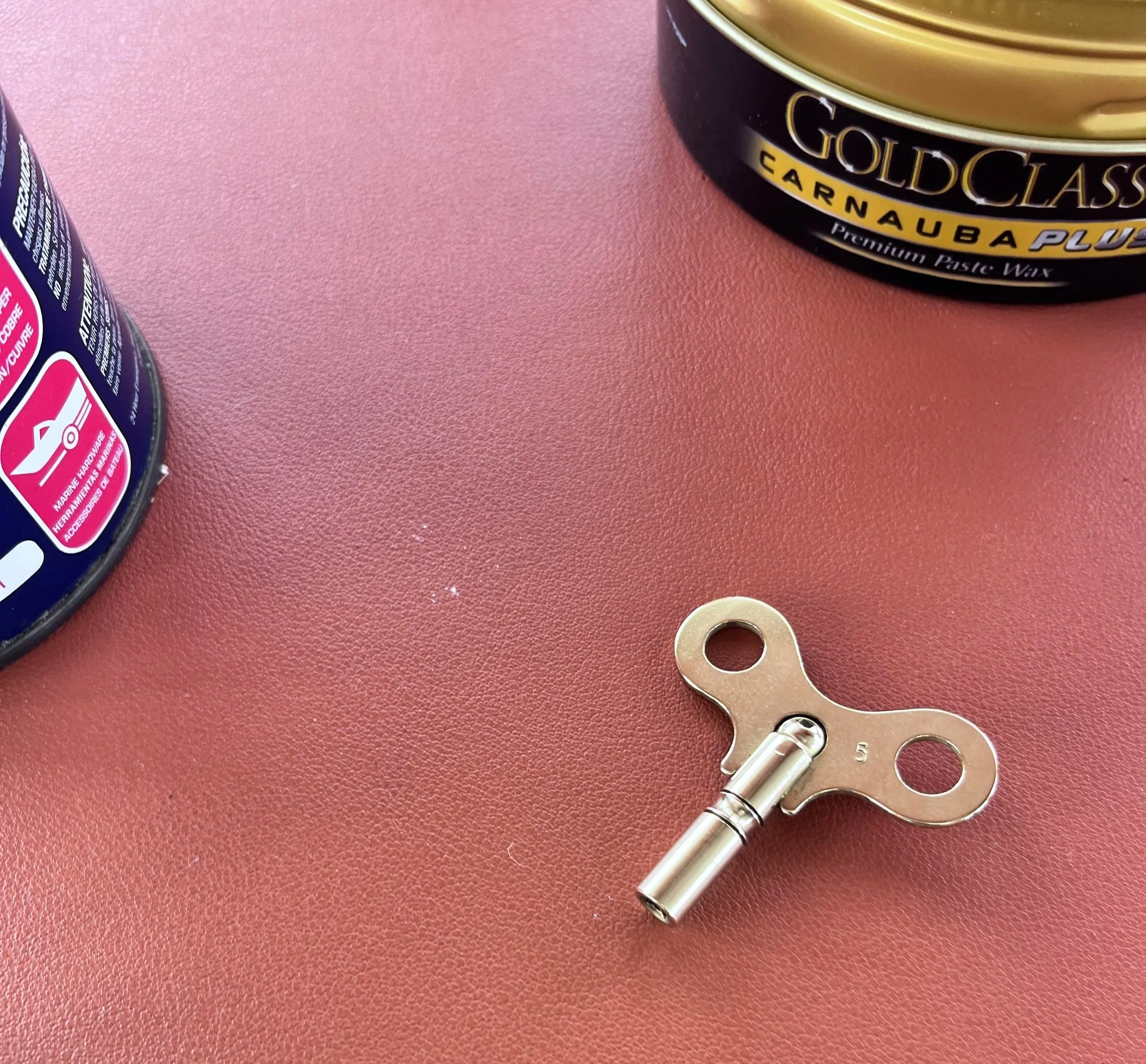
Seas were so calm today I had time to polish. Here’s the clock key.
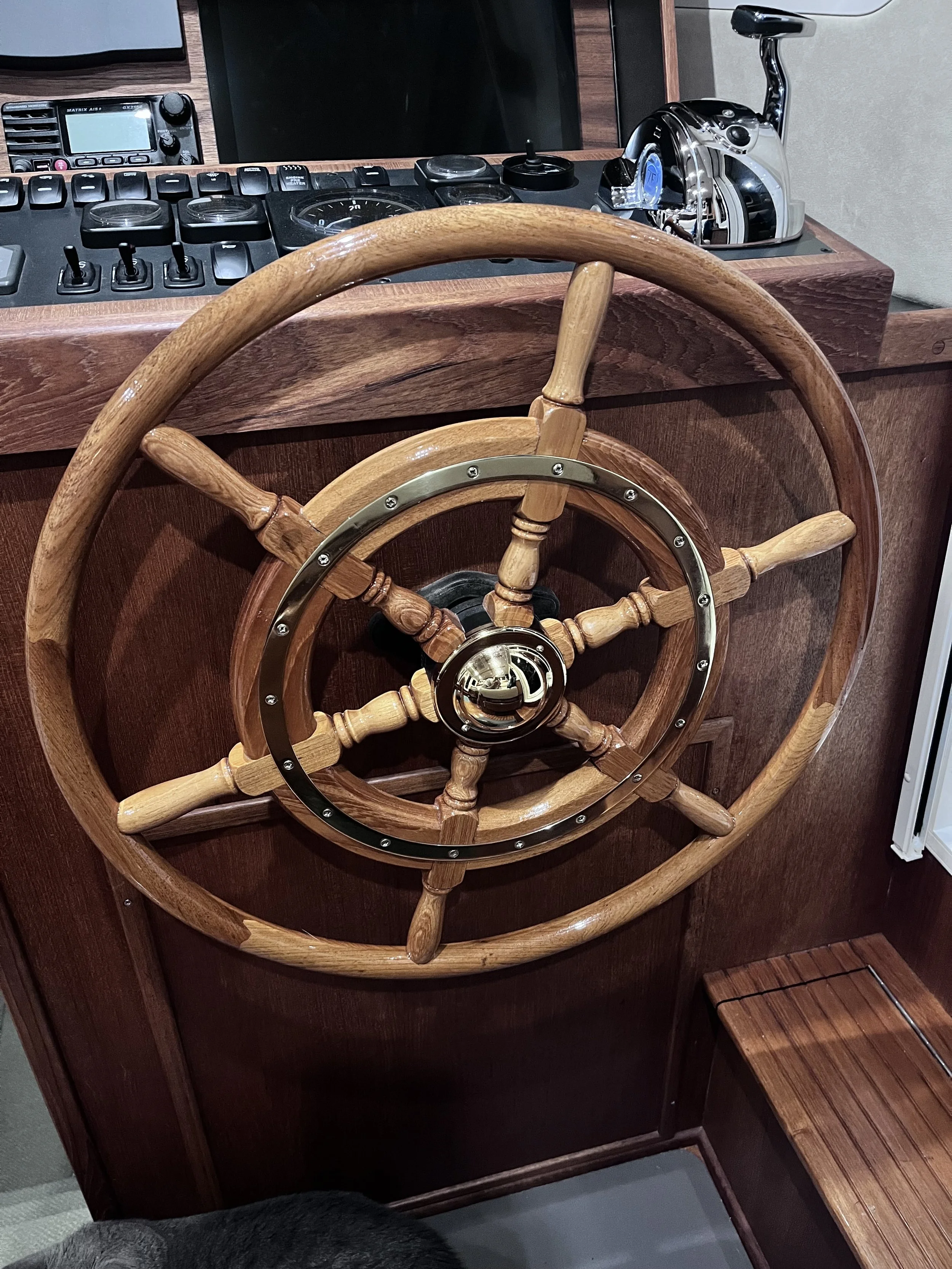
…and here are the rejuvenated shiny bits on the wheel.
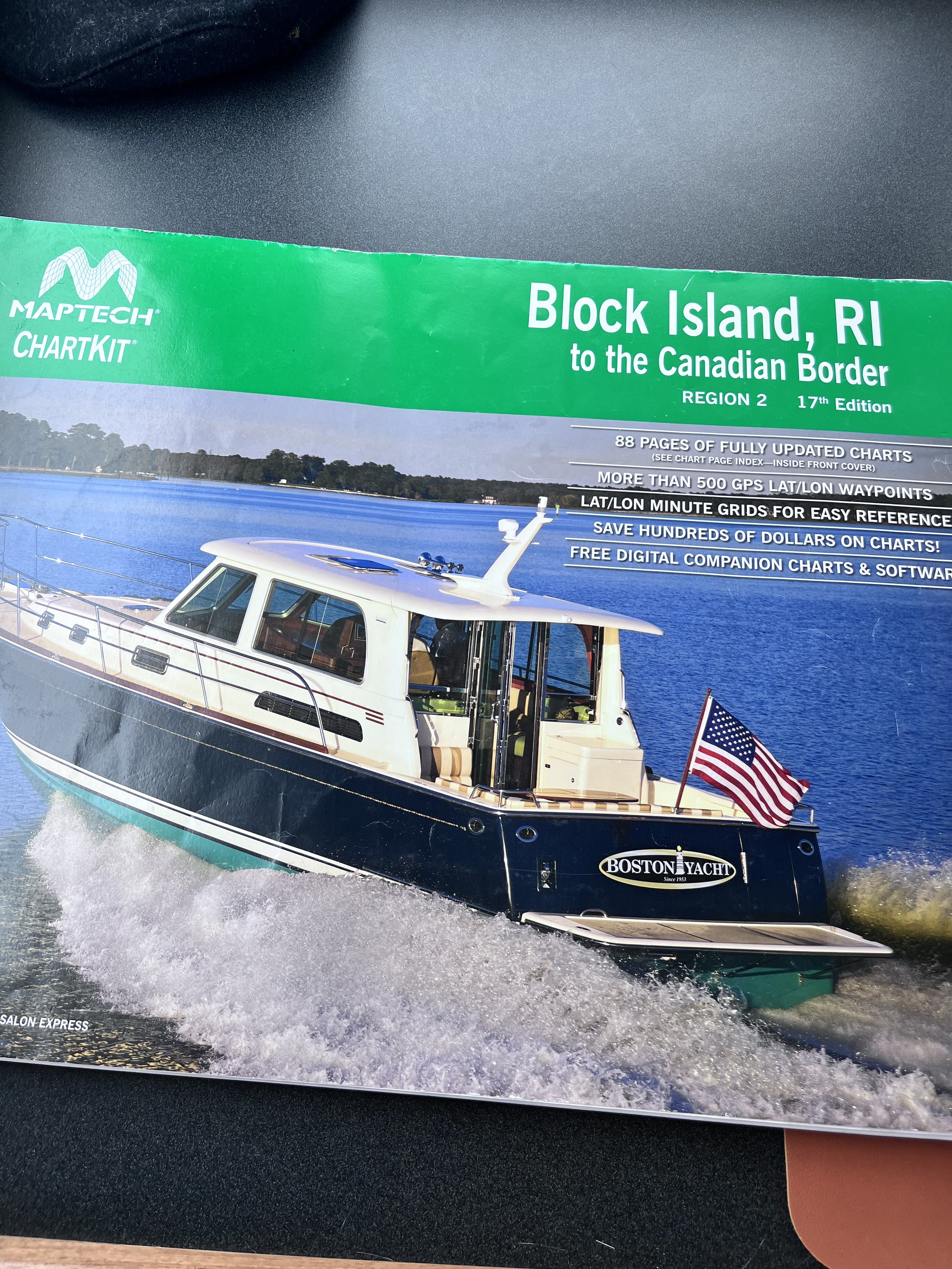
We’ve gone beyond coverage in the first of our chart books. Not sure when we will need this one again!