Everything works

Right now everything on the boat works. Every system, every pump, every light, every amenity. All of it. Works. I have no illusions about how long this will last, but for just this minute – perfection.

This perfection didn’t happen accidentally. It is the result of planning, skill, good fortune, and Amazon. We got that anchor light sorted with parts we collected from Simon and Hannah when we saw them last week in DC. The light we installed when we were at Staten Island was functional but took a different bulb from the dusk-dawn one we wanted. The new light and bulb work perfectly. And we have a spare bulb as well as a whole spare fixture.
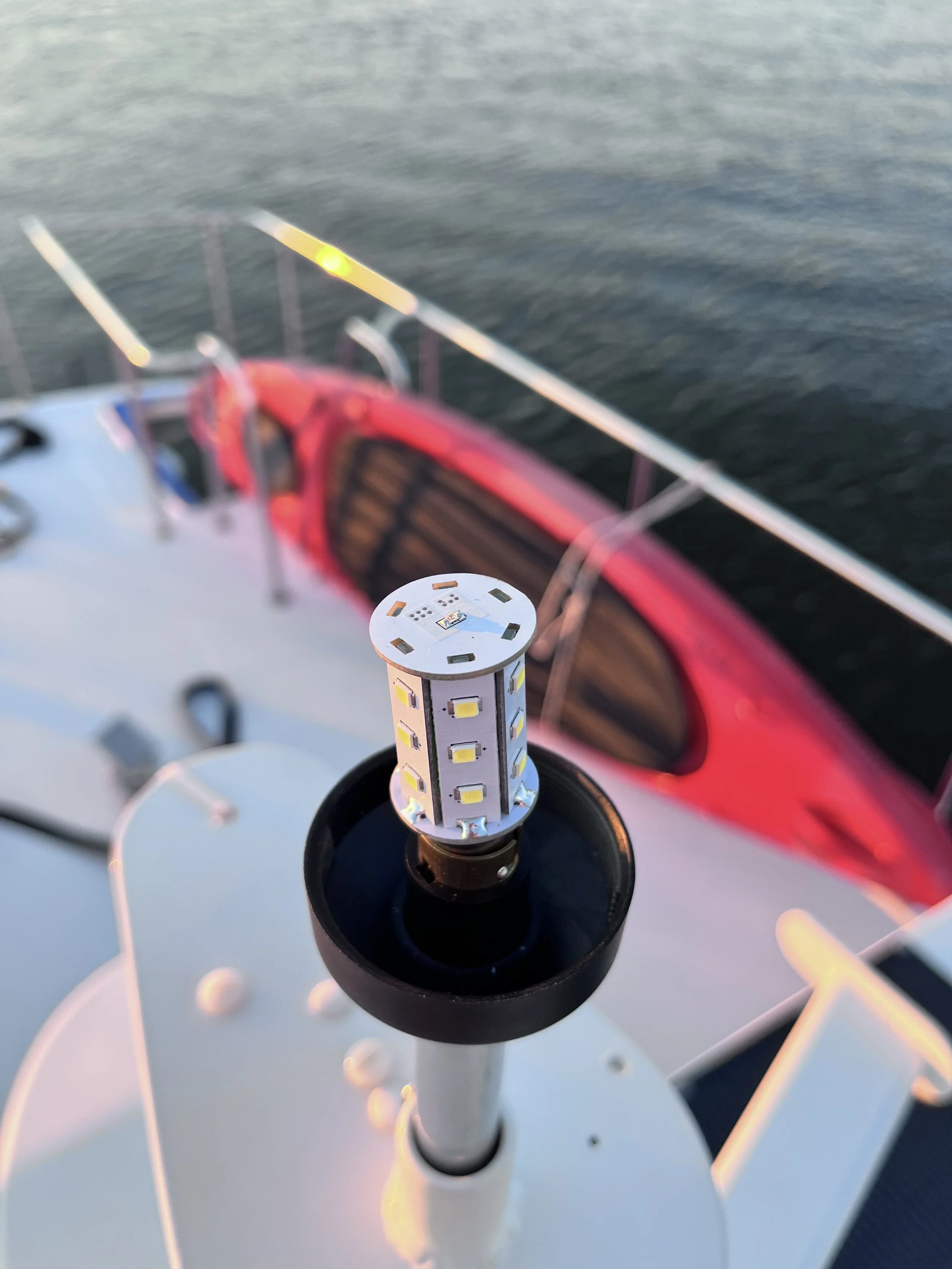
This is where the magic happens. On at dusk, off at dawn. Automatically.
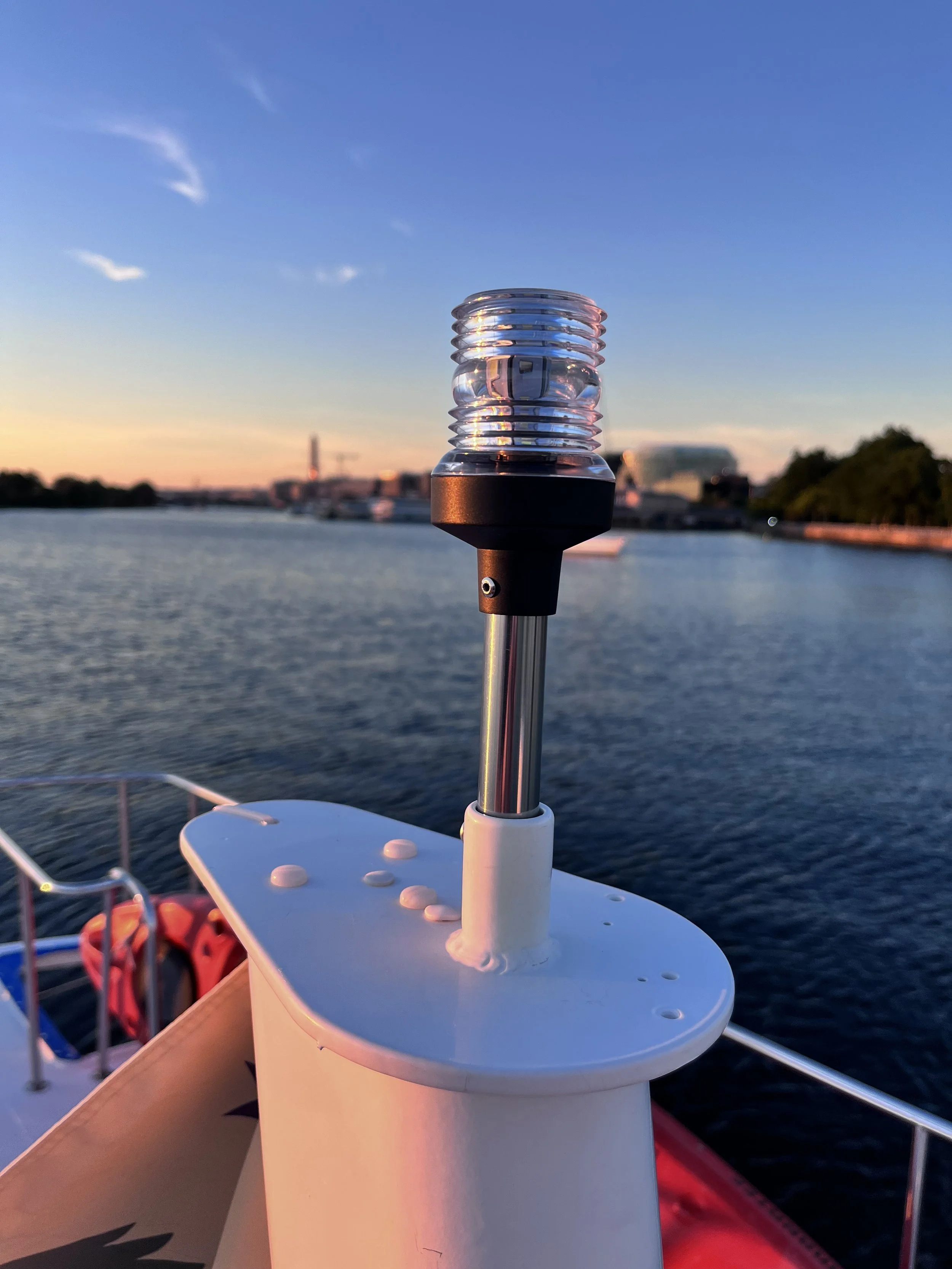
I like this light a little better than the one it replaces because the pole on this one is stainless steel not aluminum. (Bonus: can you spot the Washington Monument in the blurry background?)

On the way downriver this morning I tackled the last issue (just for now, I know). One of the front burners on the stove wasn’t staying lit. I have a pair of spare thermocouples in my bag of tricks, so I took the stove apart to replace the dodgy one. Works just right now.
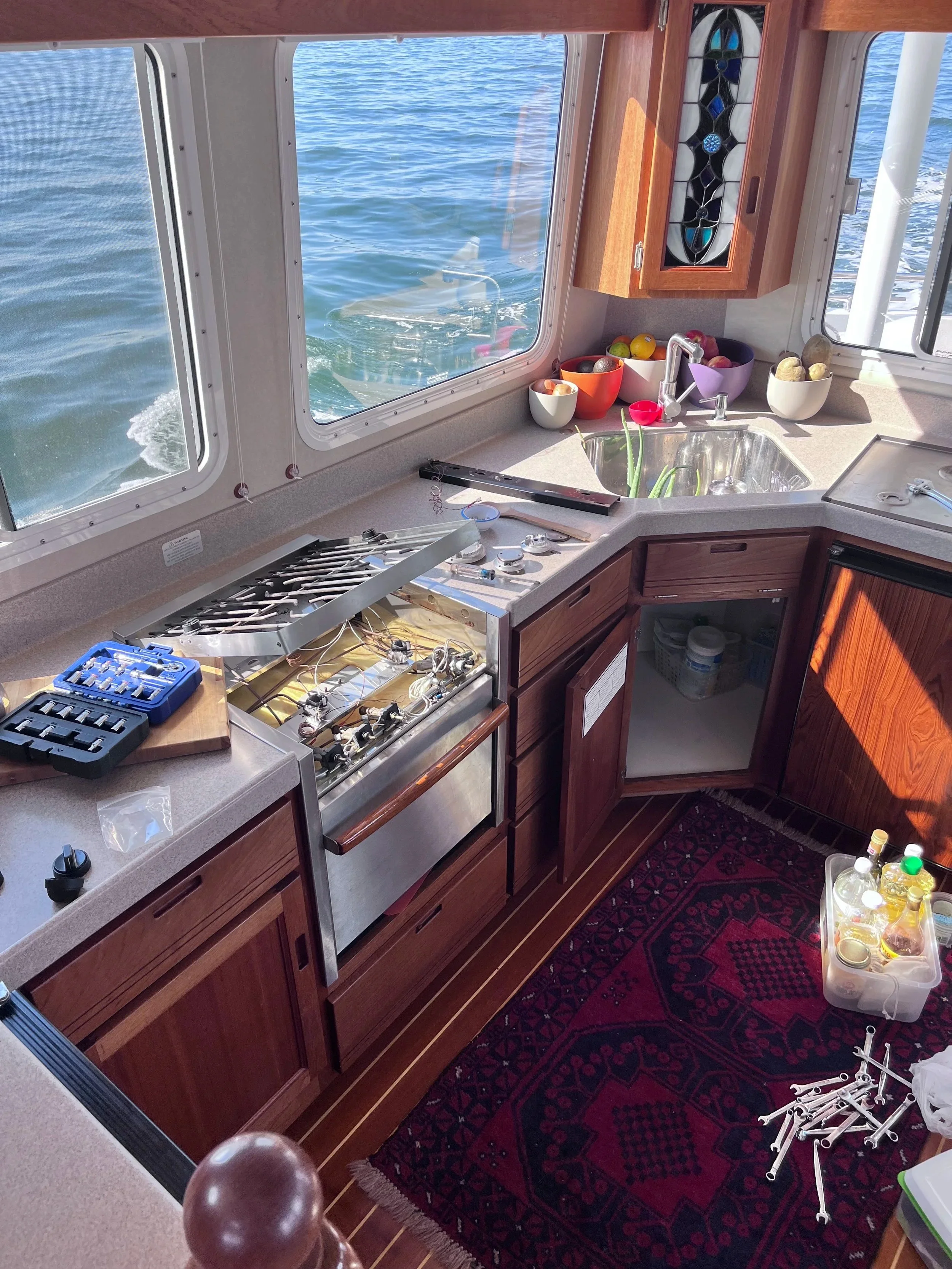
Rather than pick and choose among my wrenches, I brought all the little guys up from the toolbox for the party.
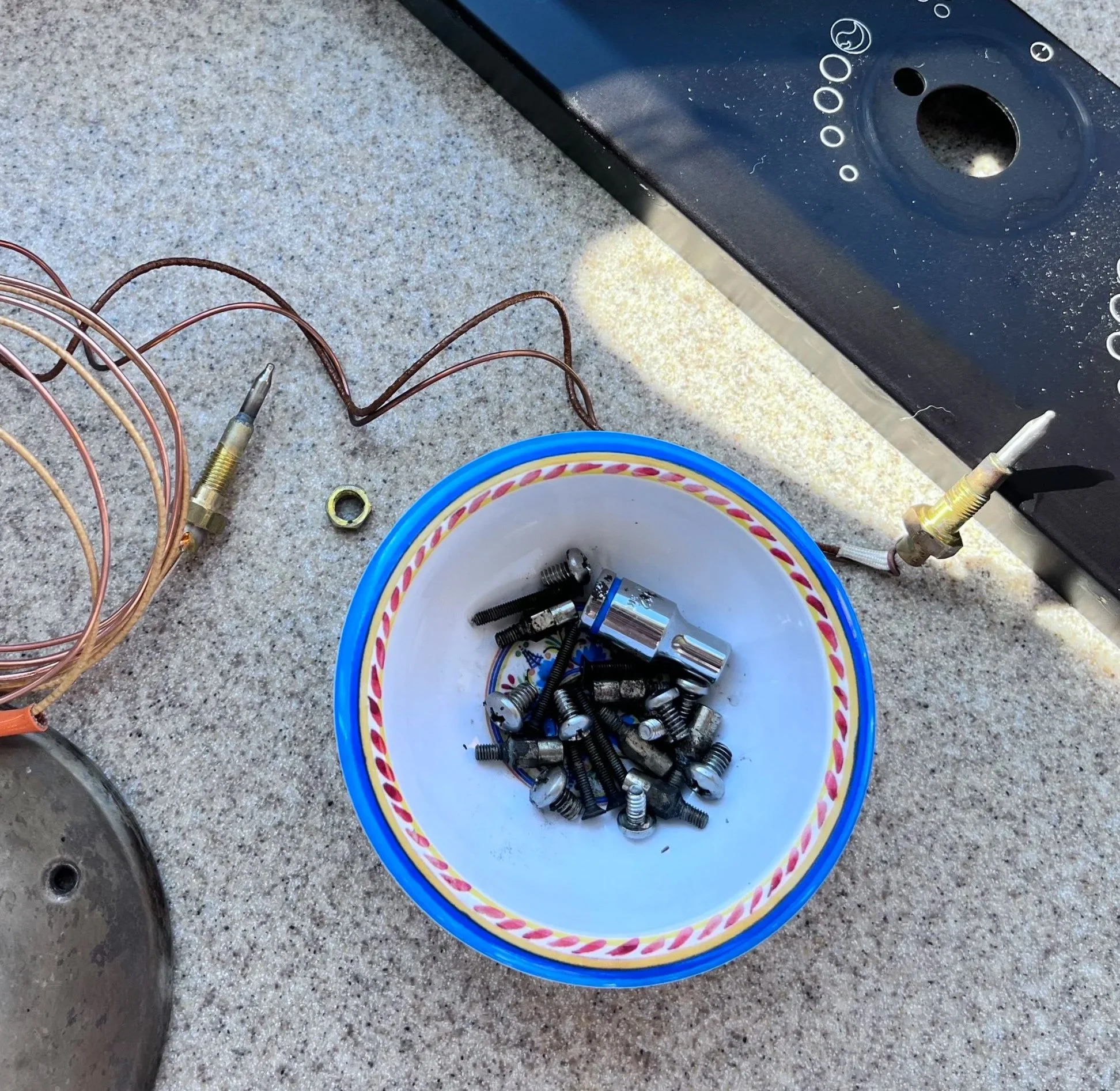
If that tiny little nut is so important, why doesn’t the new thermocouple come with one?

The road to stove-perfection was a little winding. When I put the old thermocouple down on the counter, the nut on it bounced into the sink and down the drain. That led to me removing the drain plug from the sink trap. The water, yuck, and wayward nut in the trap came out into the bucket I put under the trap. No problem. No big deal. But when I put it back together, the trap leaked. Turns out the o-ring for the trap plug was brittle and torn. So I cut a new one from an old bicycle inner tube I have on board. Fixed.
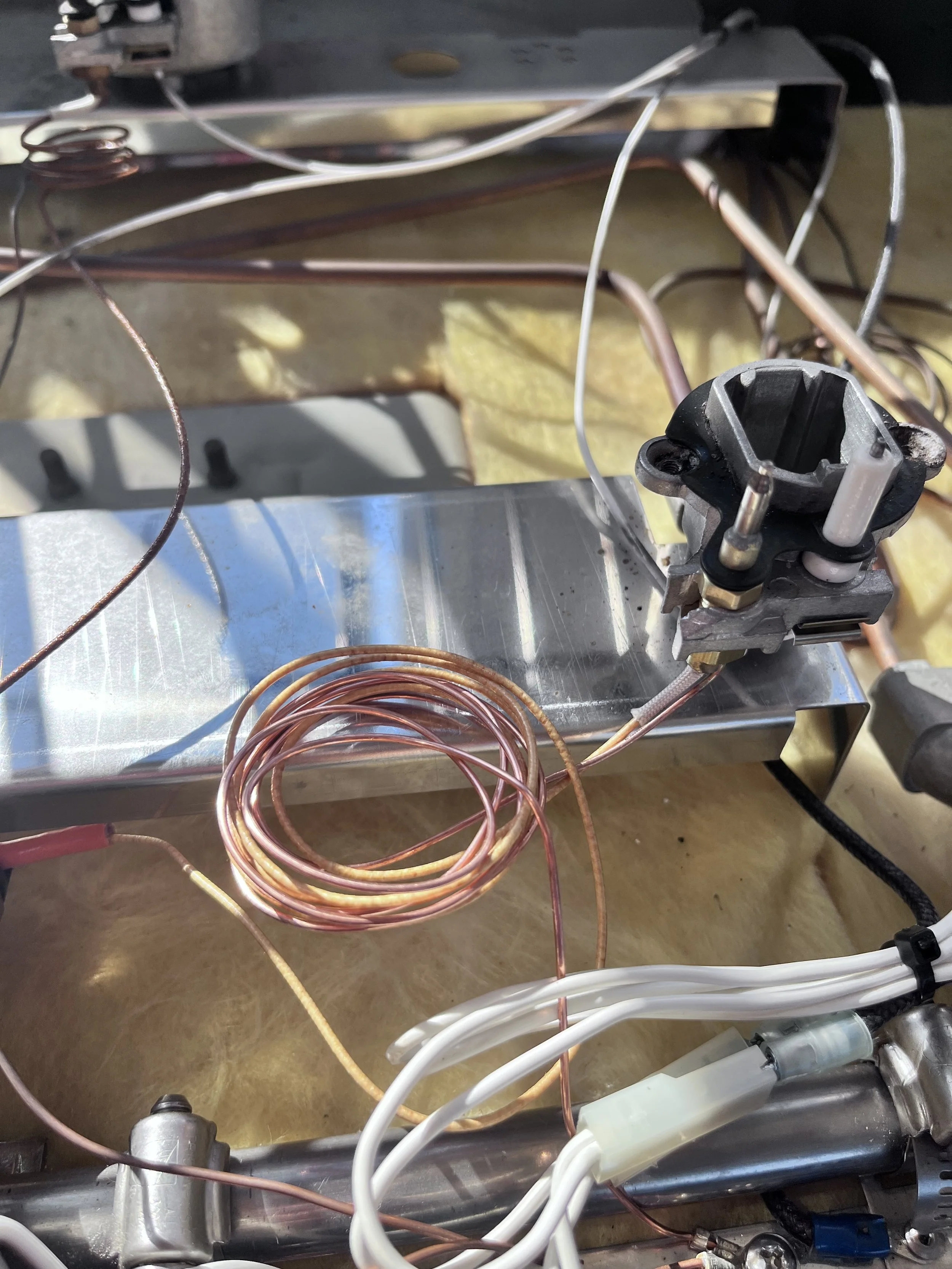
Who knew so many wires lived under the stovetop? The shiny new thermocouple and copper wire are installed and ready to do their thing.
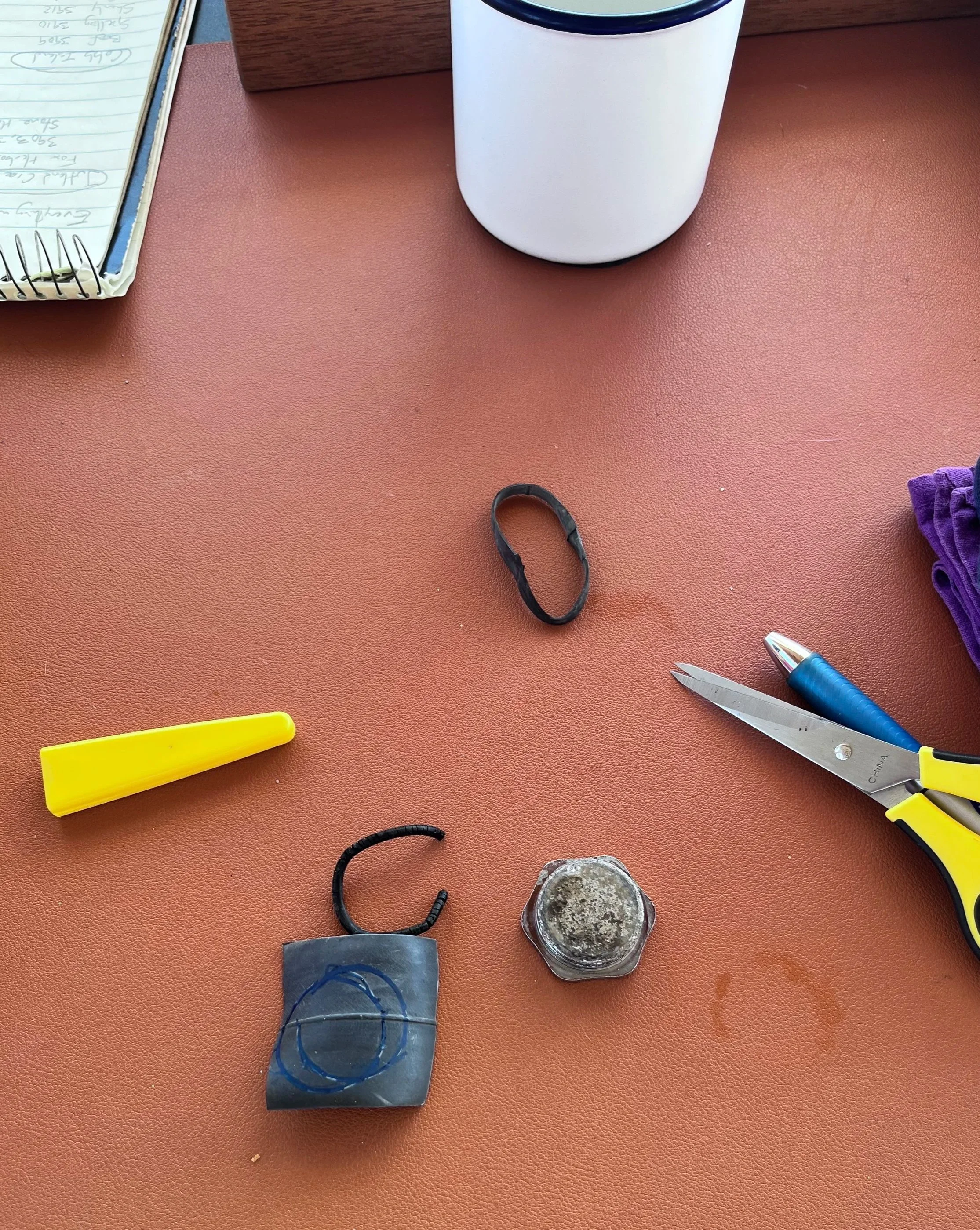
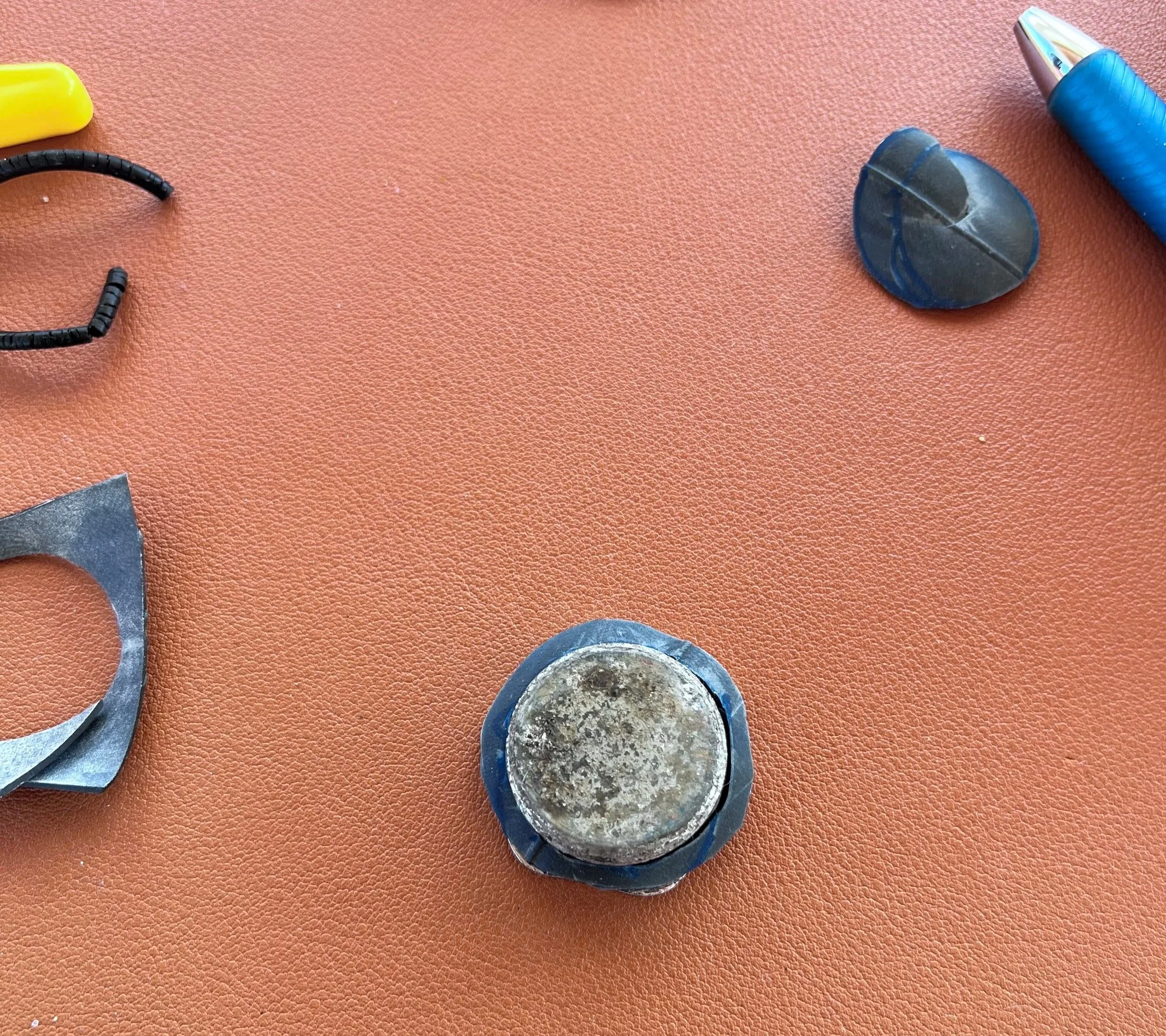
The lesson I learned is to cover the sink drain when I am working with bits and bobs in the galley.

Note: immediately after posting this entry the fresh water pump failed. We have three spares and the swap was easy peasy. But still, pretty funny and utterly predictable.
Up the Potomac!

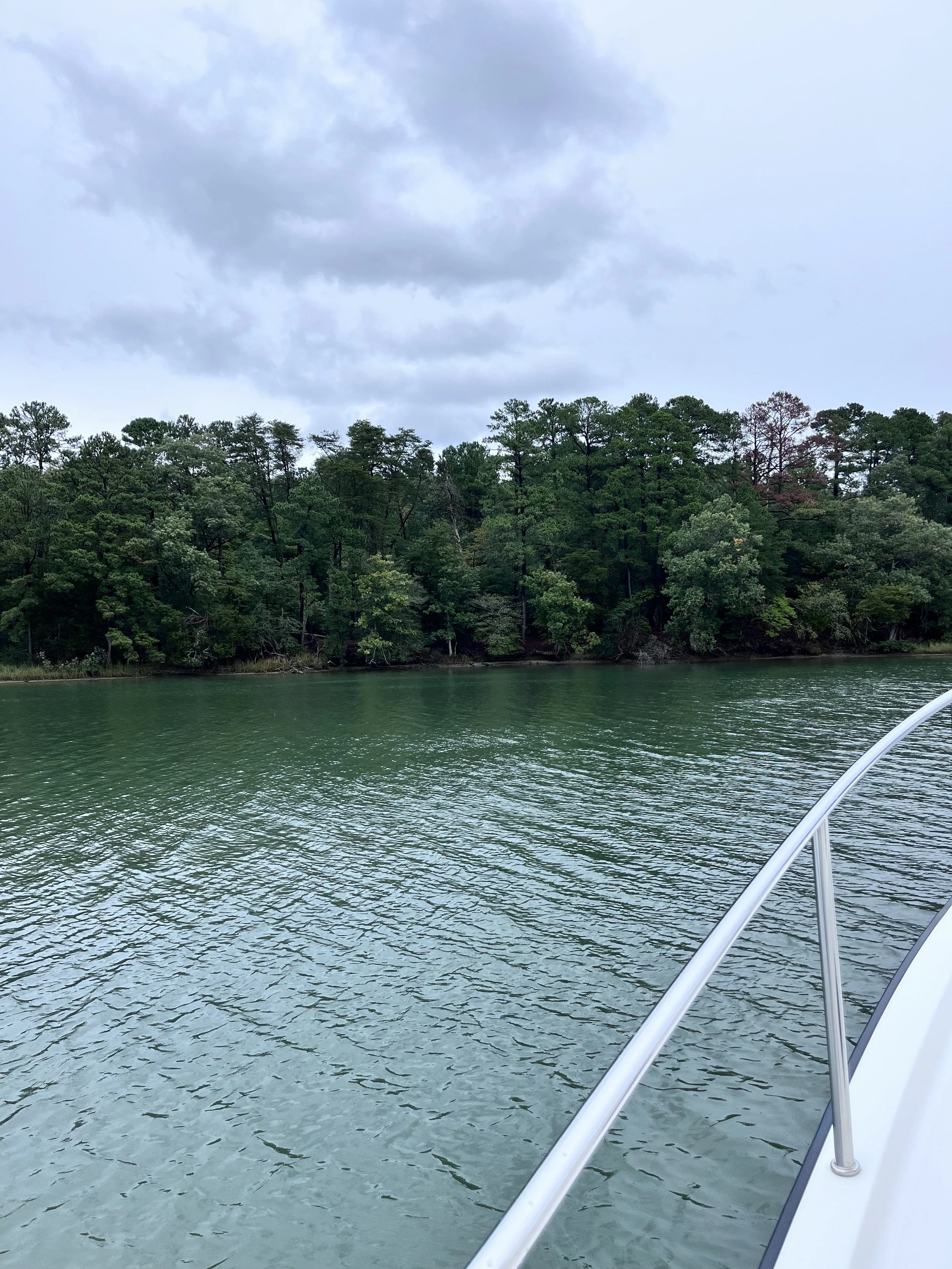
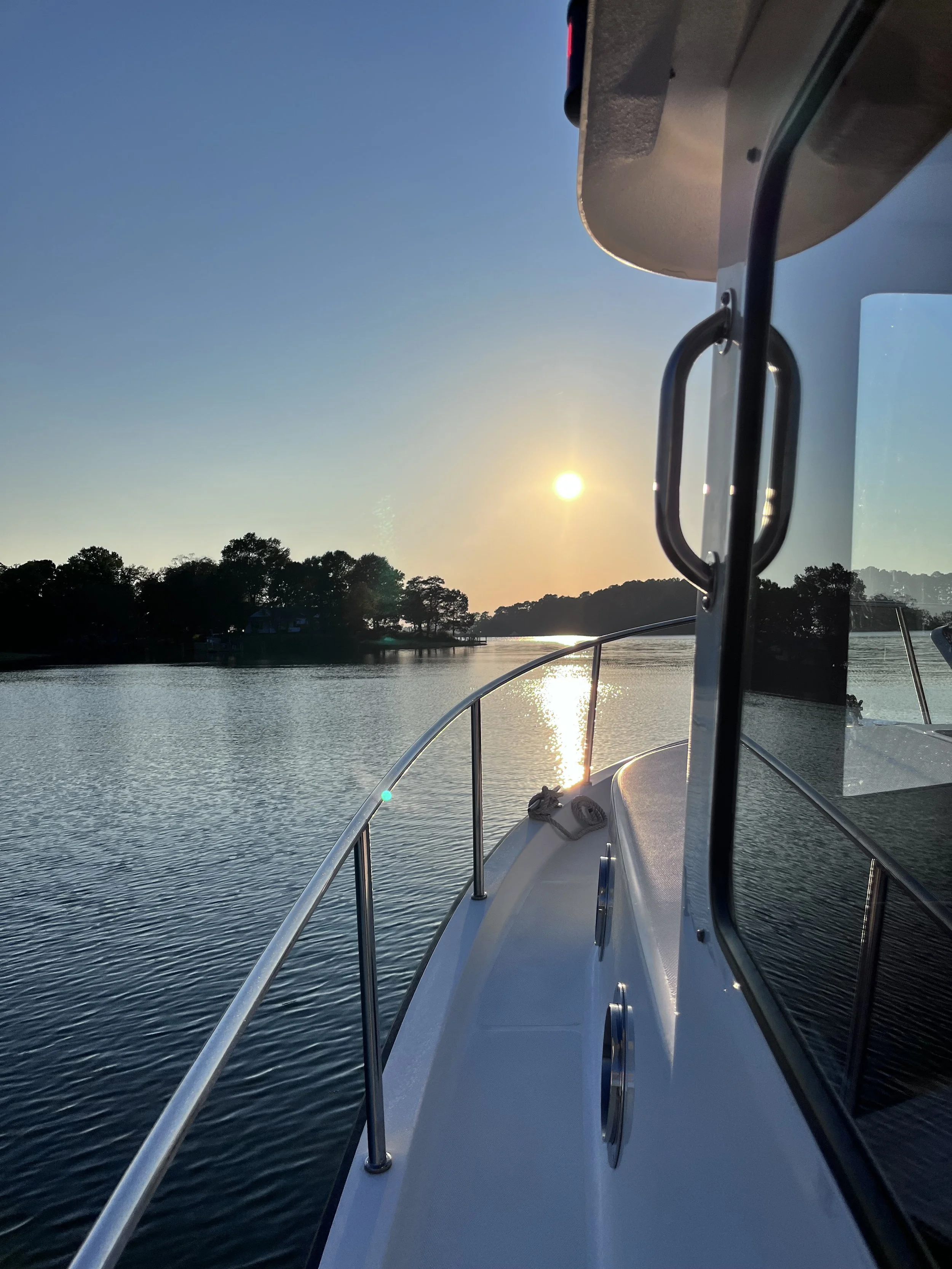
Fox Harbor was flat calm even with big winds out on the river just a mile or two away. Excellent anchorage.

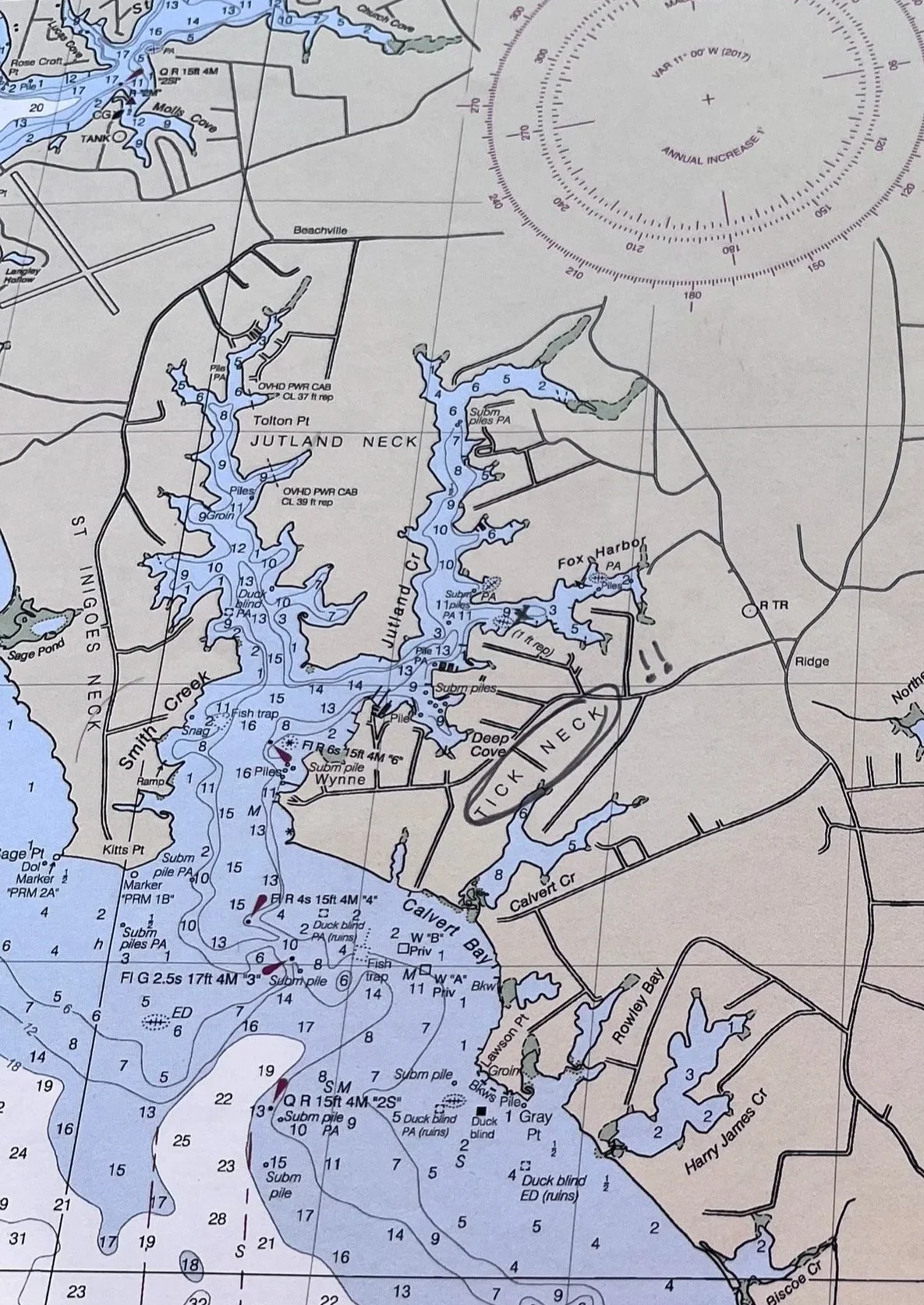
X marks the spot where we anchored, close to the appealingly-named Tick Neck. We did not go ashore.

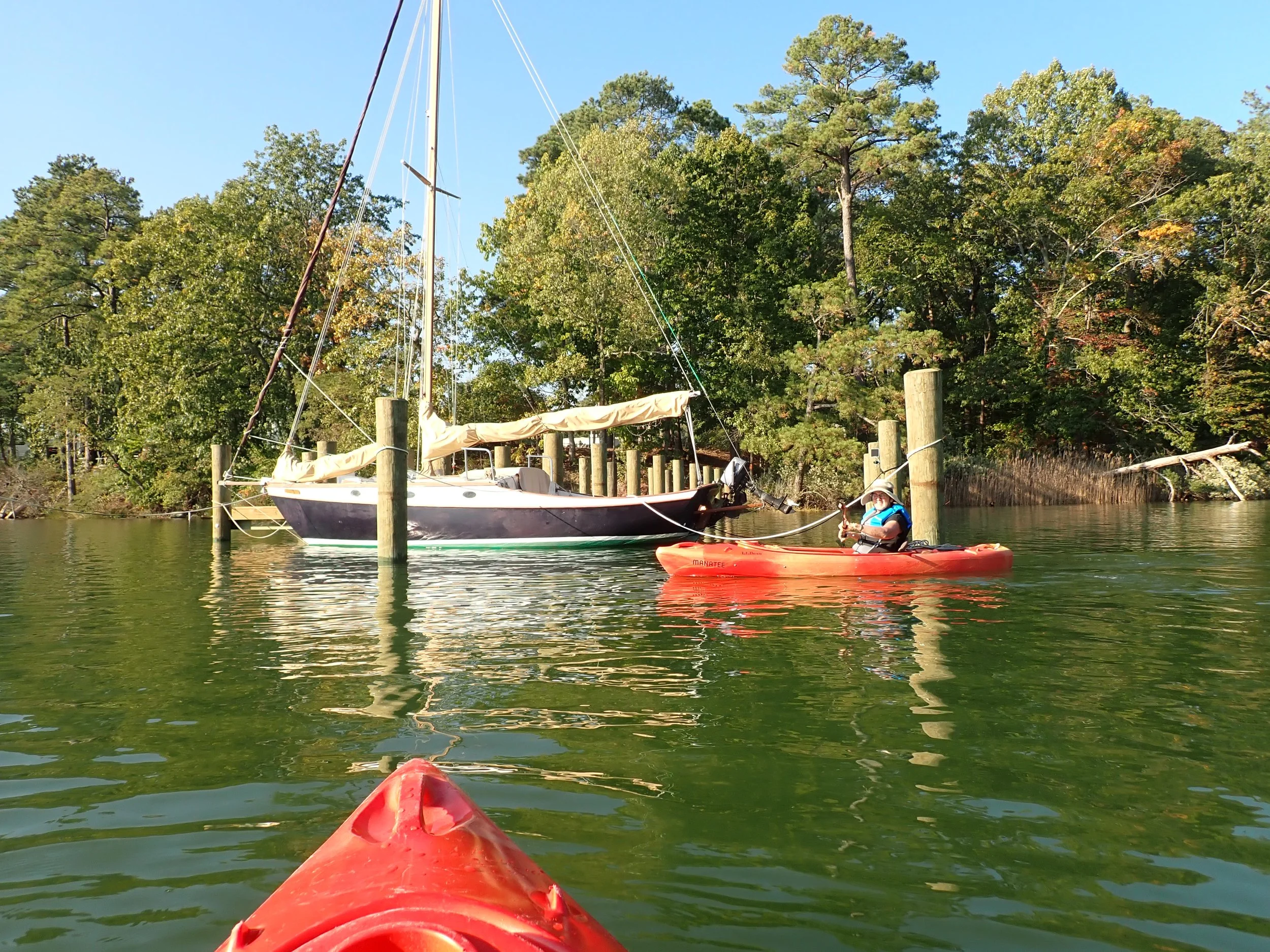
On the way up the Potomac our first stop was in Fox Harbor. It’s another extremely well-protected anchorage. When we got there it was hot…in the 80s. So we launched the kayaks and paddled upstream to see what we could see. Among the things we saw were three very different boats. The first is this Stone Horse, a Maine design that is not unusual in New England but was a rare treat in these waters.

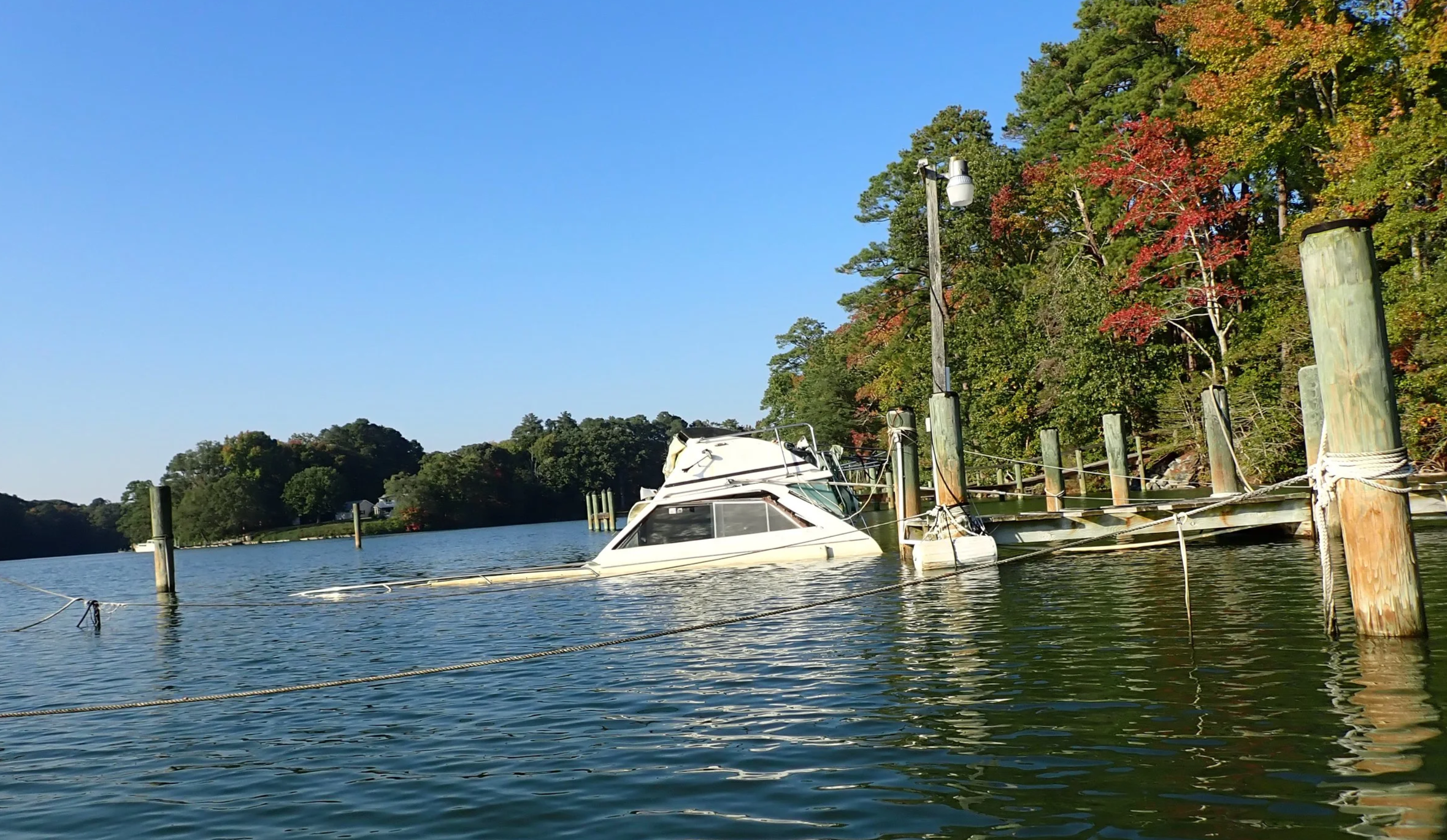
The second boat of interest we saw was this poor sunken girl.

Something about the lamppost gives off a perverse The Lion, Witch, and the Wardrobe vibe.

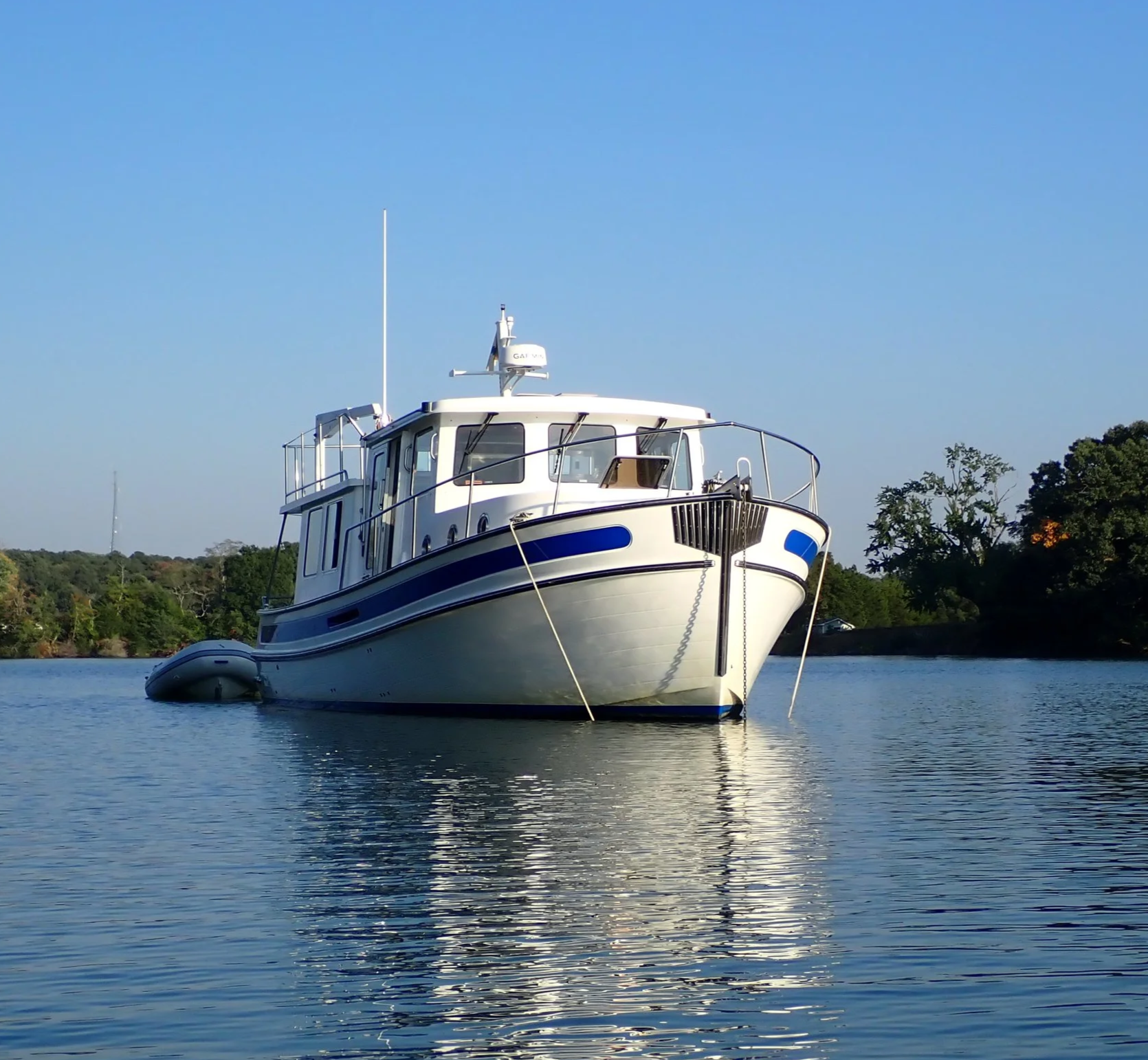
And we paddled home to our lovely Cyclops.

After a hot summery day, we got hit with some cold and breezy weather. Morning temperatures for the week were in the low 40s and even high 30s. Sub-optimal but we can take it, particularly since we are ultimately headed south towards the warm.

We were in no rush to get to Washington, DC so we took our time heading up the Potomac. There were some high winds out on the Chesapeake that triggered small craft advisories and even gale warnings for the lower Potomac, but Cyclops was unfazed by winds in the mid-20 knot range. When the breeze gusted up into the 30s, the only way we could even tell was by looking at the wind instruments. The big girl kept on trucking.

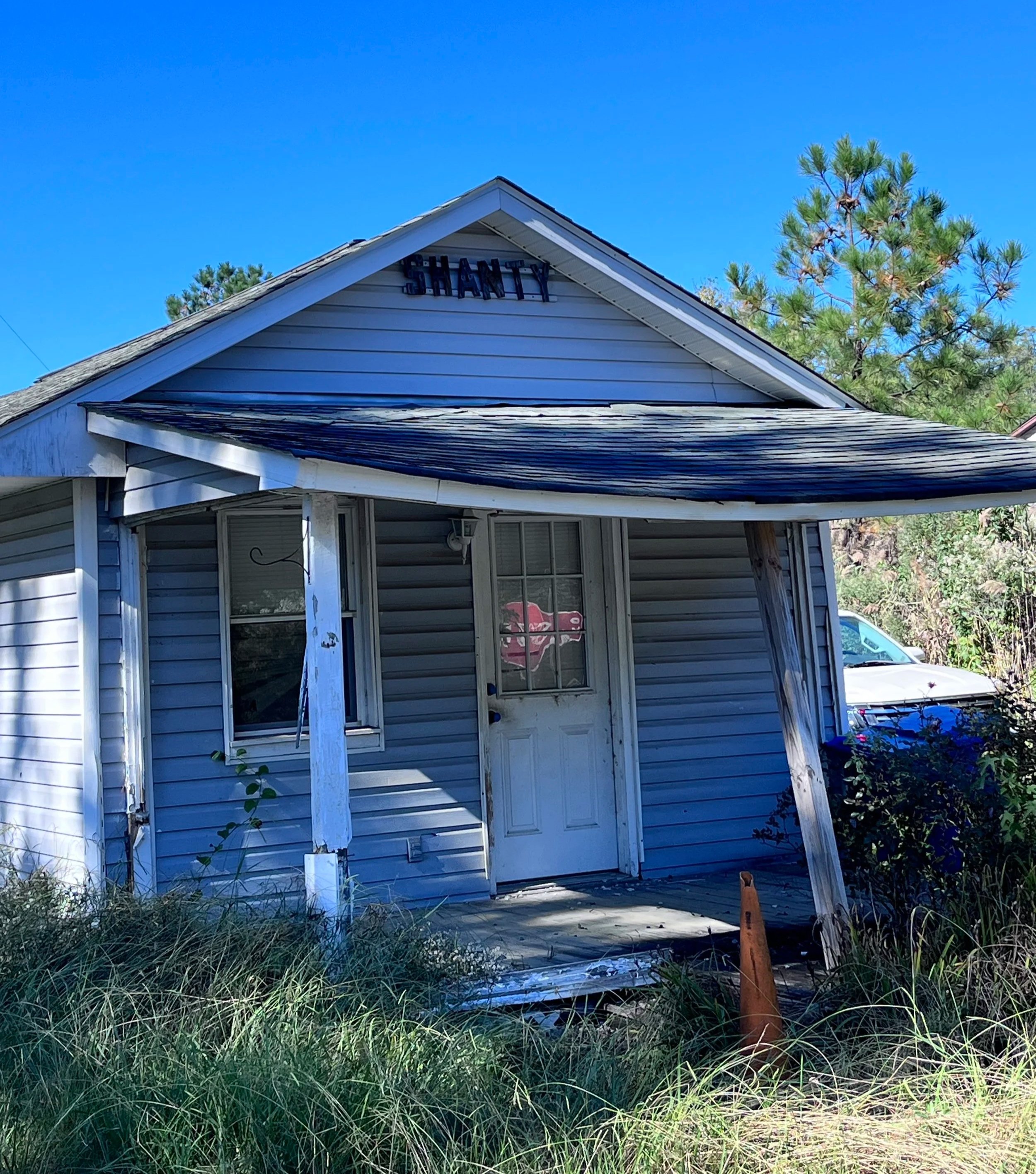
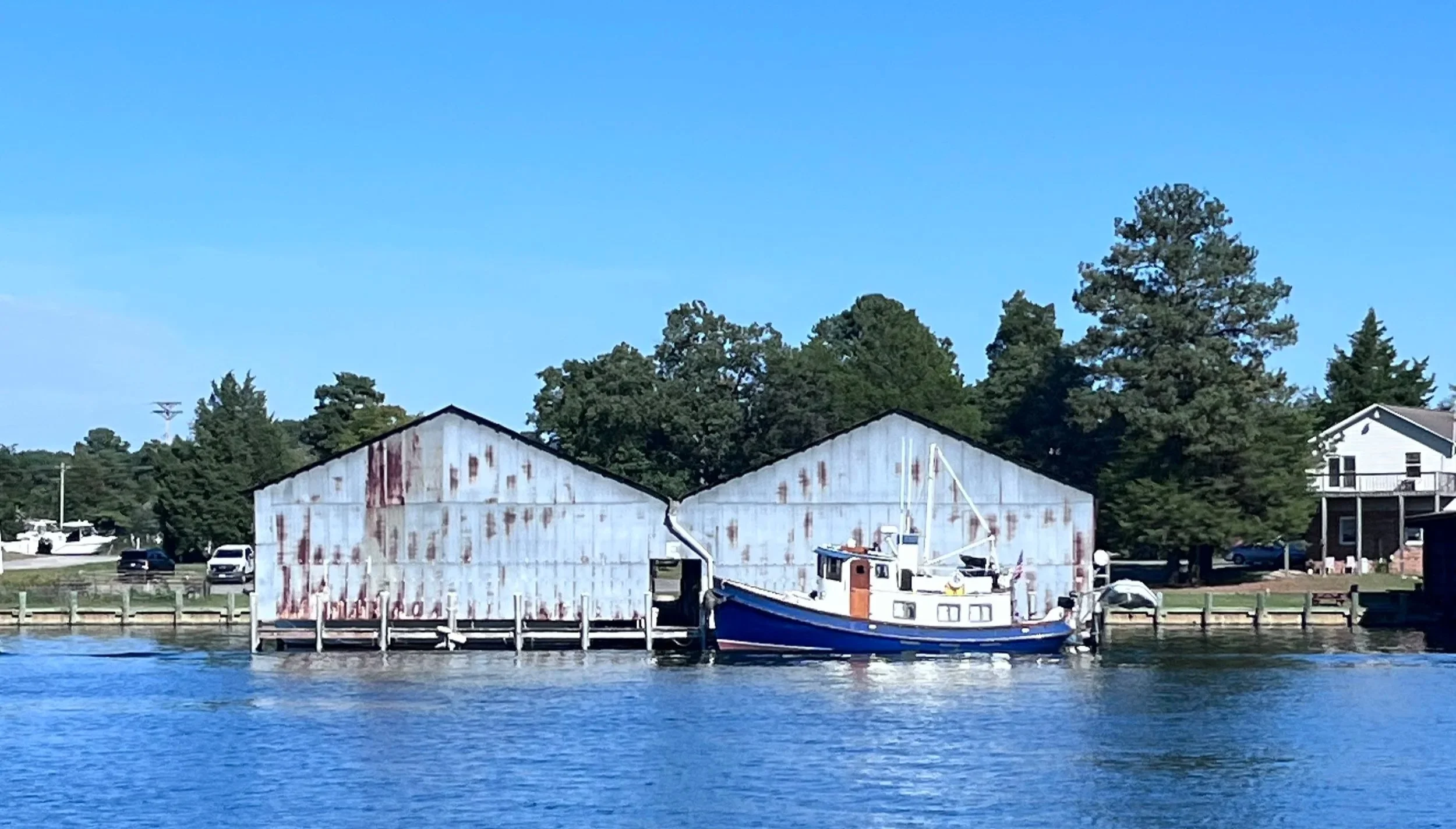
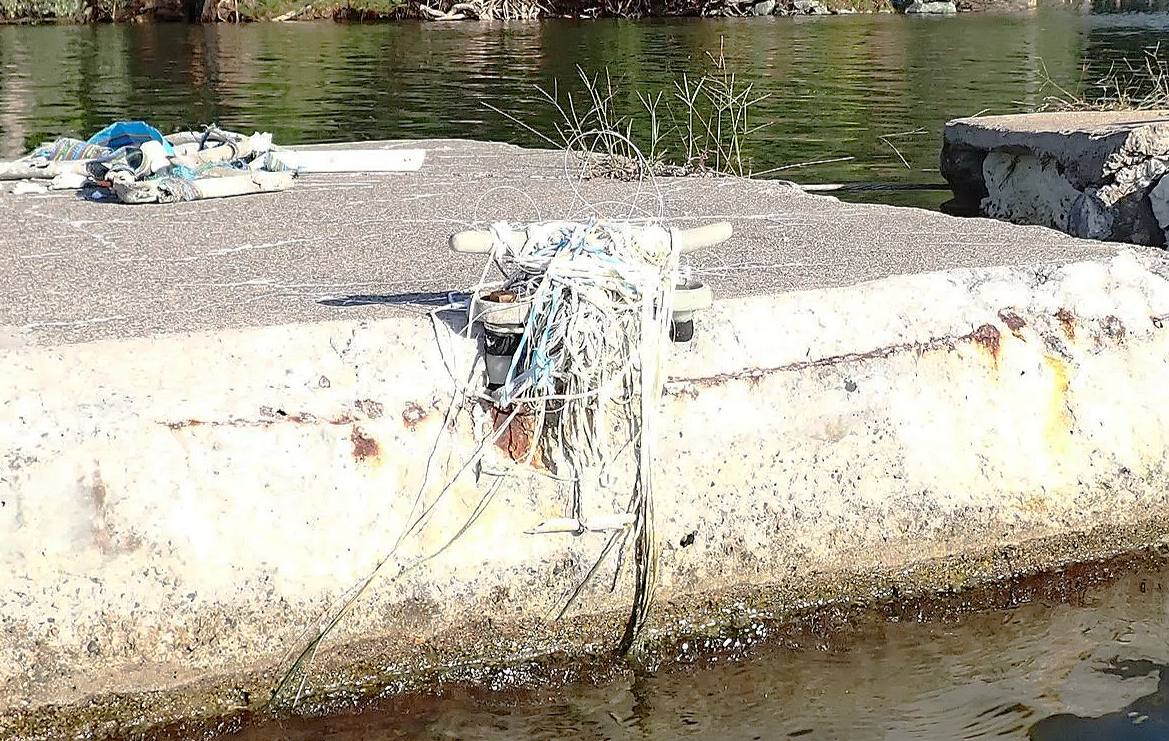
Our second stop on the way upriver was Cobb Island. It’s a tiny crabbing town with a fascinating mix of well-kept and derelict. We had read there was a free dock but when we checked it out, it was nowhere we wanted to tie our home so we anchored in the protected cove nearby, dinghied ashore and checked out the town.

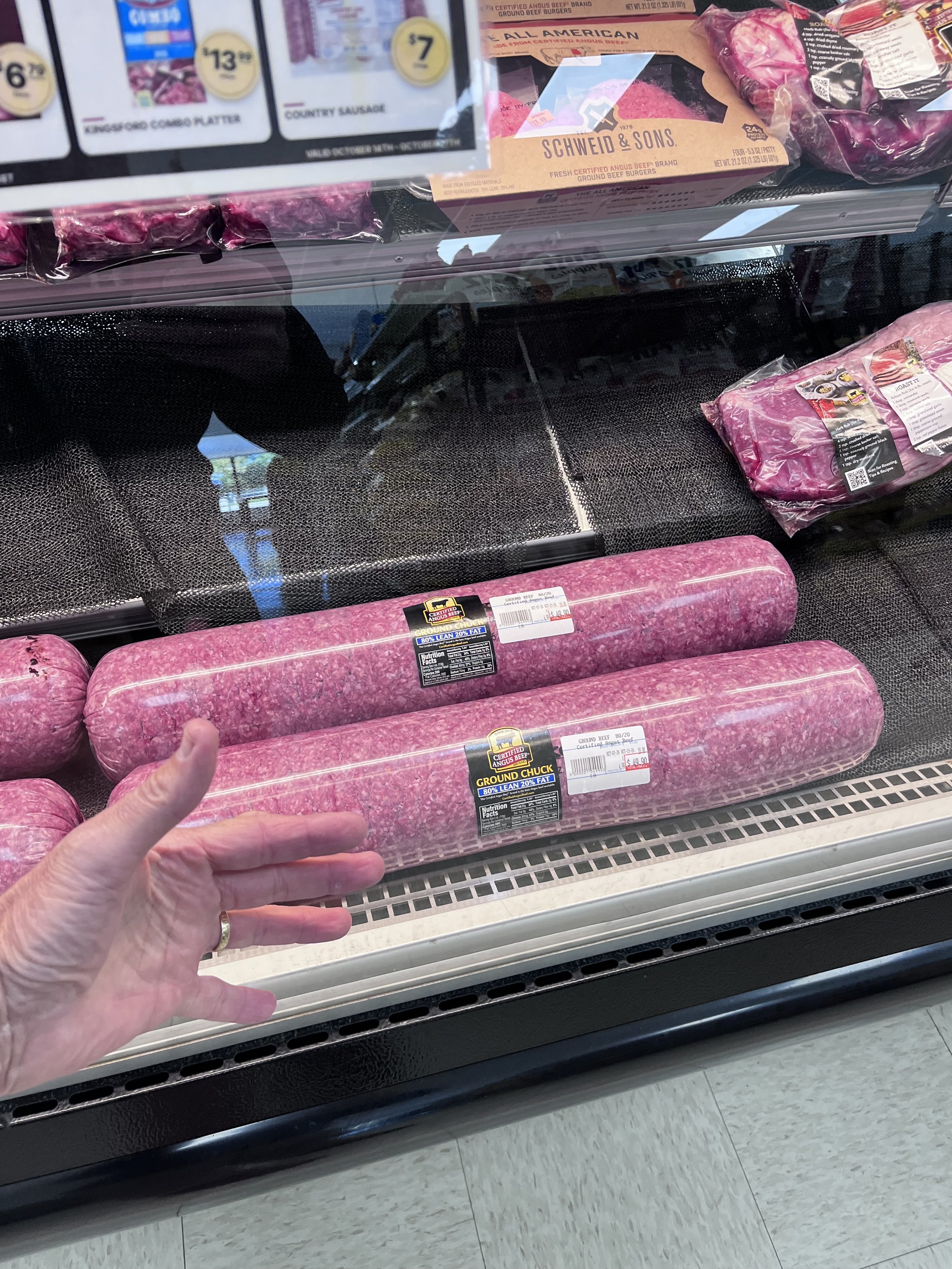
The market was super convenient - right across the street from the dinghy dock. Those are some big tubes of beef.

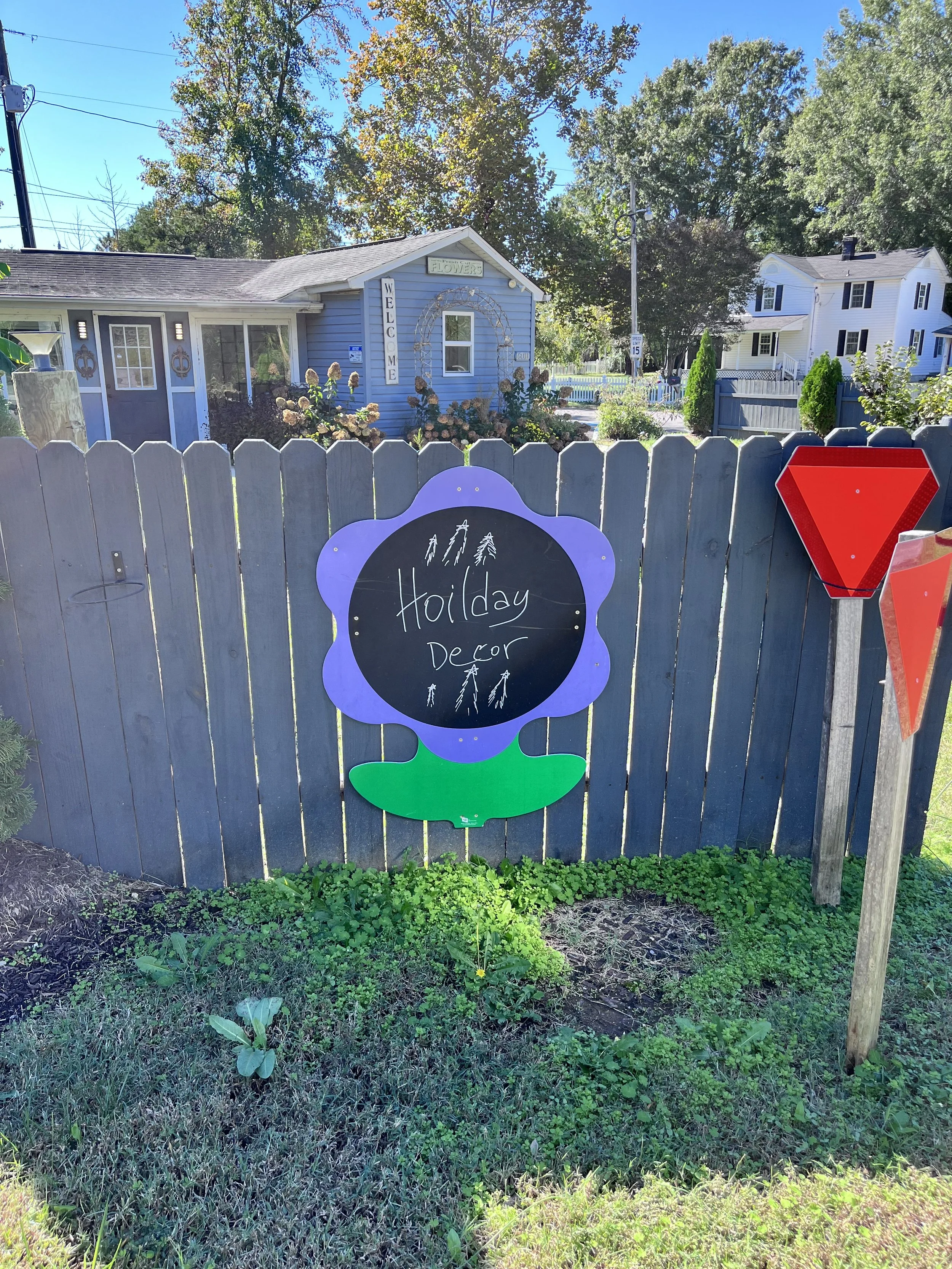
Getting a jump on the holiday season, Cobb Island did not impress with its spelling skills.

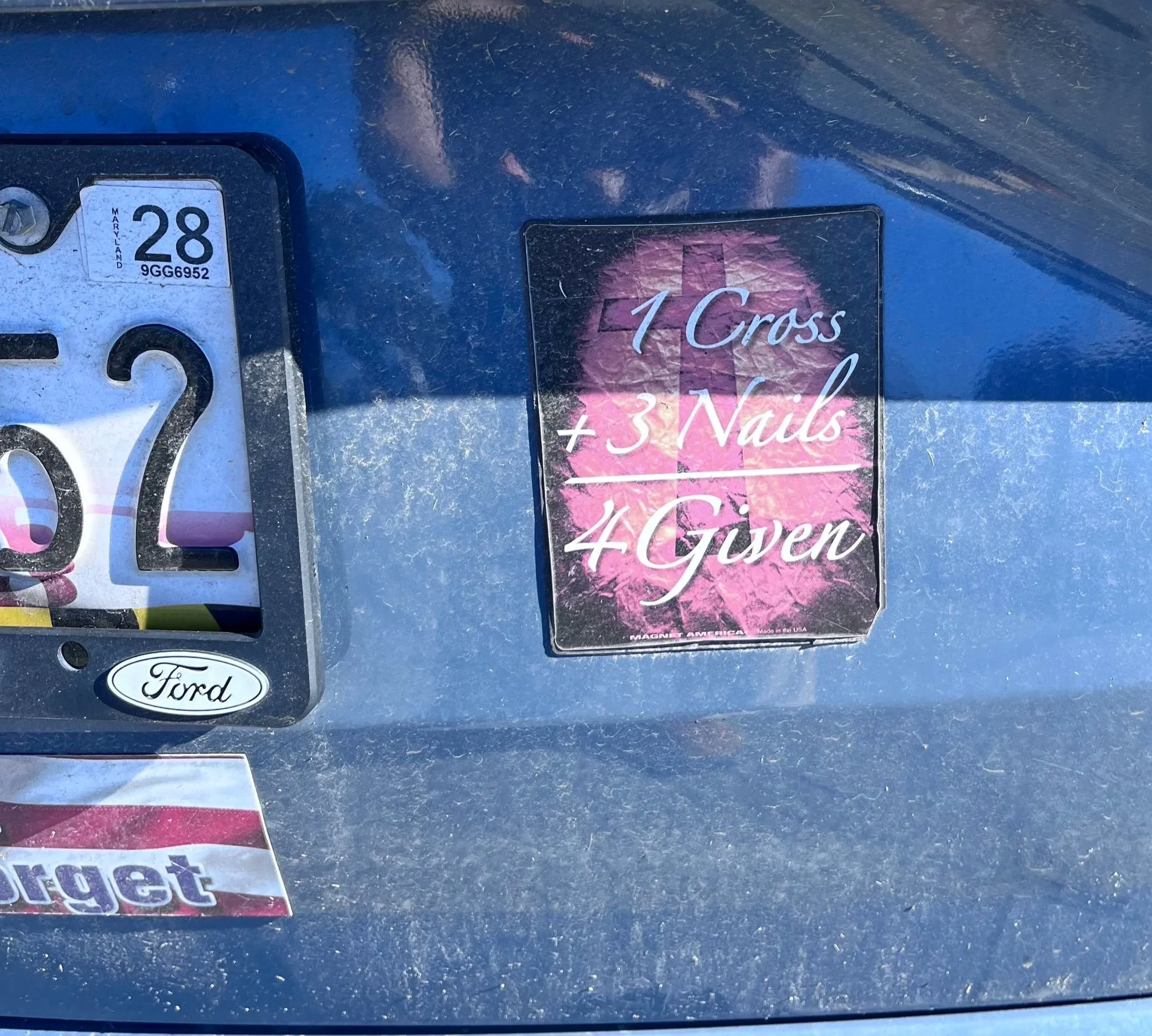
…but the bumper-sticker math is beyond reproach.

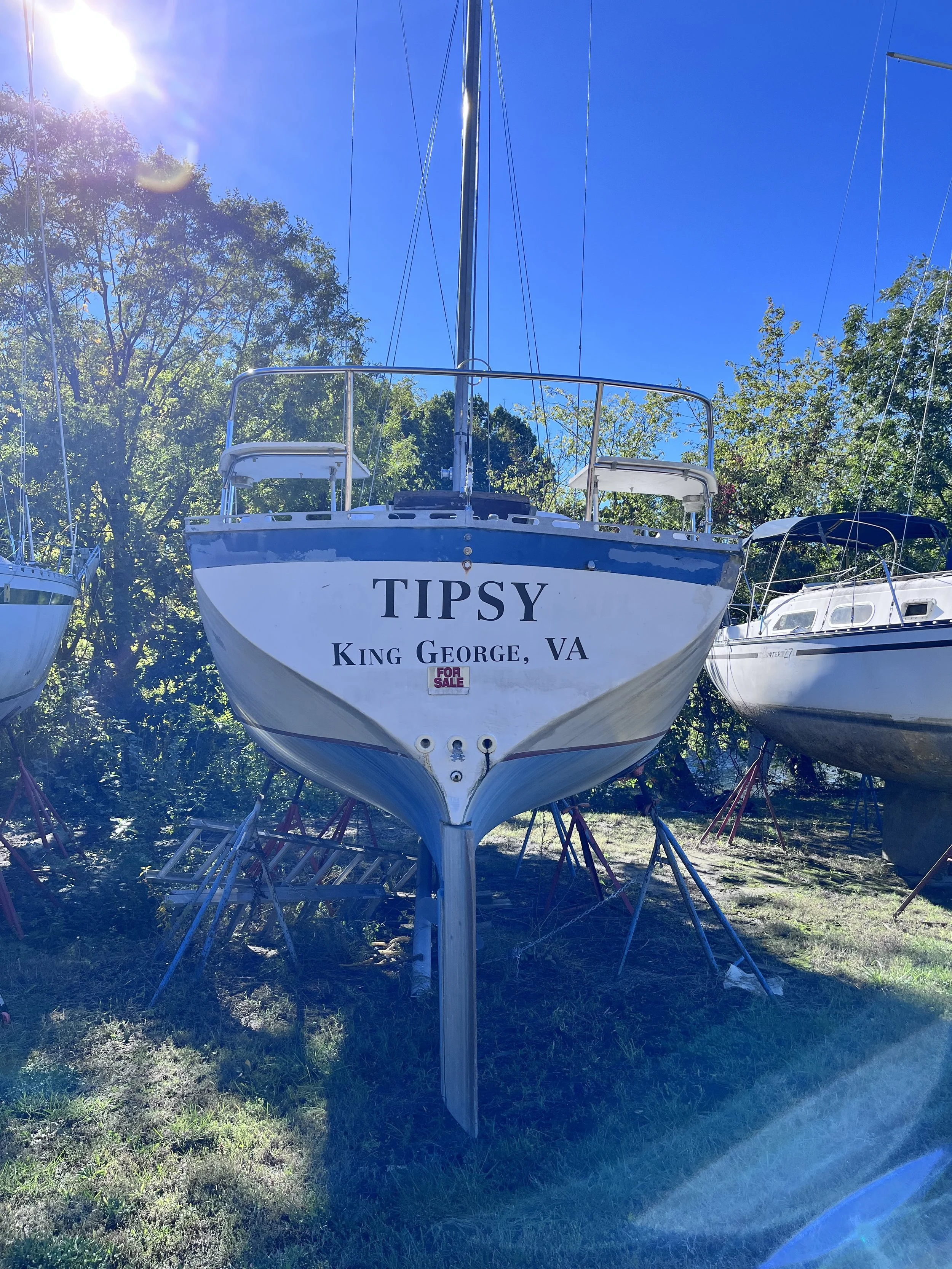
Tipsy indeed, presumably while applying the decal.

Impeller

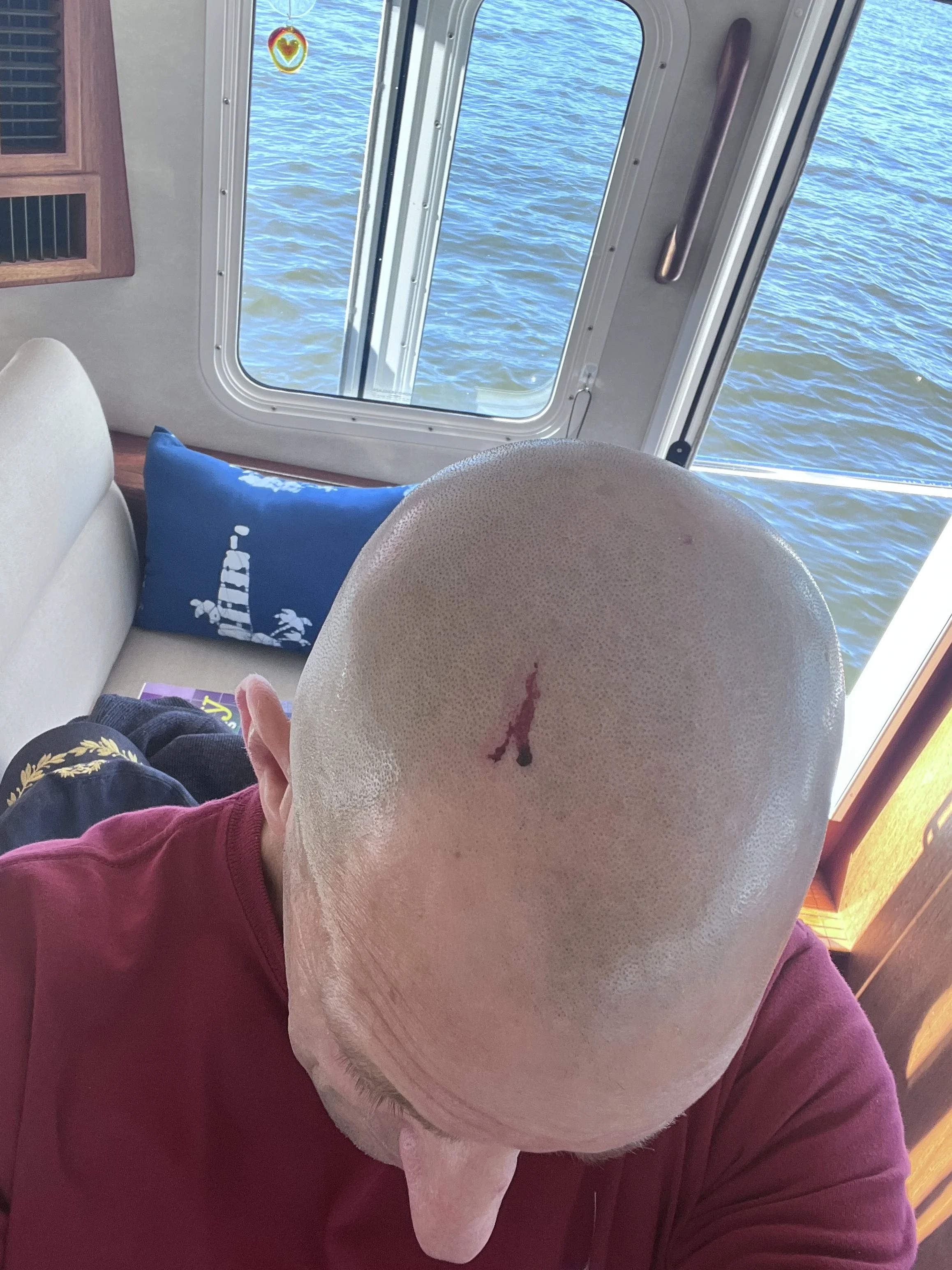
Ah, the impeller. Bane of my existence. It was a sweaty, bloody two hour job but I got the old one out and the new one in. There are no leaks, the engine seems to be staying cool. Job done.

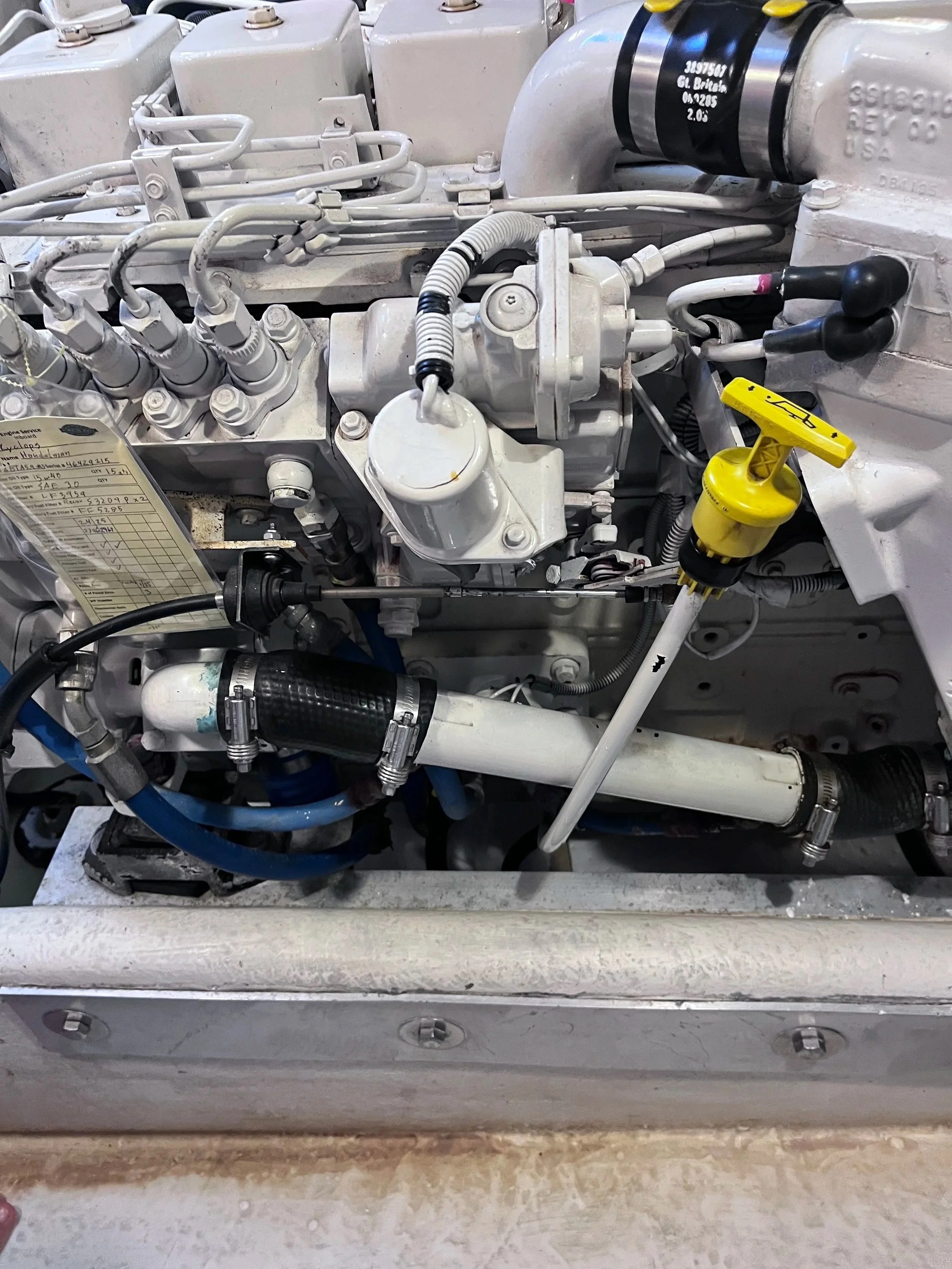
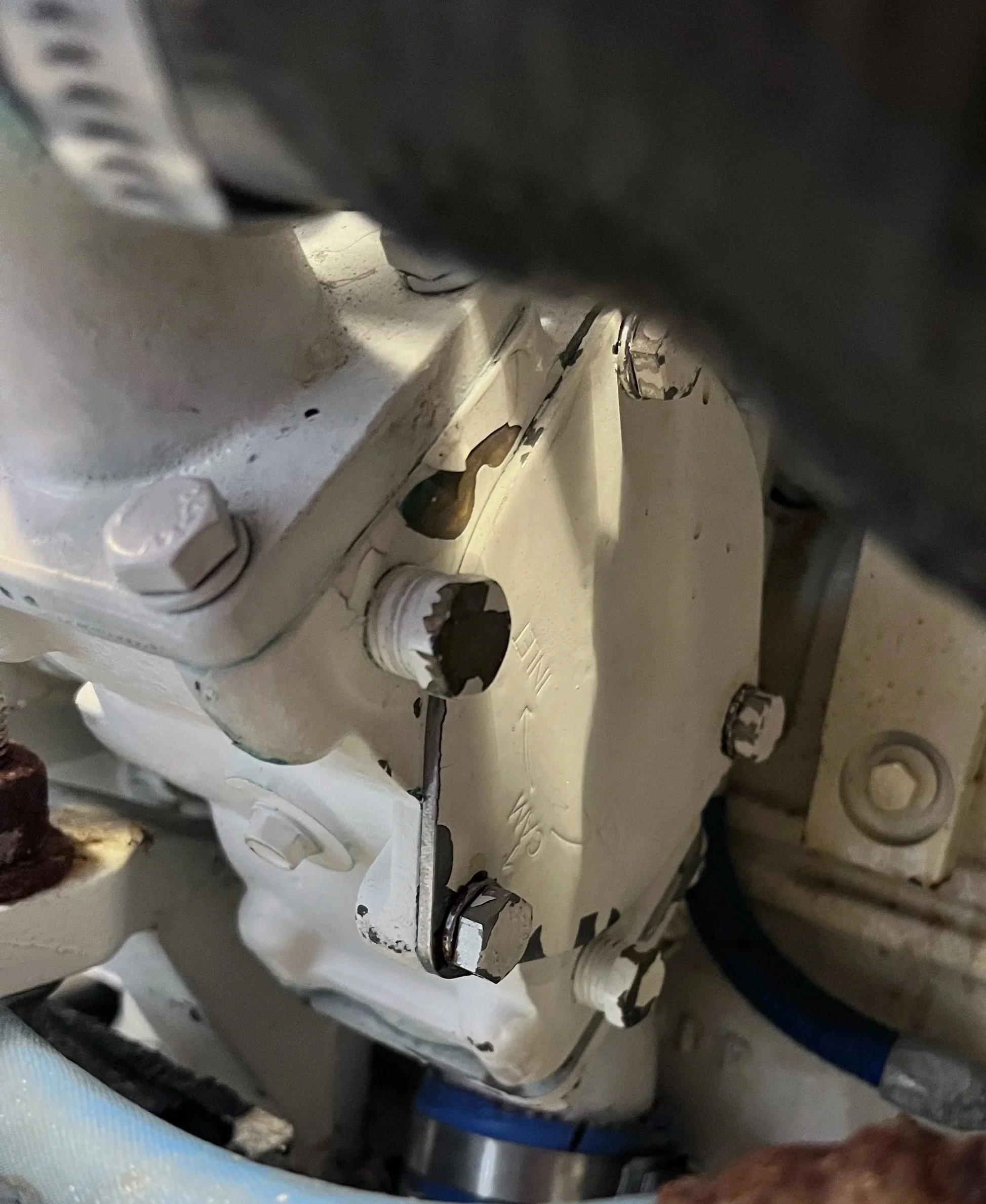
I’m no longer as nervous about the engine as I used to be, now that I am getting to know it so well. That short piece of black hose was the key to making this task less arduous. Removing it gave me a lot more working space. The water pump is hidden behind it.

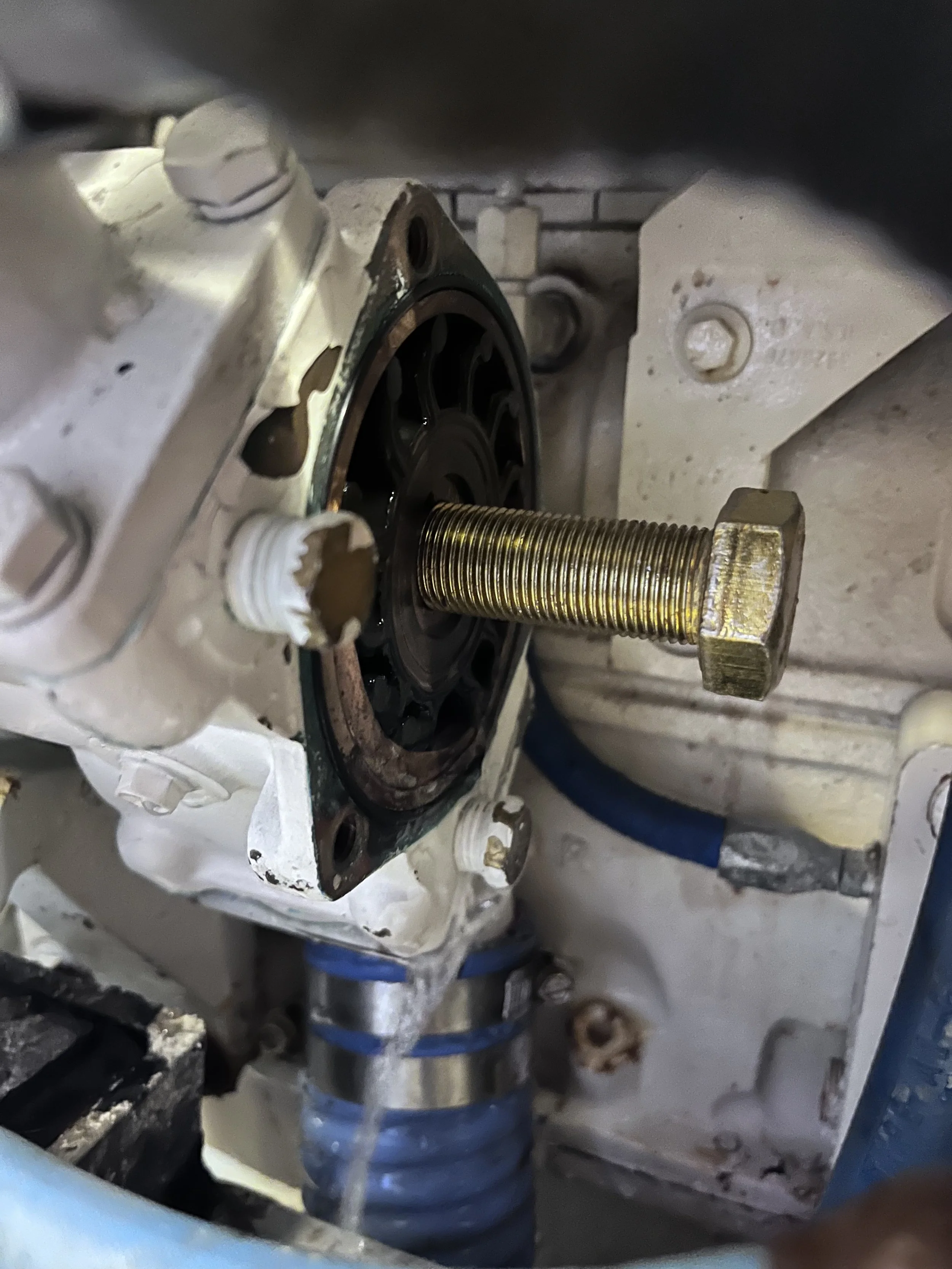
Exercising the ball valve the past several days made a big difference but it still leaks a trickle of water and needs to be replaced the next time the boat gets hauled. (The plunger trick won’t work because there’s a sea strainer over the intake – too big for a plunger to cover.) The current valve leaked three or four gallons during the course of the remove and refit. It wasn’t a problem but was an annoyance. While I was making a salt-water mess of the otherwise clean engine room I checked the engine’s pencil zincs, and they are all looking good enough to wait on replacing them for a few more months.

Ok, so maybe the water was a little more than a trickle. This is why we have bilge pumps.

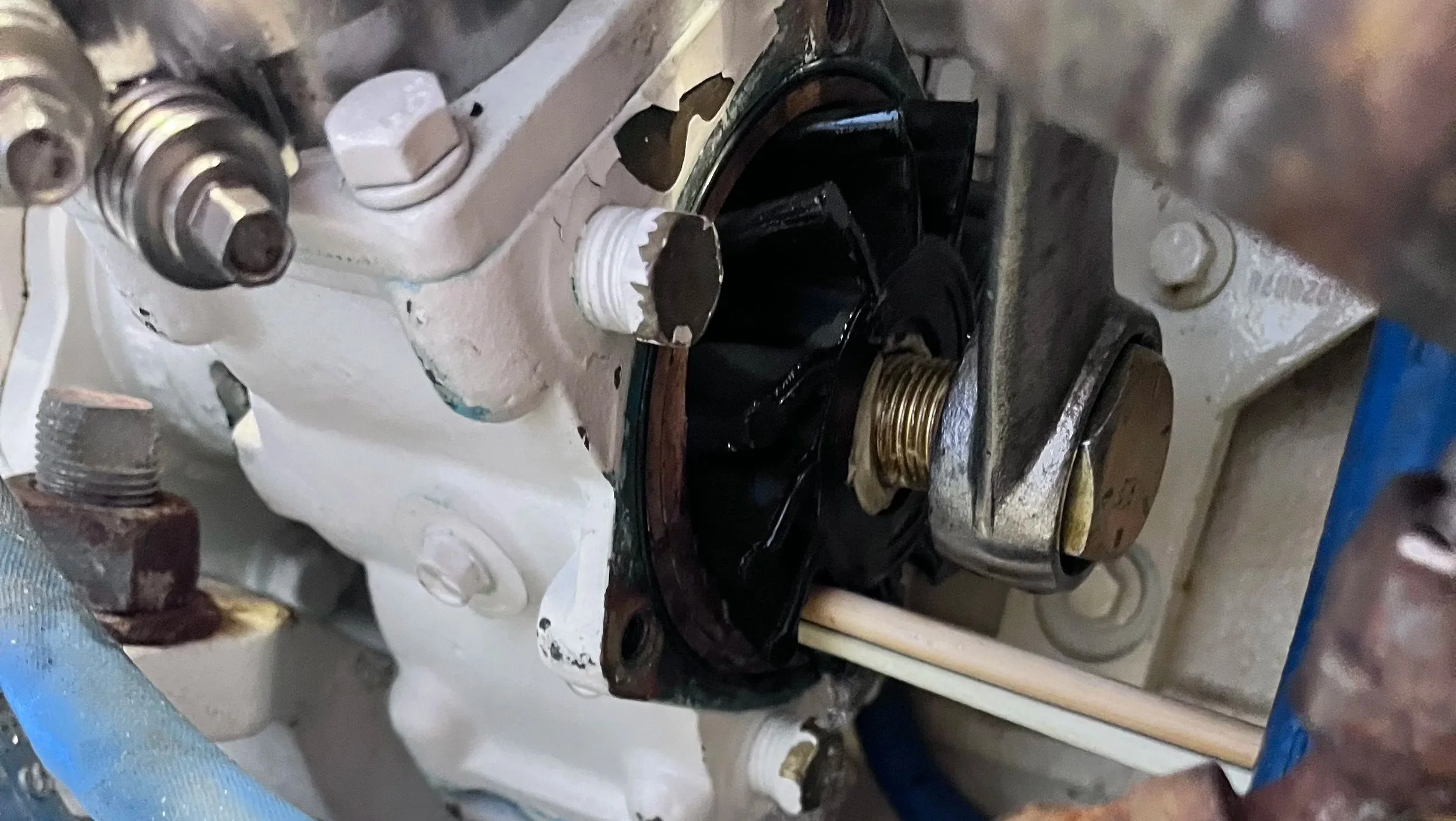
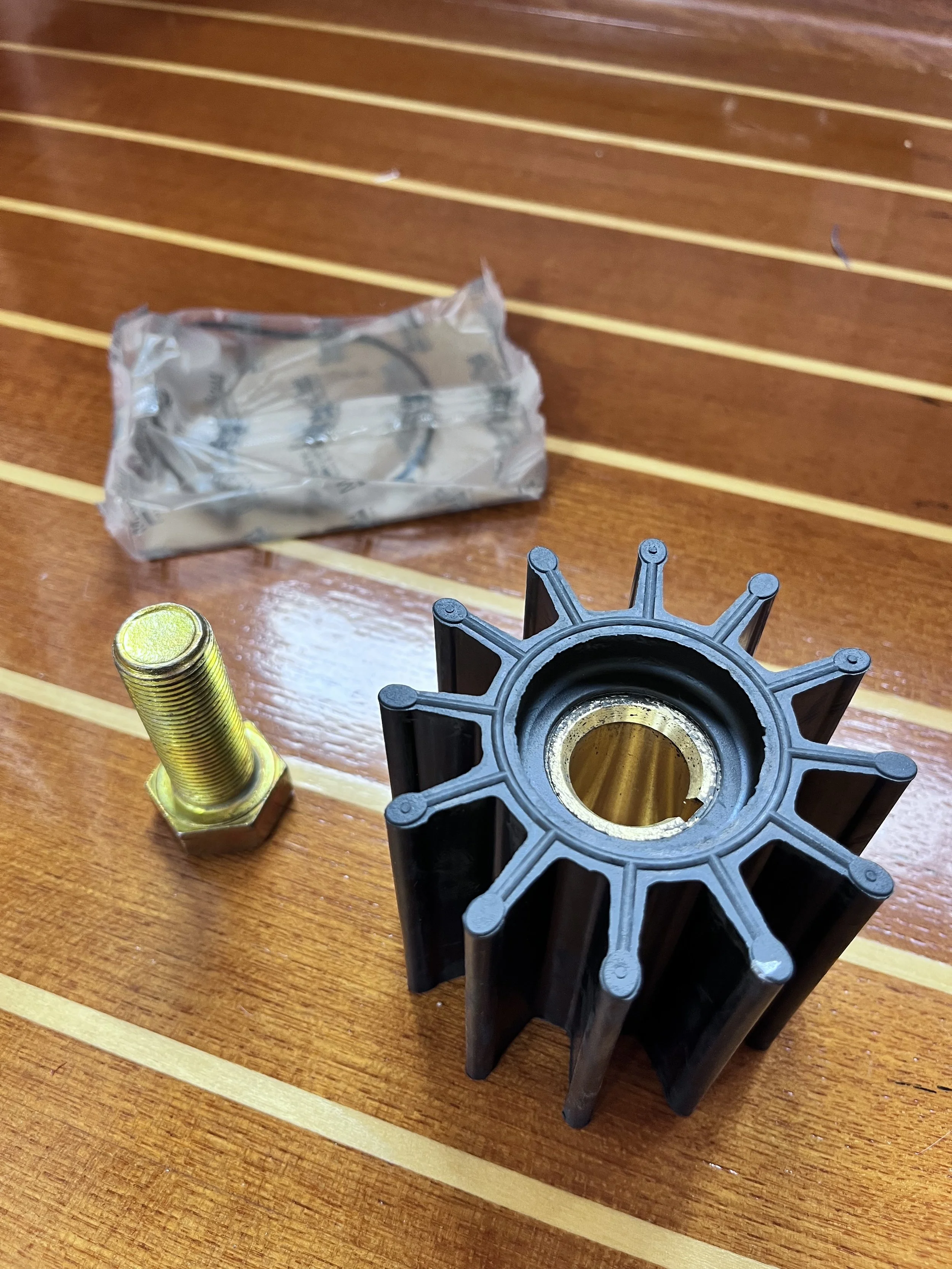
The trick to getting the old impeller out is to thread the big bolt into its hub. As the bolt goes into the impeller it pushes against the water pump shaft and forces the impeller out. That’s great, but today the woodruff key on the shaft galled the bolt as it pushed in. So although I got the job done, it destroyed both of the big bolts I bought for the job. I suppose I have another 200+ engine hours to get myself new bolts for the next impeller change.

“Why isn’t Jonathan using a socket wrench, wouldn’t that save him about 45 minutes of tedious work with the box wrench? Great question! I don’t have a 1 1/8” socket on board…yet. (Also note the chopsticks I jammed in the impeller blades to prevent them from rotating as I screwed in the big bolt. Thanks for the chopsticks Simon!)

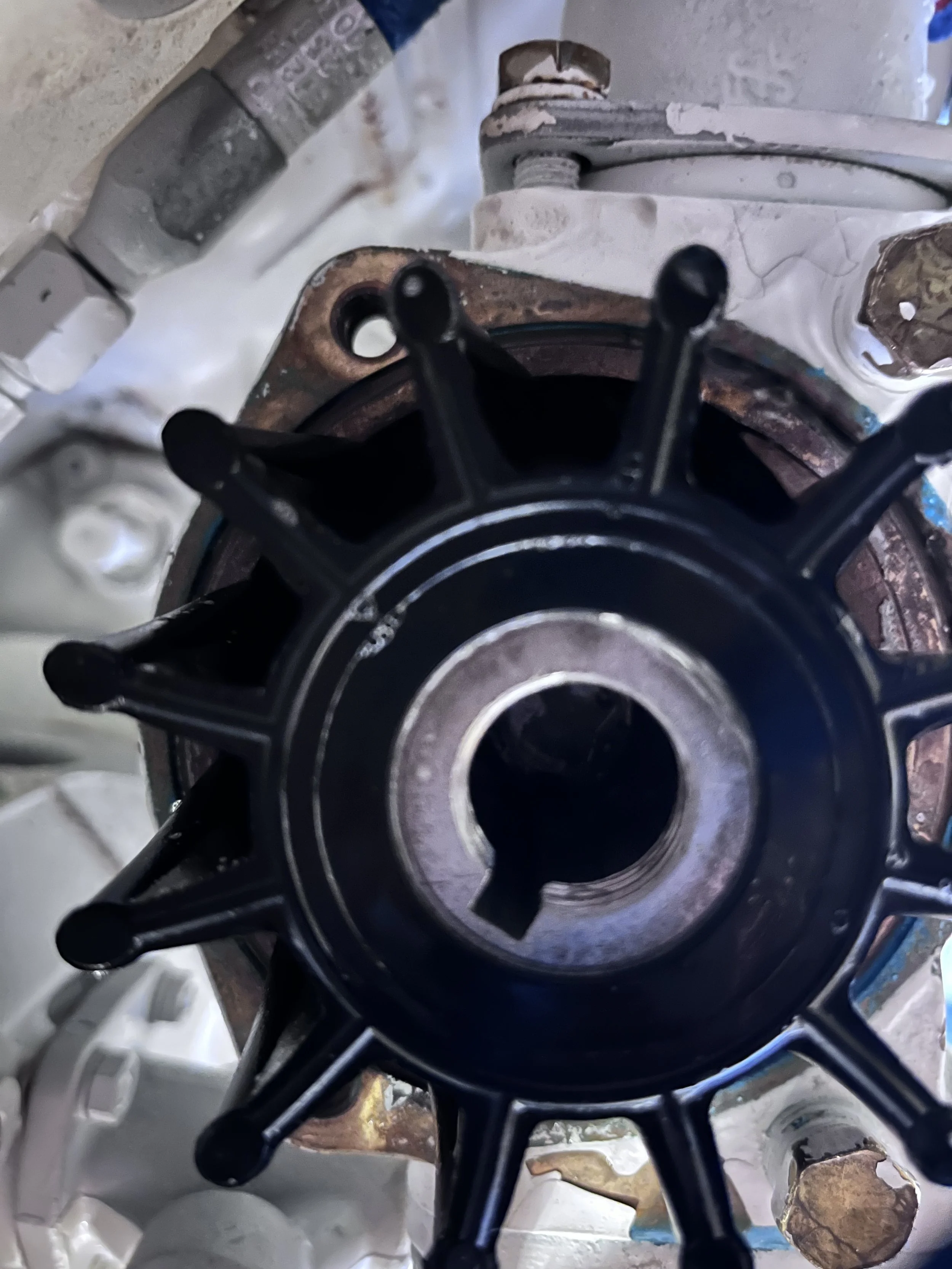
The trick to get the new impeller into the water pump is to compress it with a zip tie and to coat it liberally with dish soap. Both of those techniques worked great. I am so relieved this job is done.

In with the new.

This is the blood I was talking about. Don’t worry, I’m fine: the Chief Medical Officer cleaned and bandaged the wound for me.

Annapolis

After we left Cape May to head up the Delaware towards the top of the Chesapeake Bay we realized we might not be back on the Atlantic Ocean until December when we get to Florida. That means the next several months will find us enjoying more sheltered waters. It’s a different way of traveling and we are looking forward to it.

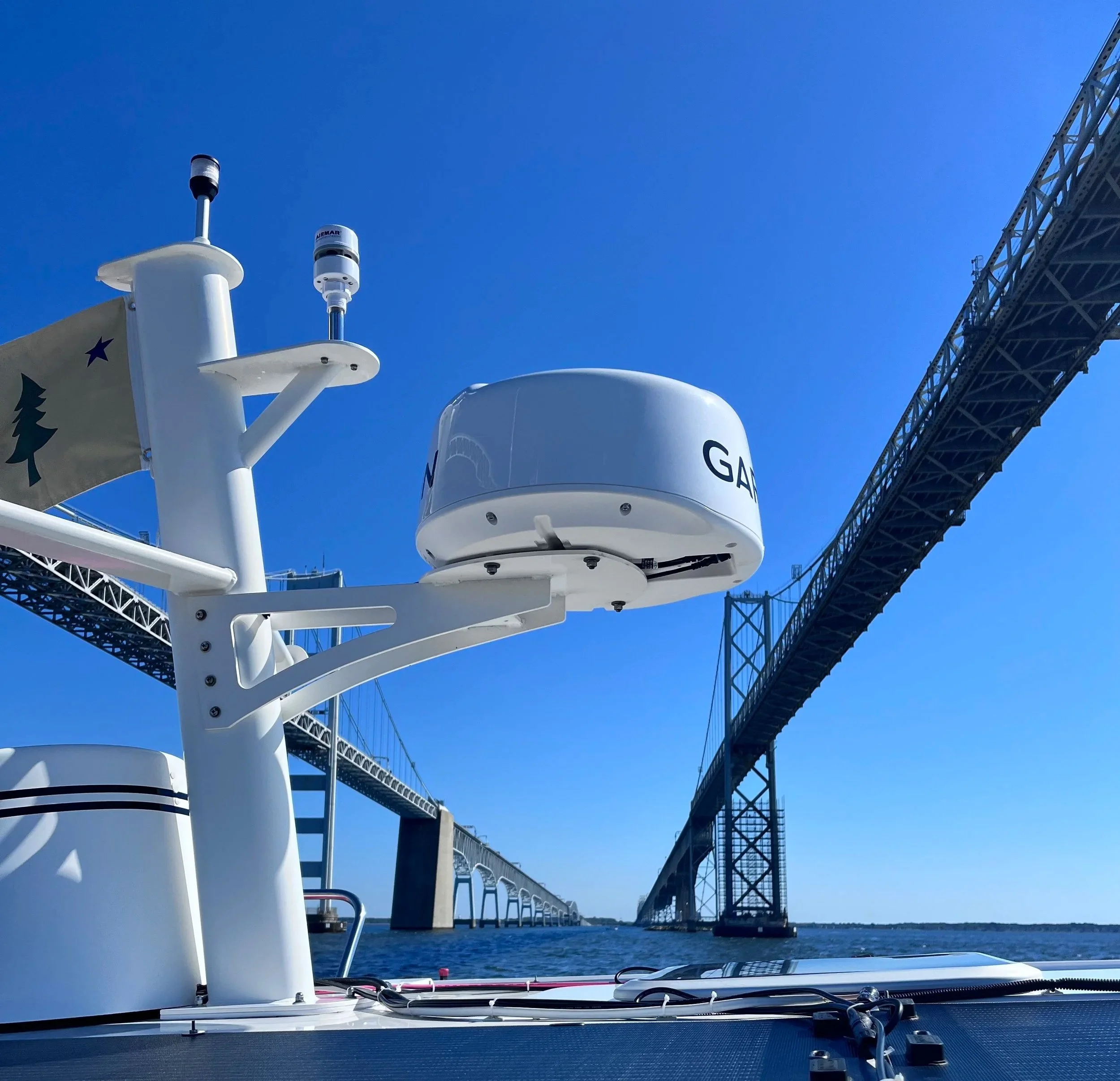
Chesapeake Bay Bridge.

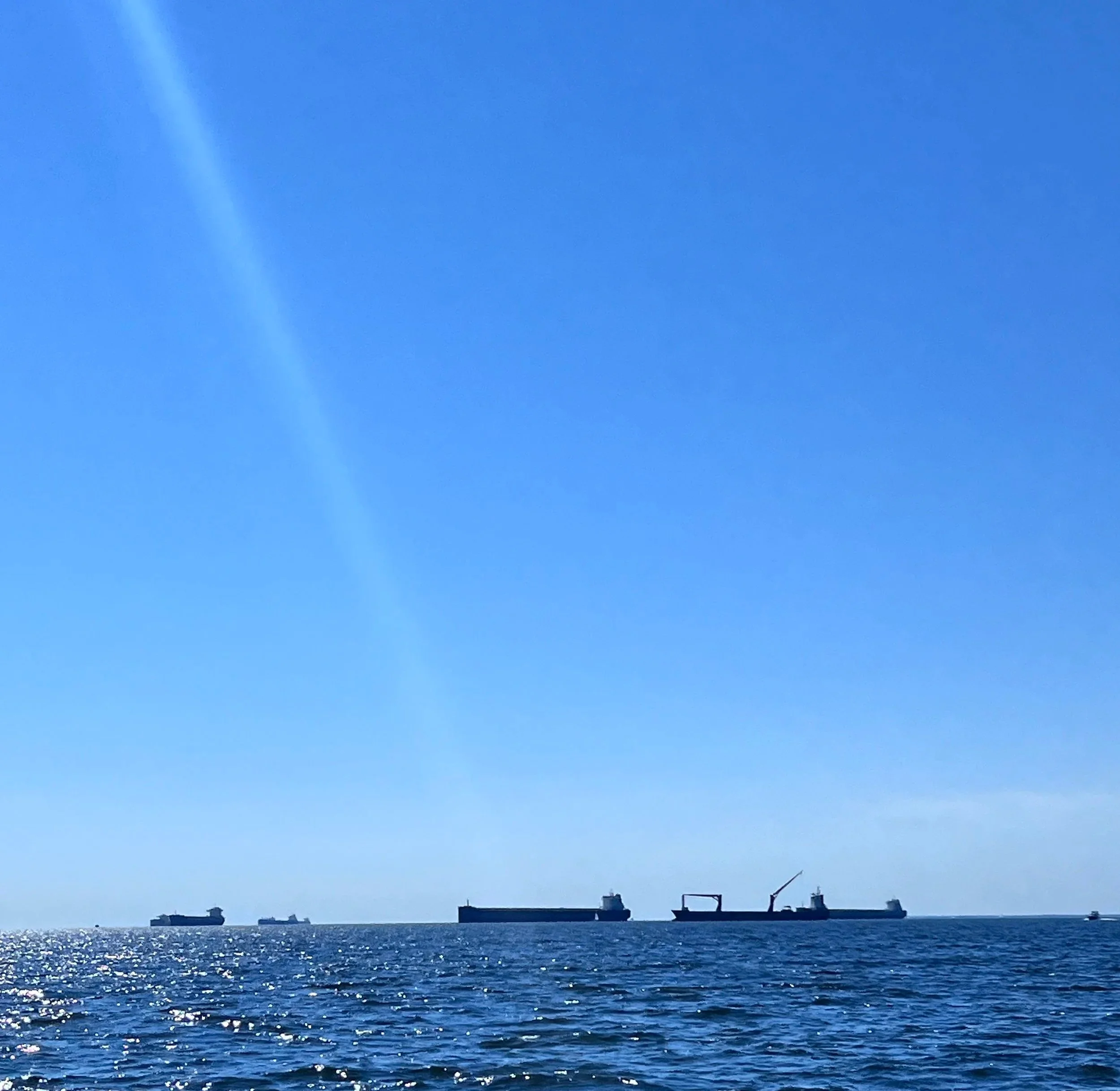
There’s almost no big commercial traffic where we boat in Maine, but the Chesapeake Bay is a thoroughfare for tankers and container ships. We saw at least a dozen big ships the morning we headed out of Annapolis. Most were anchored, presumably waiting their turn in Baltimore to drop off or pick up whatever it is they carry. These boats are all in the 1,000’ foot range. Big girls.

We headed for Annapolis with the naive notion that we could just rumble into the harbor and pick up a mooring for as long as we needed. After all, it was just a few days after the biggest powerboat show north of Florida, and a few days before the biggest sailboat show…in the world.

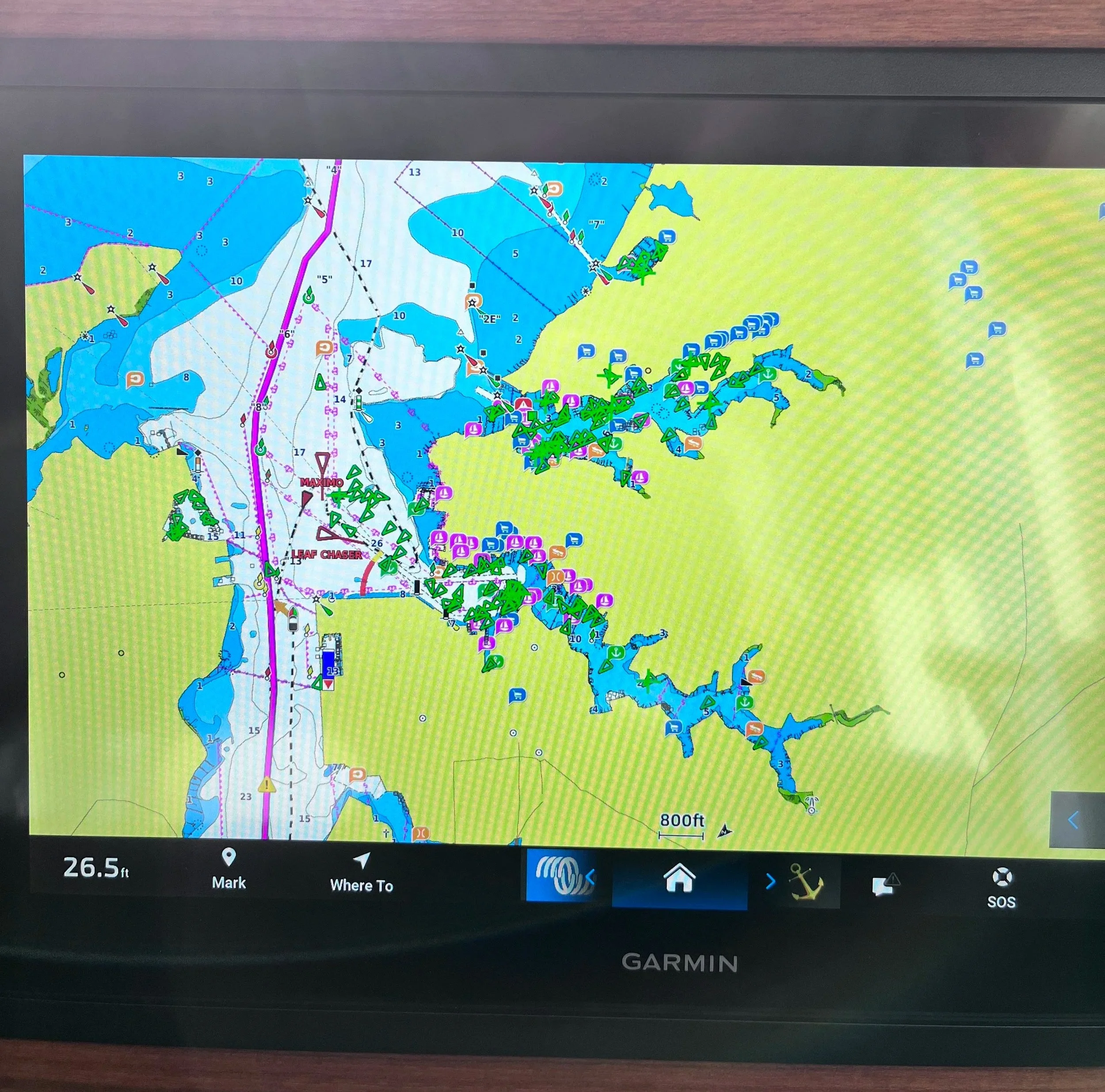
This picture is a shot of our chart plotter as we headed out of Annapolis. Every green triangle represents a boat broadcasting its position on AIS, there are probably another two boats that don’t have AIS for every one that does. The place was full.

There were no moorings in the outer or inner harbor. The big Annapolis anchorage was completely exposed to the not-inconsiderable wind, was a chaos of wakes, was packed with boats, and was filling with more desperate visitors looking to wedge their boats in among all the others.

Not for us.

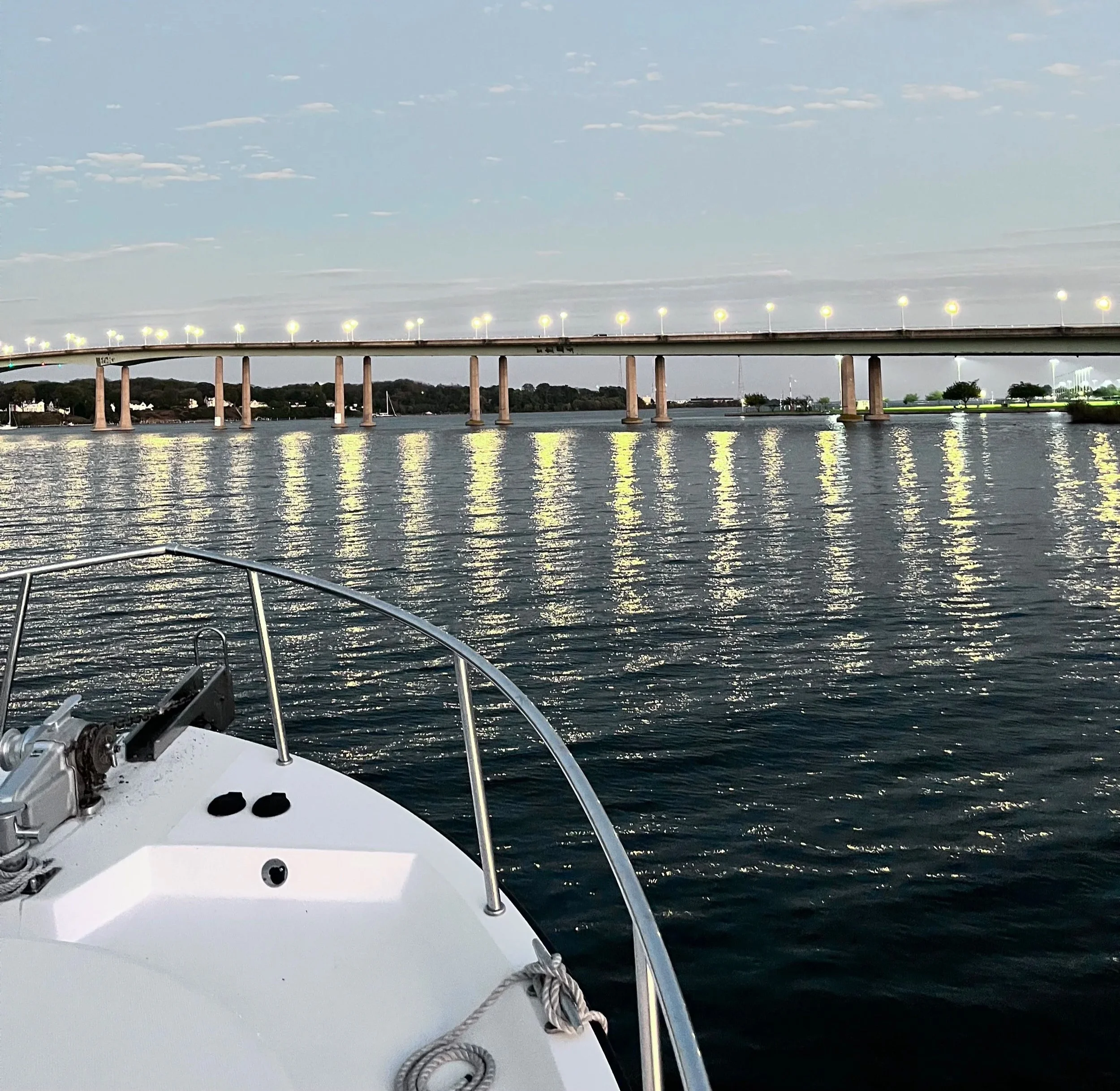
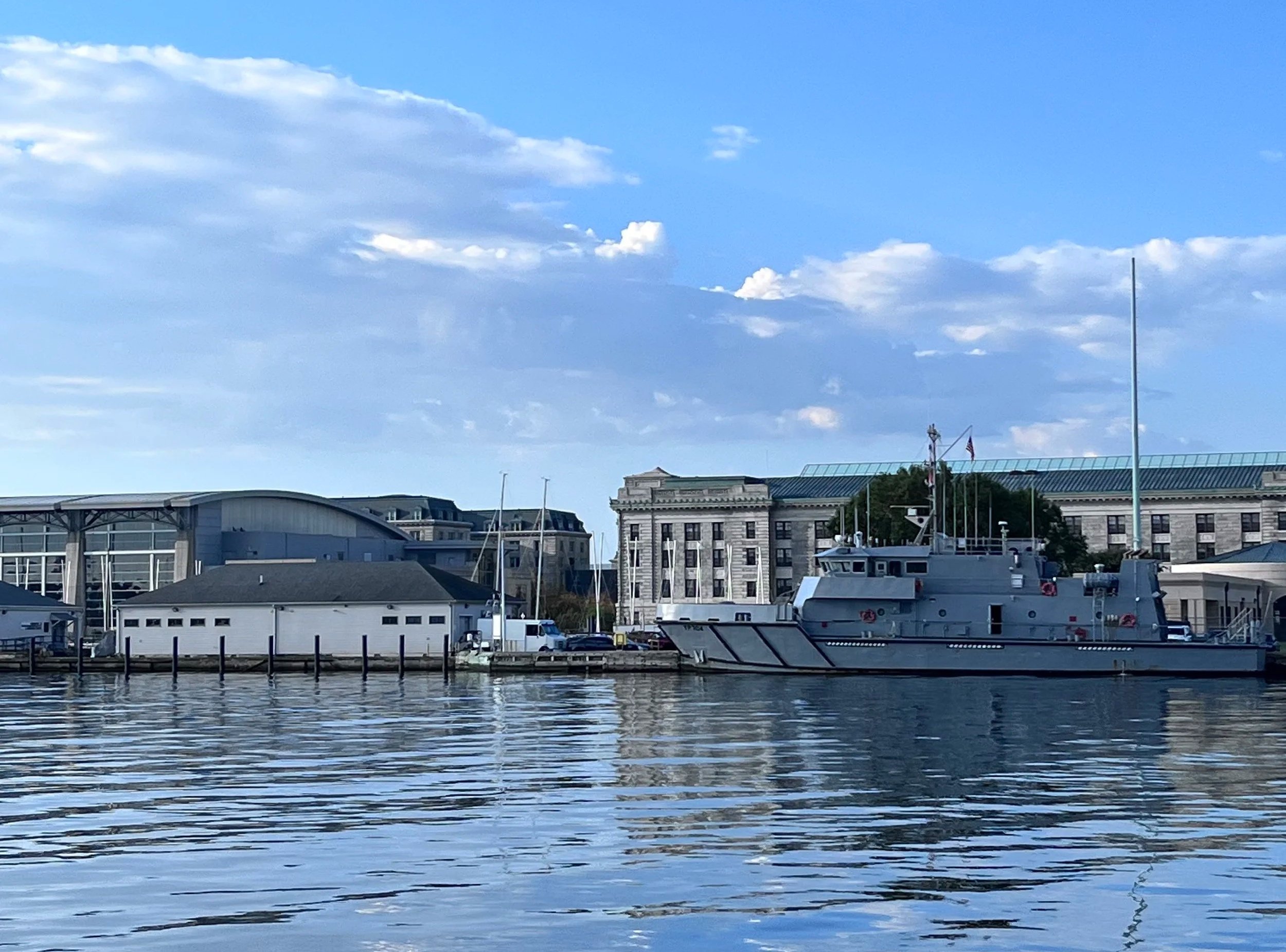
Ellen found an amazing anchorage just a mile up the river. There was nobody else there, the place was sheltered from the wind, just upriver from the US Naval Academy. We had a delightful evening watching the sun set, listening to the cadets shout and march and whistle and bugle, hearing the bells ringing the hour in Annapolis, and then watching the lights come up on the bridge. What a great night.

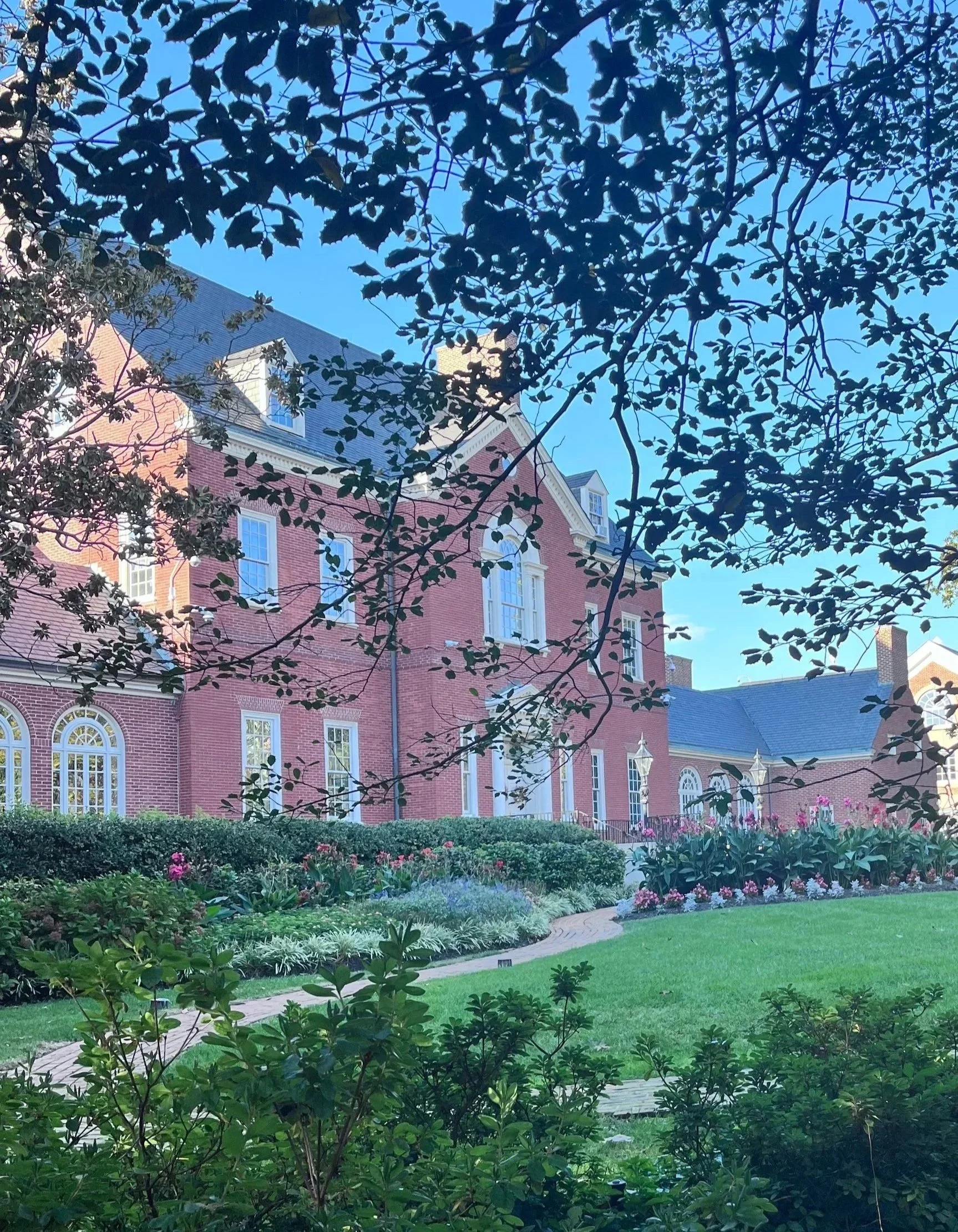
Annapolis looks like a pretty neat place. We took Giggle Monster to town and wandered around for a while, but the crowds and circus atmosphere didn't really accommodate our skill set so we decided to come back in May when things are a little quieter and we can soak it in properly.

US Naval Academy

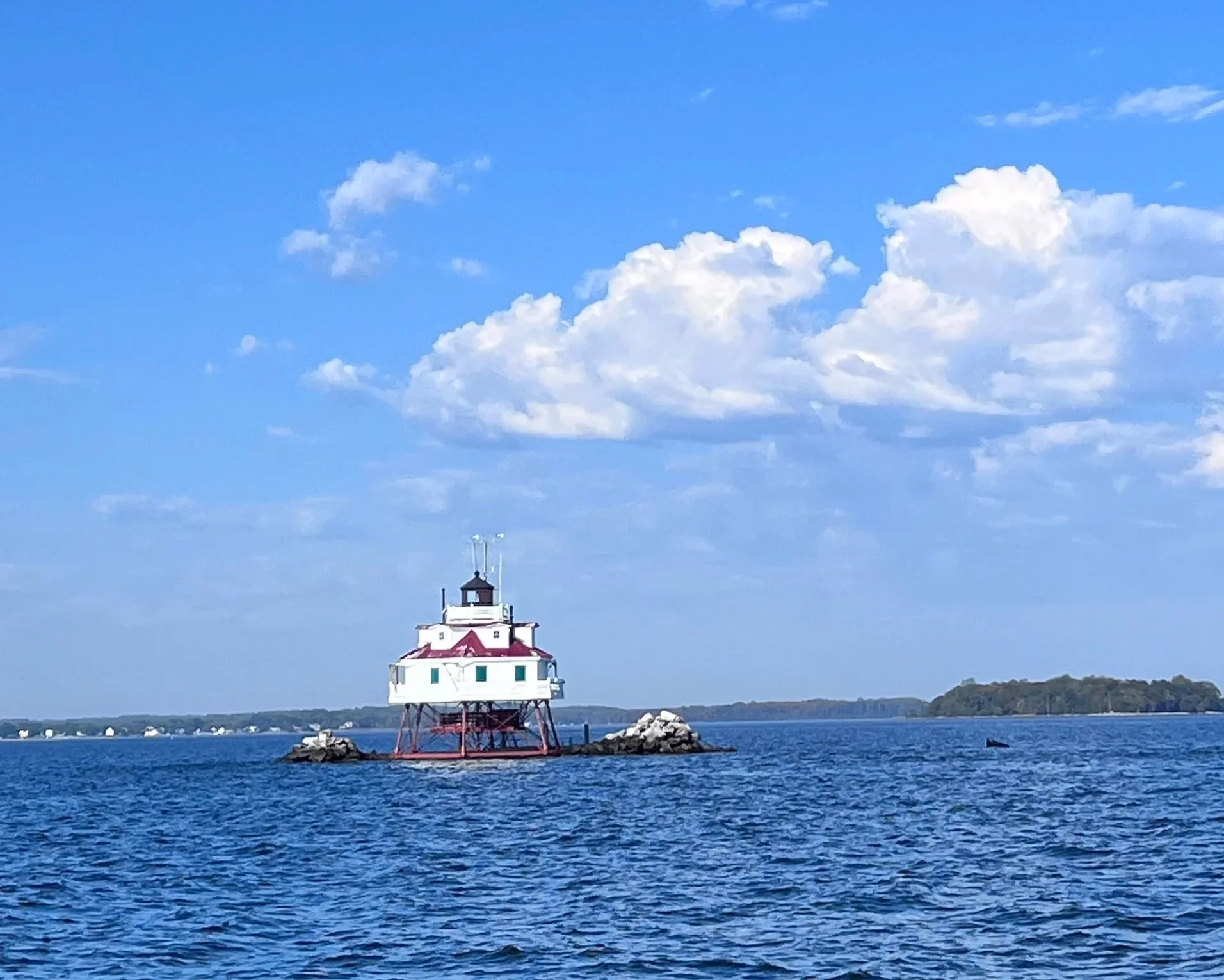
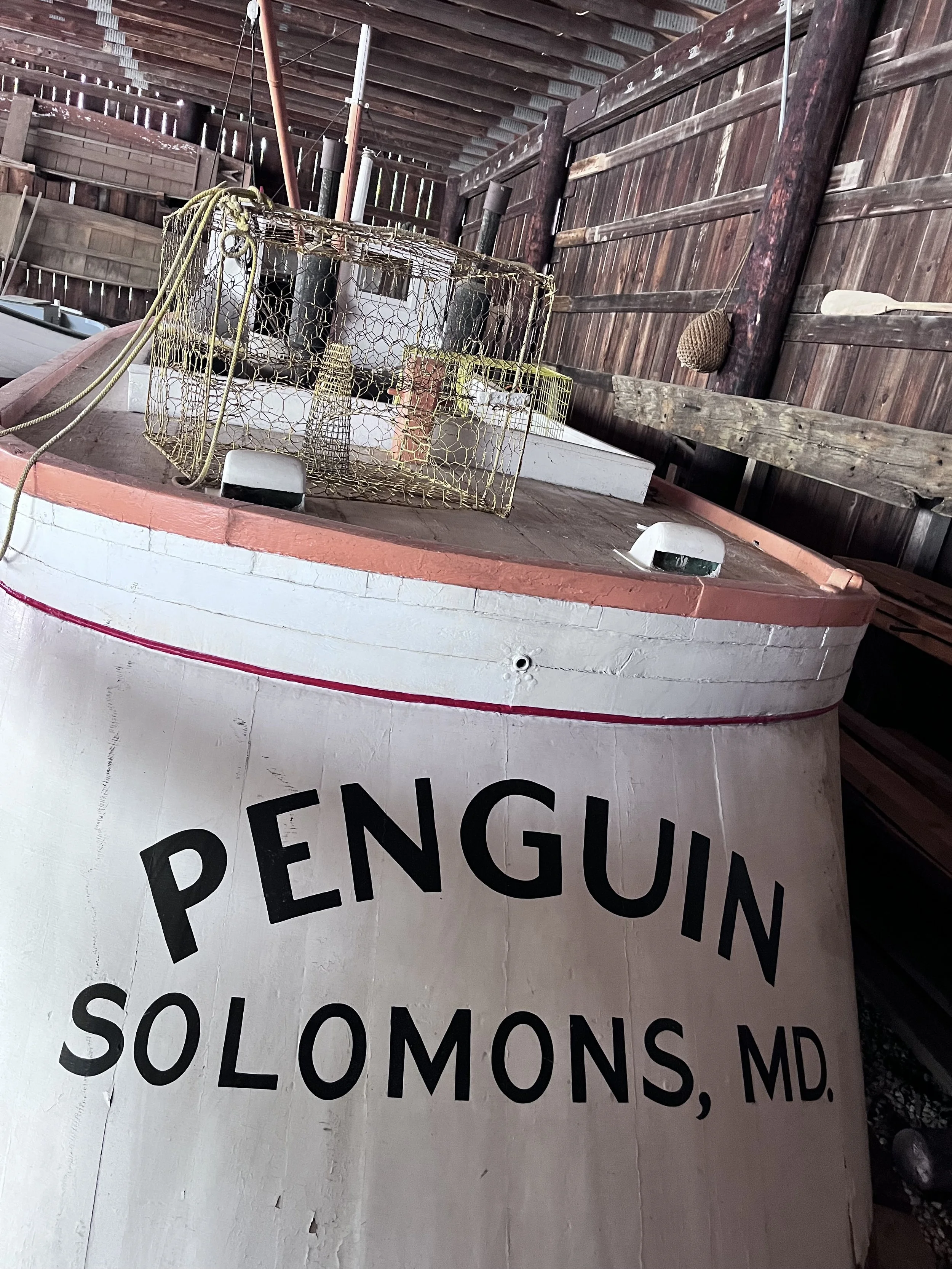
Plus, as is often the case, weather was on its way. We headed for Solomons, Maryland knowing it is a super comfortable place to hide from wind and waves. We got to explore a bit and had a wonderful time at the Calvert Marine Museum. It’s a special treat to visit a marine museum by boat. The place has its own lighthouse – one that used to stand in the Bay but was saved, moved, and restored at the museum. So salty.

The lighthouse at the museum looked like one of these guys. It got moved to the museum after being decommissioned.

We are living a life surrounded by boats and water. It is heaven on earth.

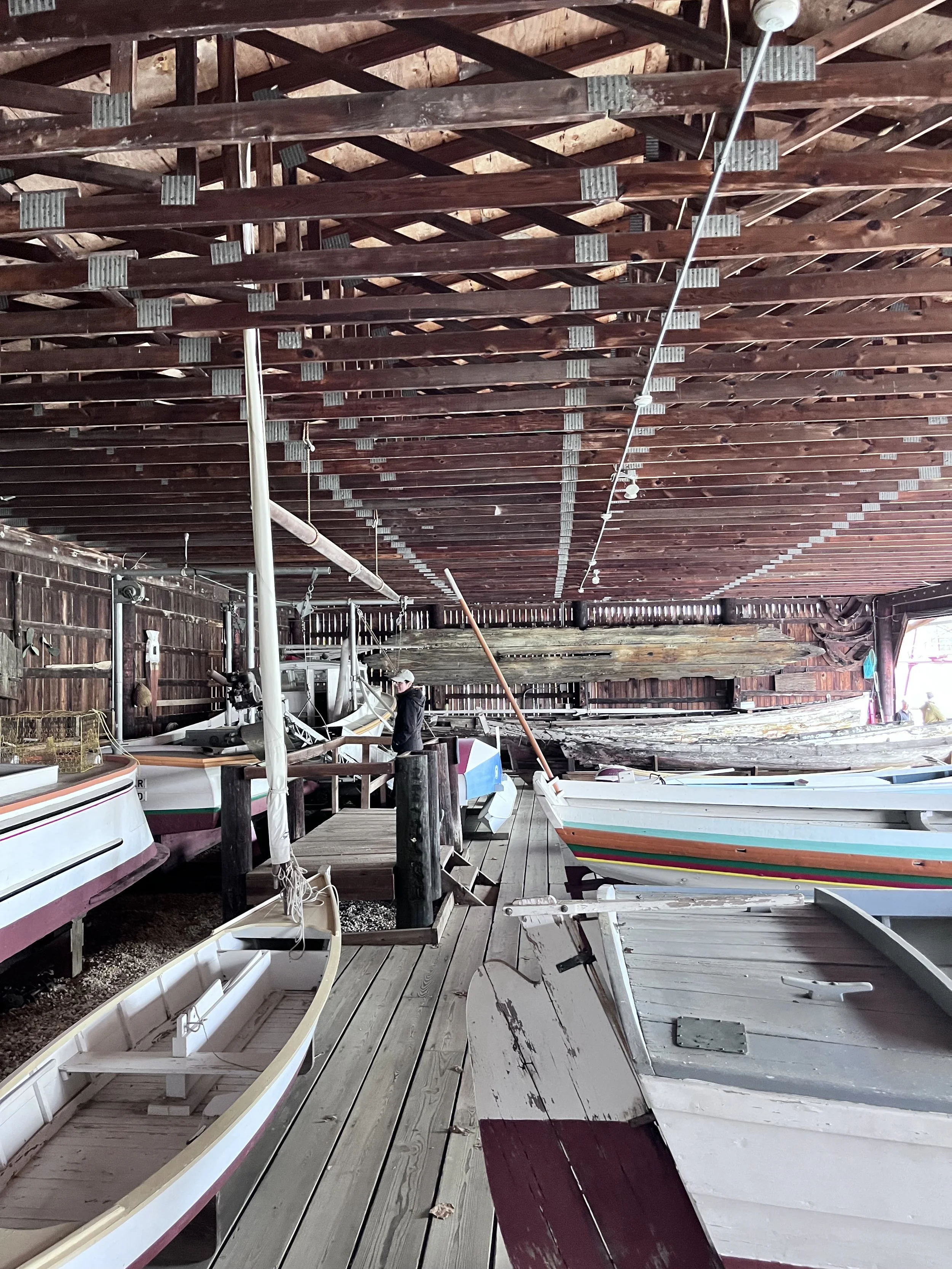
Most marine museums have a barn filled with boats carrying a little extra patina. Calvert was no exception.

Witchcraft II

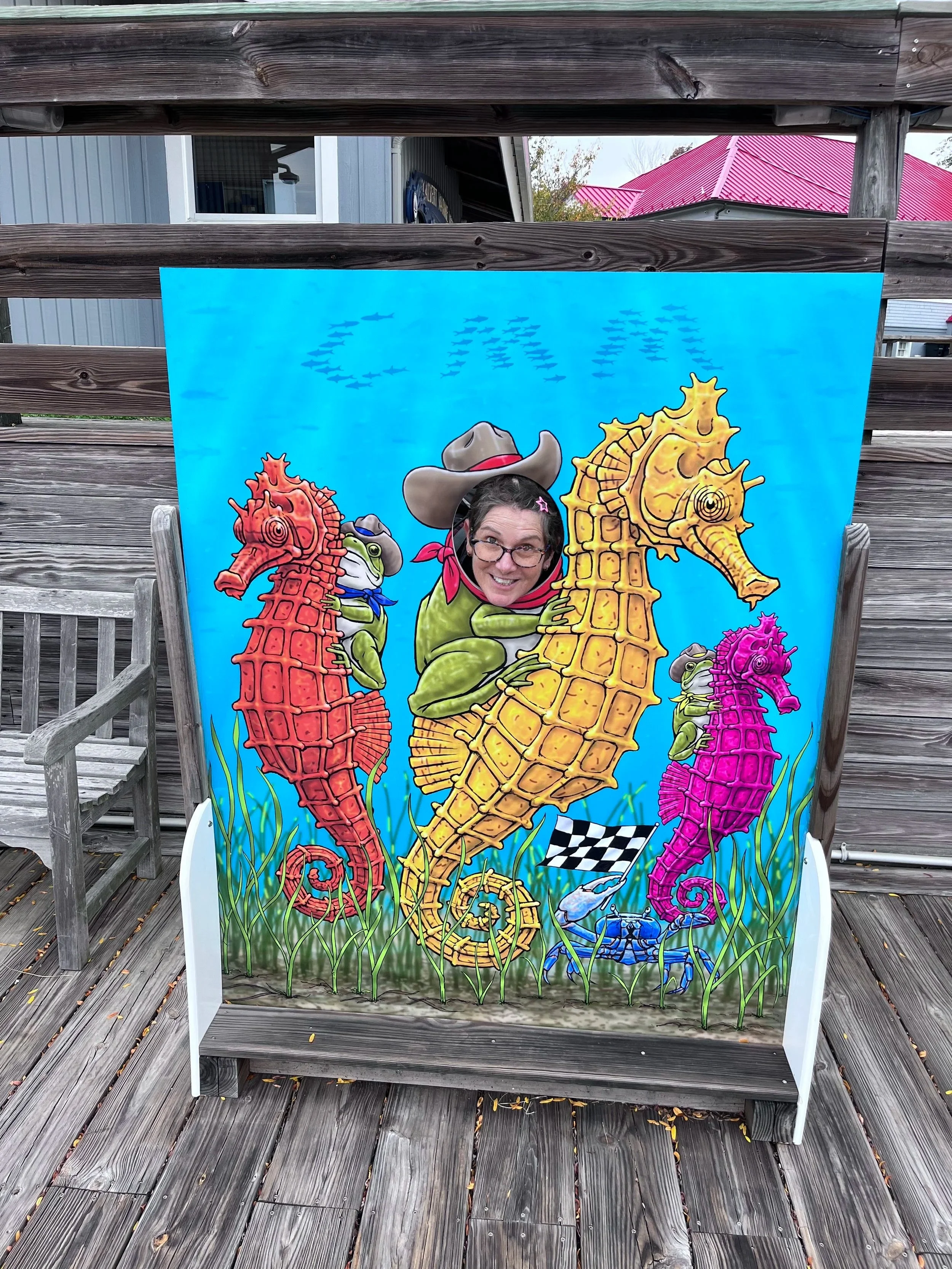
Why is the frog riding on the seahorse, and how does the seahorse feel about the situation? We saw some real seahorses in the aquarium at the museum. Those are some peculiar fish.

But to be fair, who am I to talk?

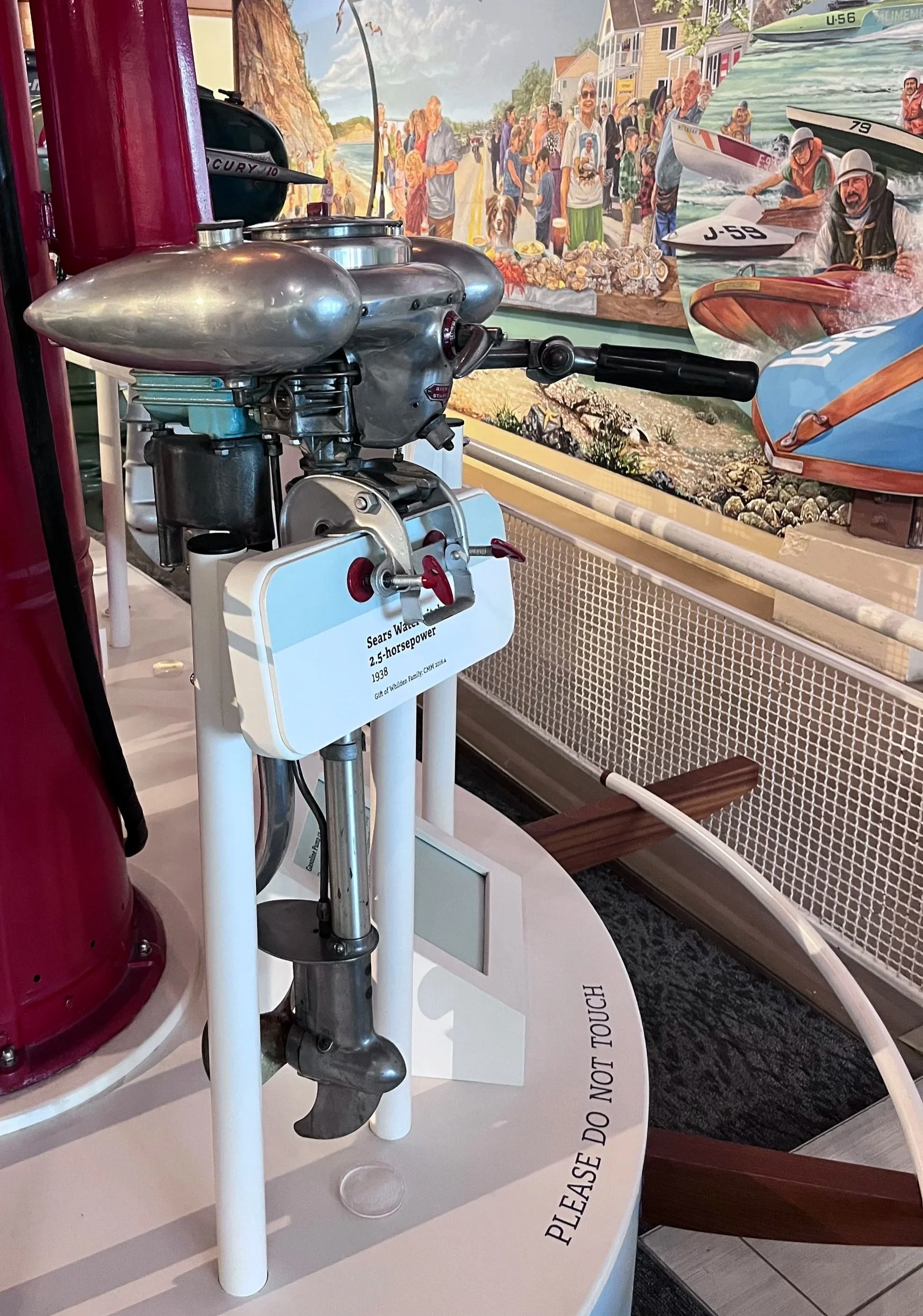
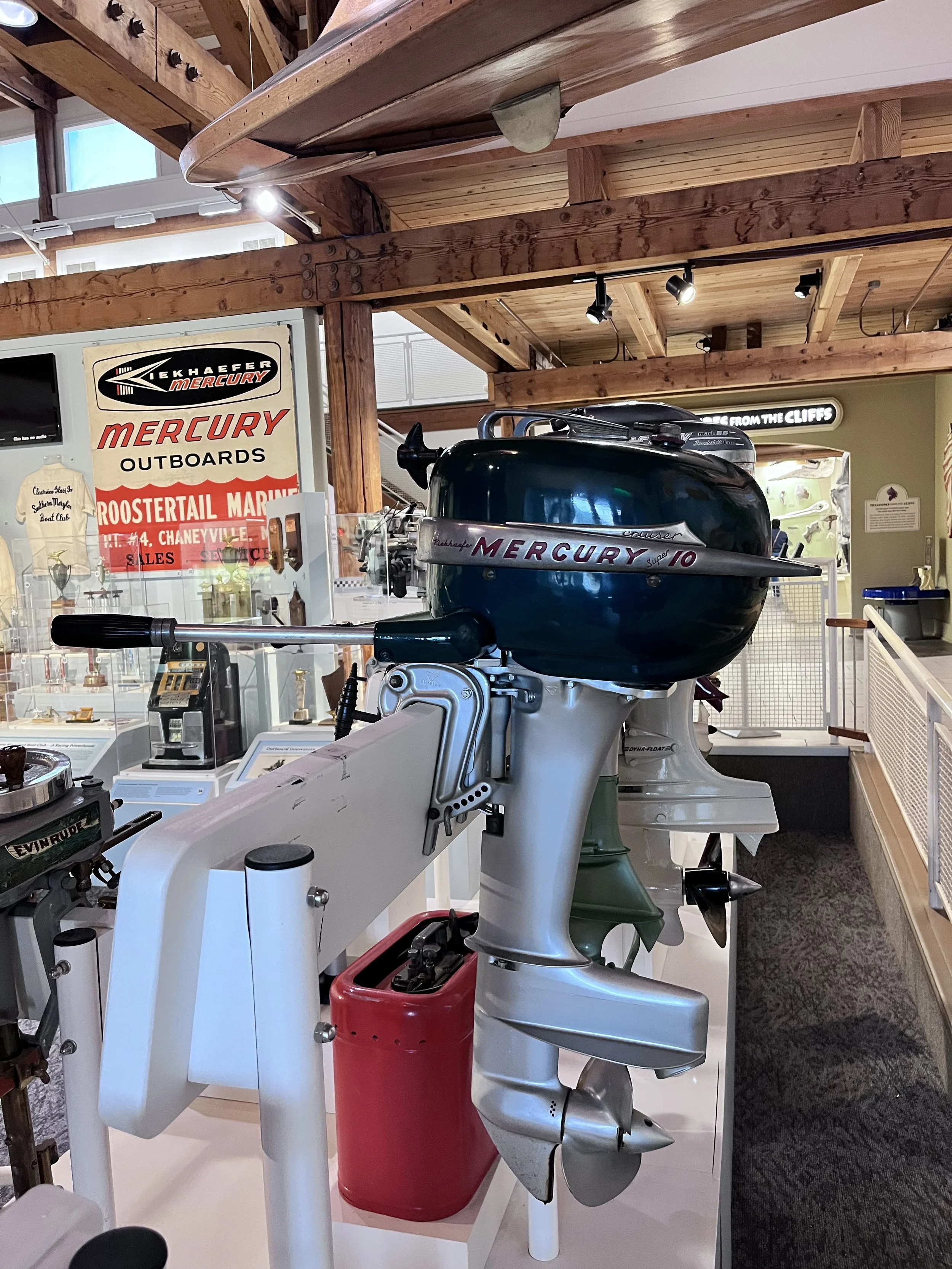
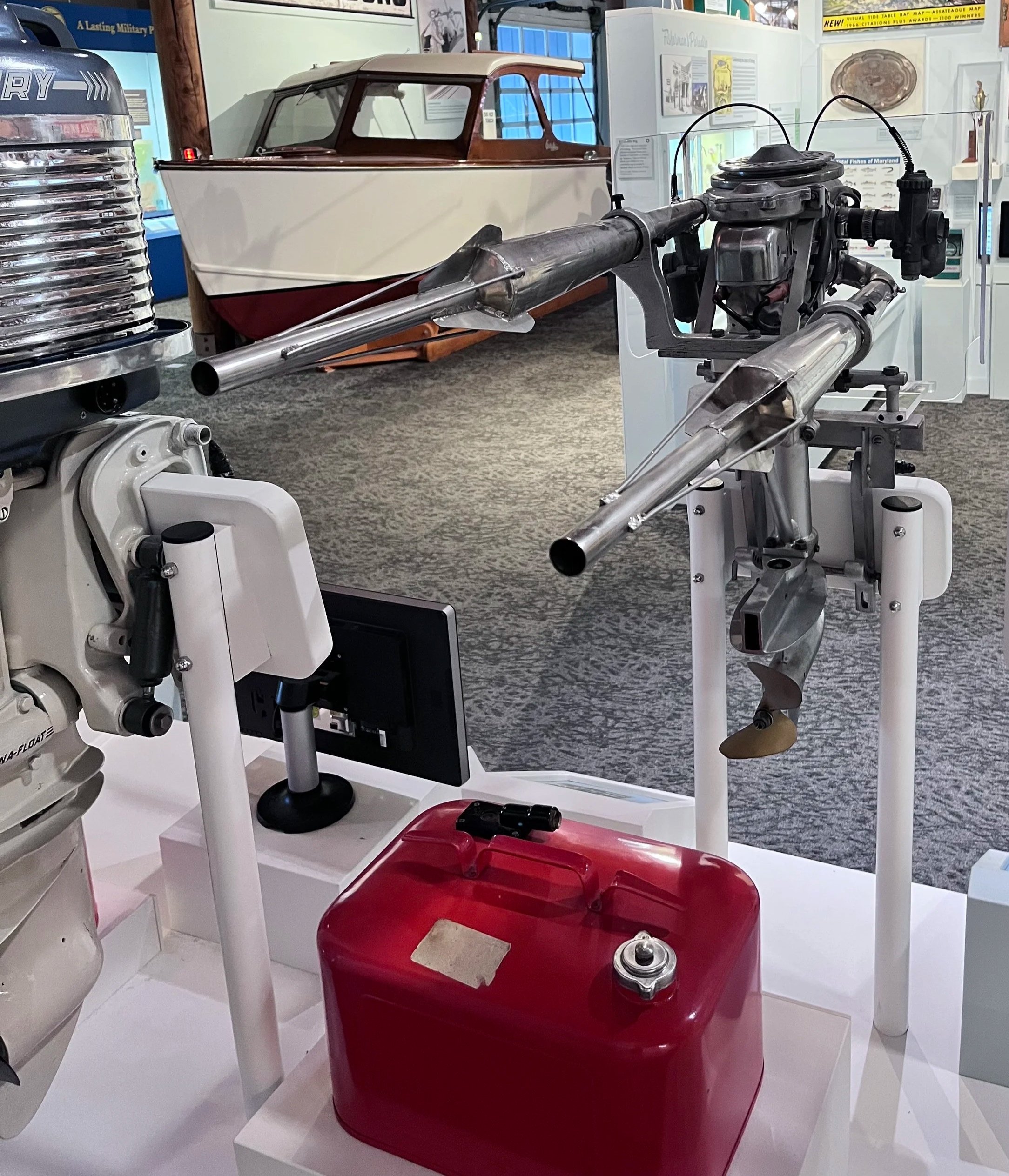
The museum had a neat little exhibition of old outboard engines. The design and style of these machines is out of this world and portrays so much optimism and enthusiasm.

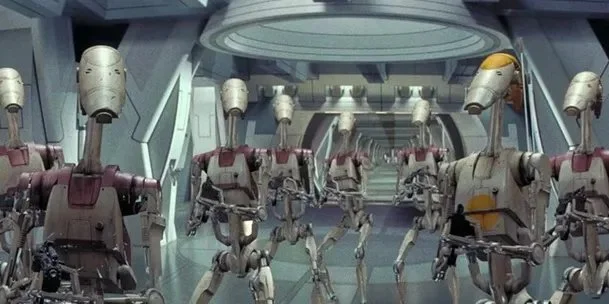
This one reminds me of a B1-series battle droid.

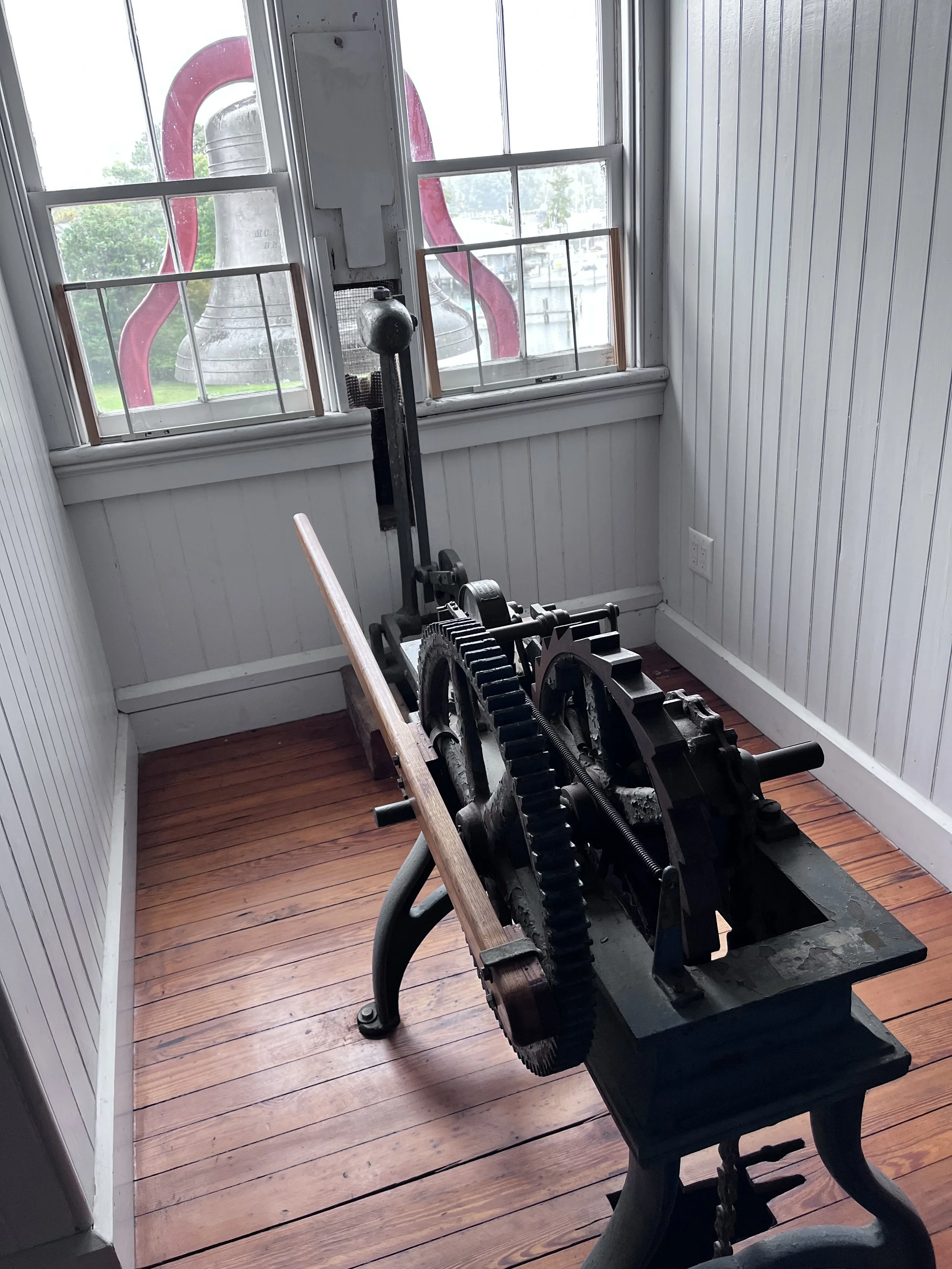
The fog bell in the lighthouse is rung every 15 seconds (as needed) by a mechanized bell ringer that needs to be rewound every two hours.

For more fun, check out cyclops_at_sea on the Instagram.

Swan Creek

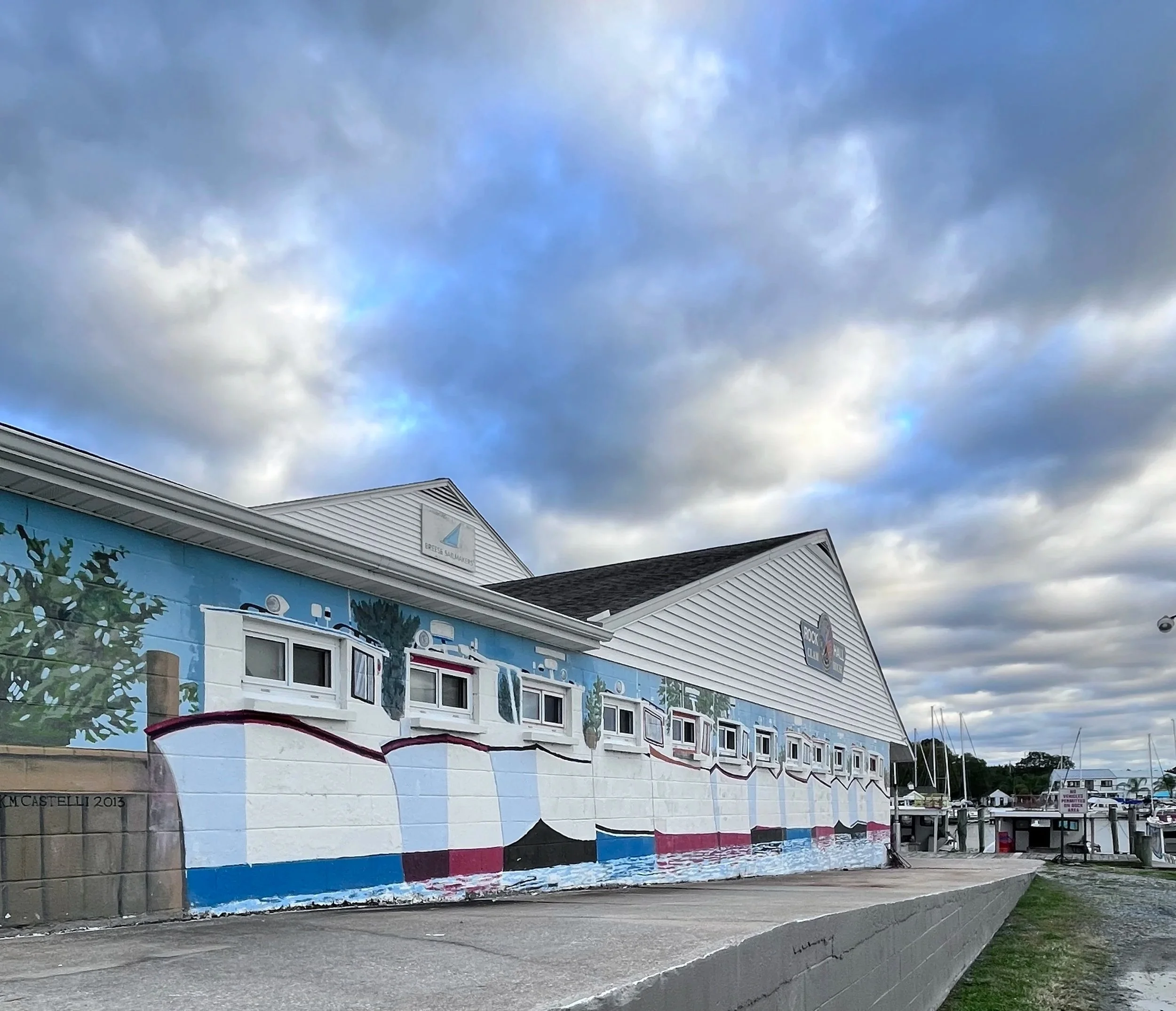
Our first stop on the Chesapeake was the delightful Swan Creek. The Bay seems to be chock-full of anchorages in creeks. The creeks are a little windy and pretty shallow. Those attributes conspire to make some serene, protected anchorage. Swan Creek was our introduction. It is just a short dinghy ride to a dock and a nice long walk to charming Rock Hall, Maryland.

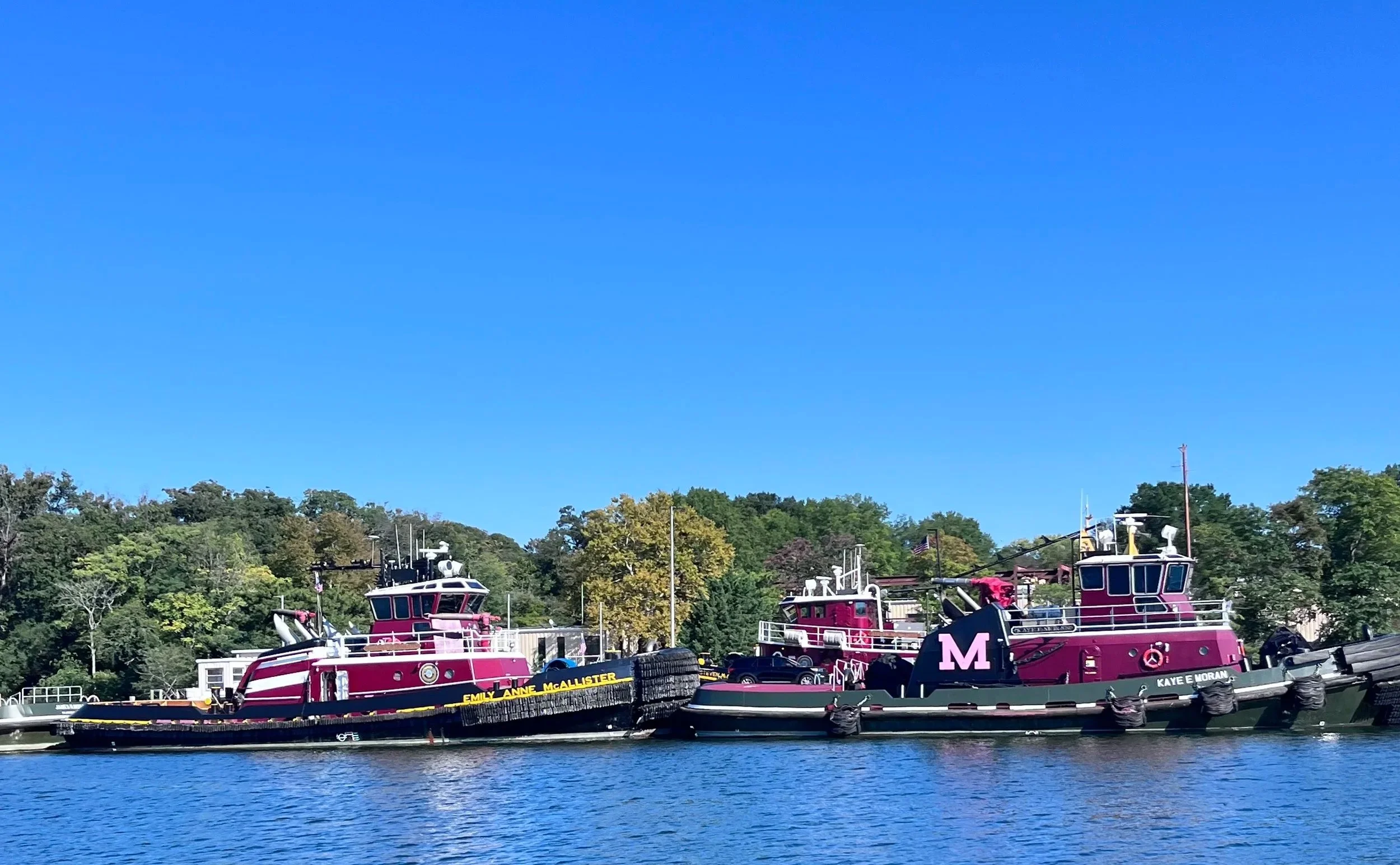
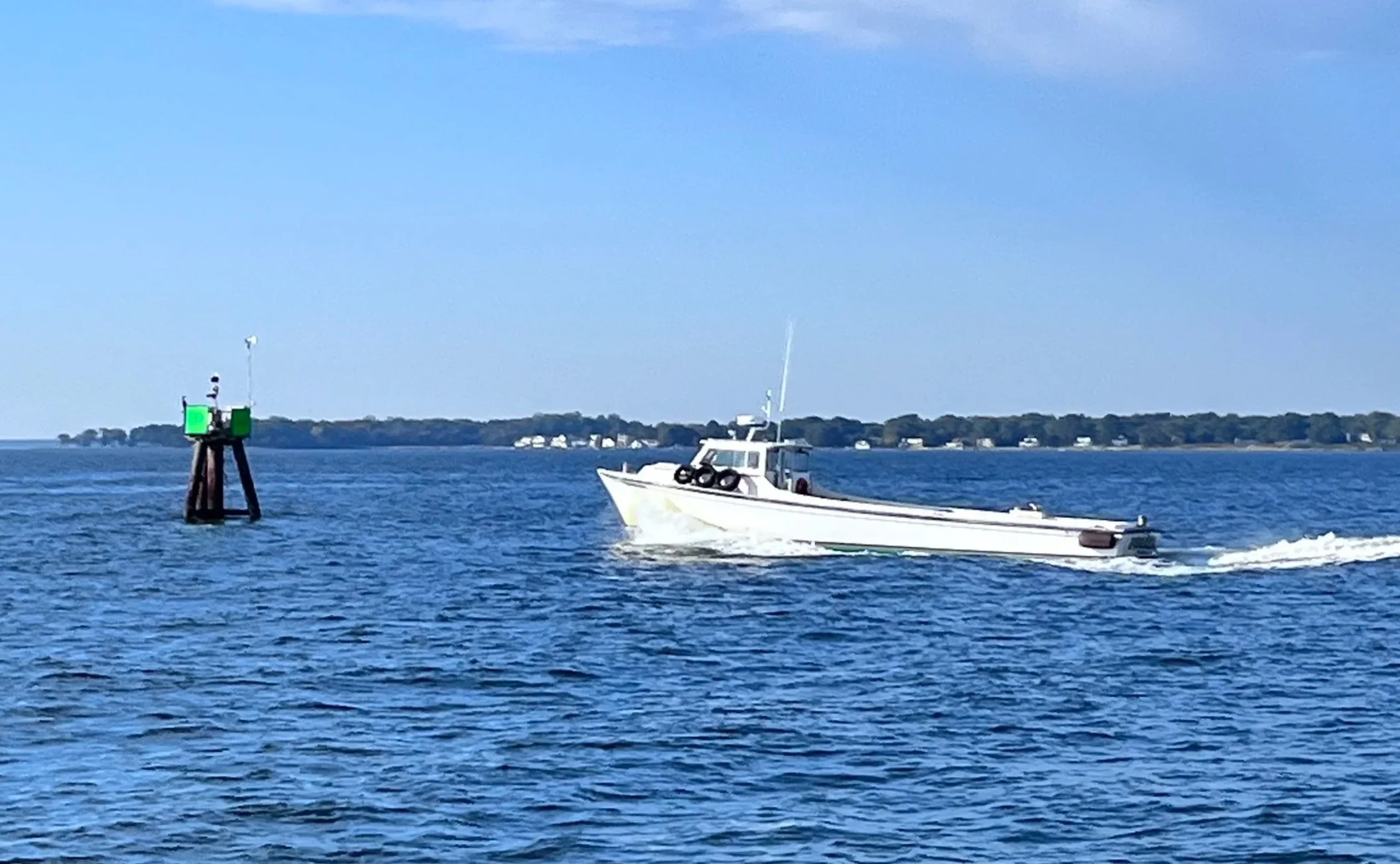
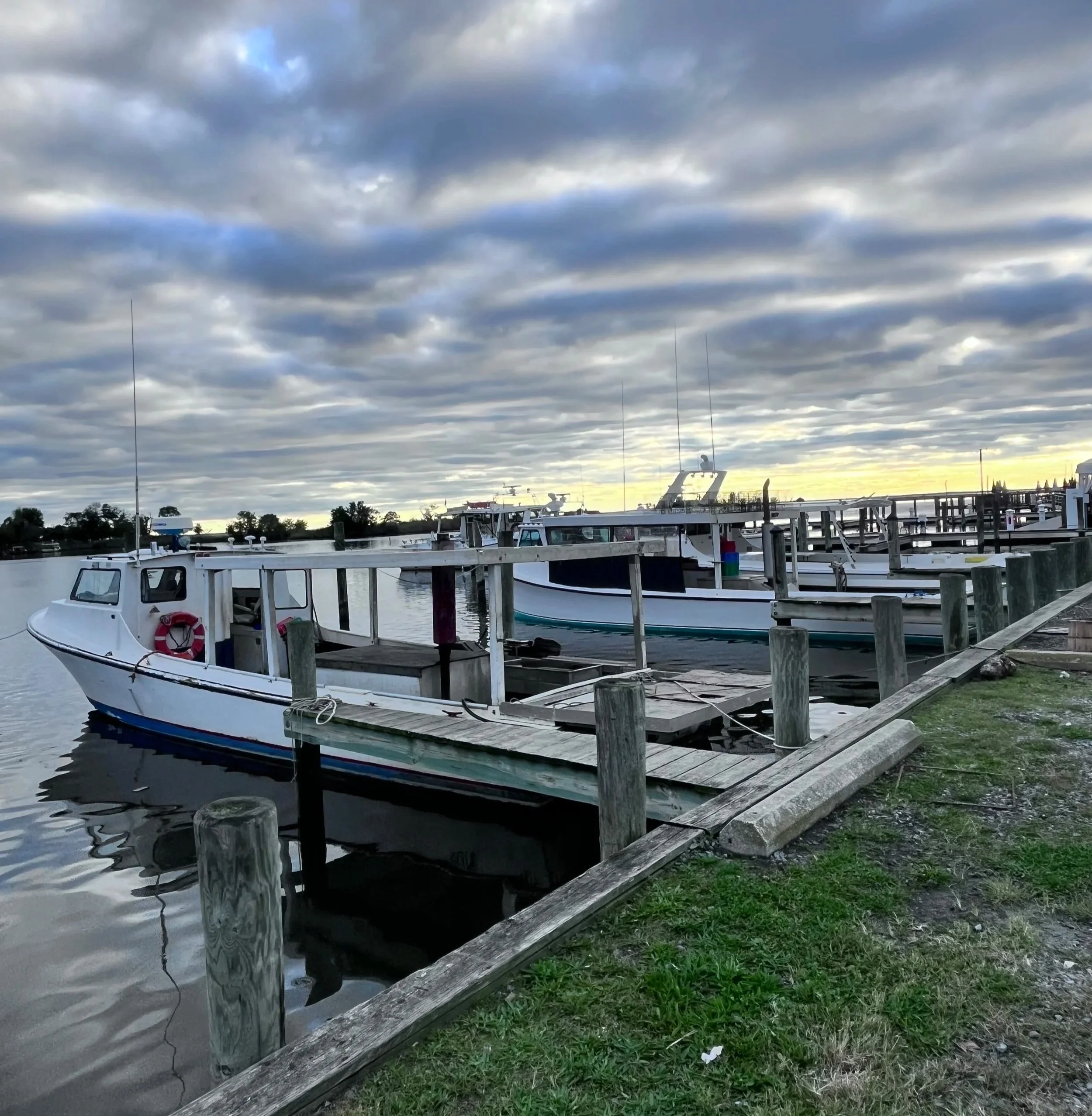
We are getting accustomed to the crab boats on the Bay. They’re reminiscent of Maine lobster boats but are also completely their own thing. Not much freeboard, they are long long long in back and have their covered cabin far forward. Like a low rider hotrod of a lobster boat. We don’t know enough about the differences between the two fisheries to explain why the boats have evolved in different directions, but plan to chat up the next crabber we meet so we can find out.

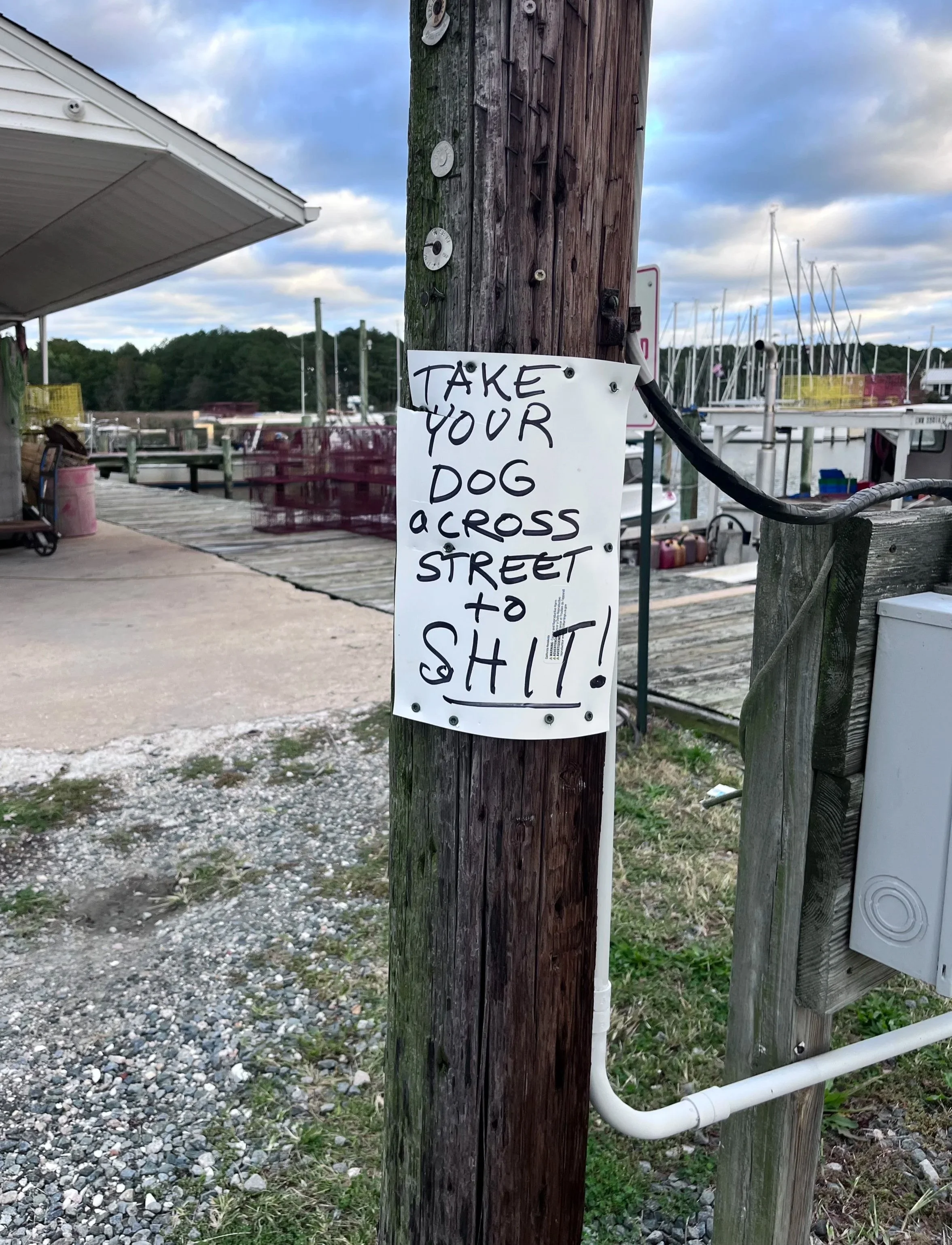
…glad I don’t live across street.

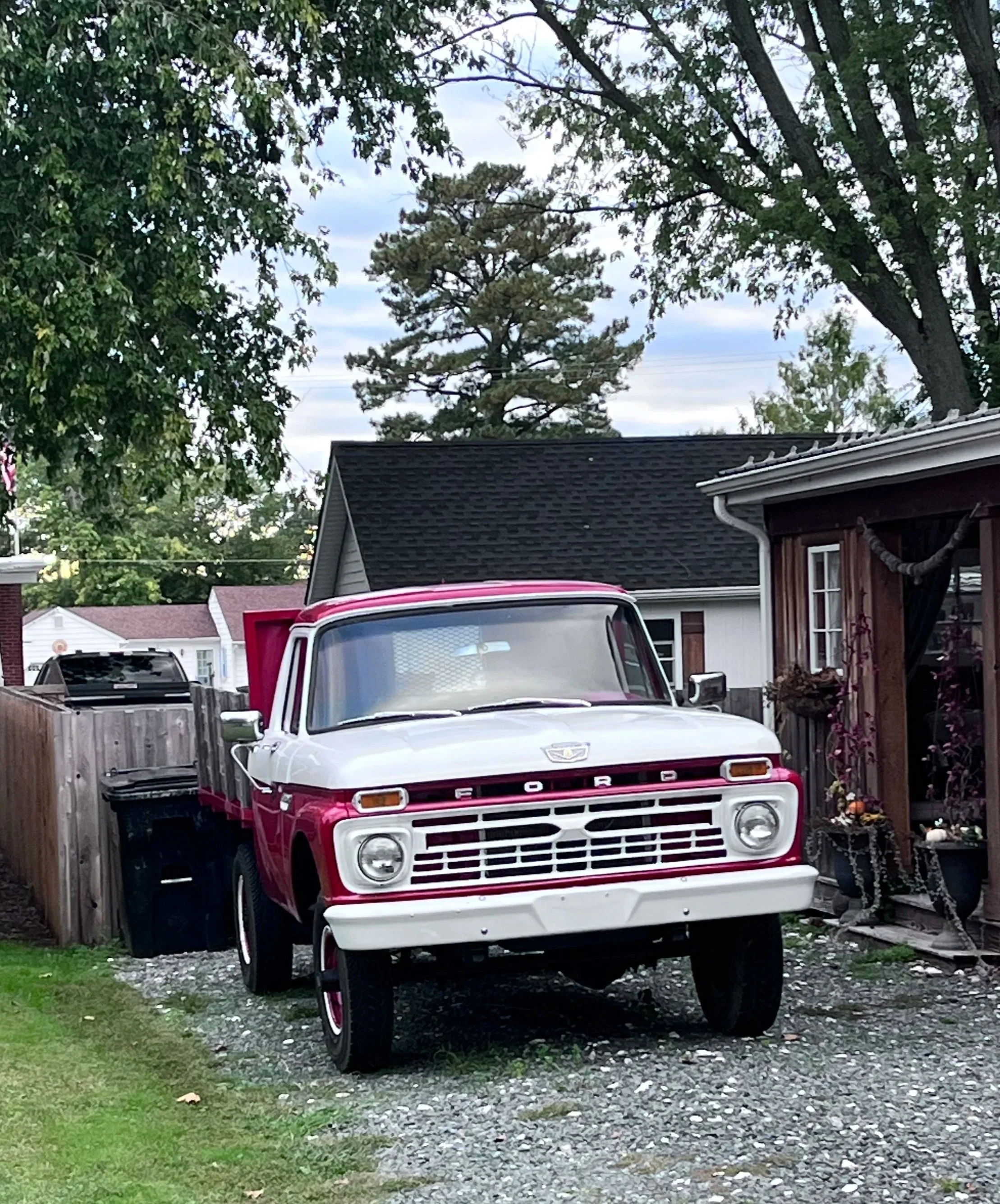
Check out this old girl!

Maintenance day

There’s been a lot going on, plenty of travel and interesting sights to report. But this post is strictly maintenance-related. We are anchored in a quiet little creek just up from the mouth of the Potomac River. In the coming days we will head to Washington, DC to visit Simon and Hannah. But for today and possibly tomorrow we are sticking here. There is a front moving through and it’s bringing big winds and rain.

We are anchored in 10’, the bottom is muddy, the tide is minimal, the protection from wind and waves is perfect. It is an excellent spot to wait out weather.

I woke up at 5:30am today and realized that the beautiful 80 degree day we enjoyed yesterday turned to a wet and windy 48 degree morning. And I left the pilothouse hatch open a bit last night. No harm done, but quite a rookie mistake.

So today I got to some glamorous tasks: oiling the teak, cleaning the windows, and fussing with a ball valve. Ellen has been doing some painting and building on a project we are surprising the newlyweds with, so don’t mention anything to them.

Yesterday I was calculating how much longer we can expect the raw water impeller to keep impelling the raw water. There’s no way of knowing, but when I looked at it in August it seemed fine. But it is nevertheless overdue for replacement. When/if it fails we will be without an engine until it is replaced, so there’s a non-zero chance of catastrophe.

The raw water impeller is the piece of equipment responsible for pumping cool ocean water through the engine so it doesn’t overheat. Boats don’t use radiators to cool their engines like cars do, instead they pump in water and use that to cool things down. The impeller is the heart of the pump and because it is made of rubber, it is a wear item.

Ok, so I’ve been calling it a tool like it is some complicated piece of equipment, but the removal tool is just that big bolt that gets screwed into the end of the impeller, pushing it out of the water pump housing.

The August inspection was ostensibly an attempt to replace the impeller with a new one, but I was stymied because I didn’t have an impeller removal tool. I ordered one of them and although it is on board, along with several spare impellers, I have been putting the job off for months. I’ve probably replaced 15 boat impellers over the years, it’s not a difficult job until it is. And if it goes poorly, the engine can’t run until the task is done right. This water pump is in a pretty tight spot that doesn’t fill me with delight or optimism about the task.

How to replace an impeller: close the ball valve, remove the four bolts holding on the water pump cover plate, use the tool to remove the impeller, install the new impeller, replace the cover plate, open the ball valve, hope nothing leaks. What could go wrong?

Another reason I’ve been putting the job off is that the ball valve doesn’t shut completely. The ball valve stops water from coming in and sinking the boat while I have the water pump apart to remove the impeller. The valve is 21 years old and reluctant to close fully unless I whack it with a rubber mallet, even after a good malleting a trickle of water still makes its way in. The trickle isn’t a problem, but it creates a salty mess under the engine and is irksome to the person fussing with the impeller.

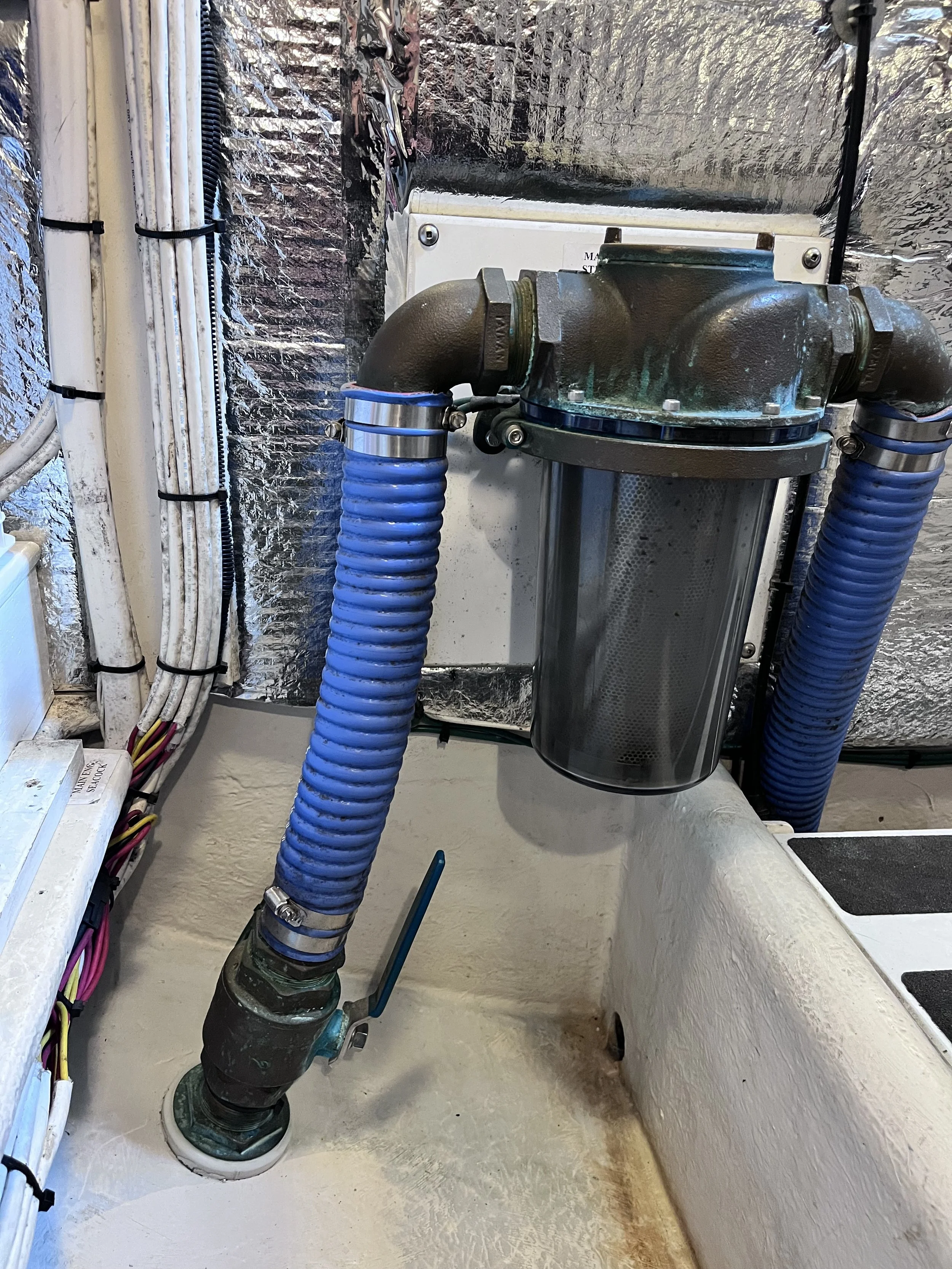
That’s the ball valve at the bottom left. The big tank-looking thing is the sea strainer. It keeps fish and seaweed and whatever else gets pulled in from making its way to the engine. The truly remarkable thing about this setup is that, unlike the water pump, everything is easily accessible.
To replace the ball valve (I ordered a replacement, it is inbound to Simon and Hanna’s place in DC) the boat needs to be hauled out of the water. Removing the valve while in the water would leave a 2” hole in the bottom of the boat. The internet has ideas about how to change a valve while in the water, they involve a swimmer going under the boat with a plunger that gets suctioned over the hole, then the valve gets unscrewed and replaced, and the plunger gets removed. Sounds doable, sounds like a fun challenge, but definitely not something for this murky Potomac water so I’ll wait until Florida at the earliest.

For the meantime I will exercise the valve. (That just means I will open and close it repeatedly in the hopes it becomes more compliant.) And I’ll probably wait until we are anchored in DC before I mess with the impeller. It should be pretty easy to remove using the new tool, but I’m not sure how easily I will be able to install the new impeller.

Up the river

Brigantine was a fantastic stop while we waited for ideal weather to continue down to Cape May and then up the Delaware River. The timing of each leg was important, first because we wanted light winds from the west for the run down the coast, second because we needed to ride an incoming tide for the trip upriver. Mission accomplished.

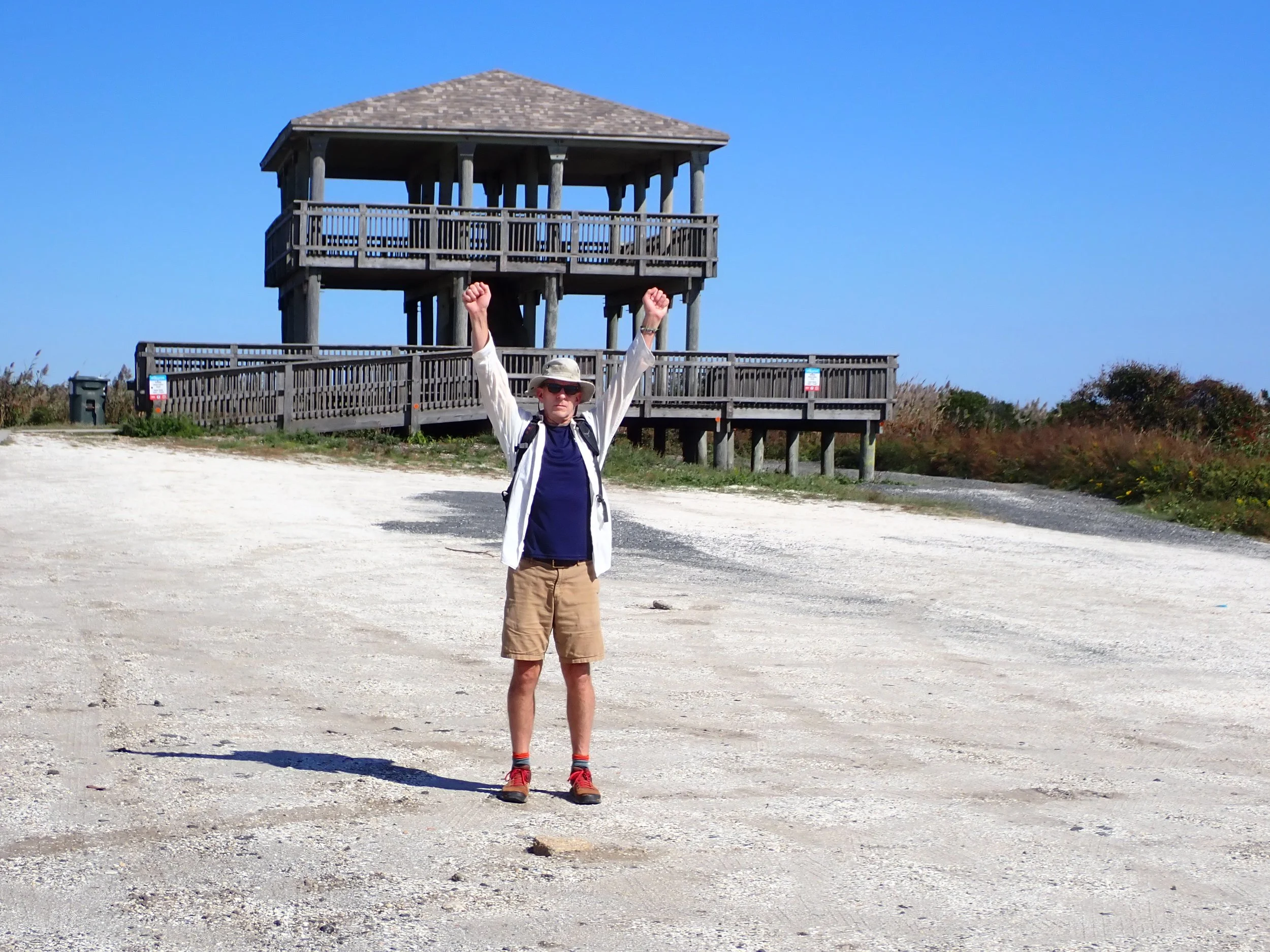
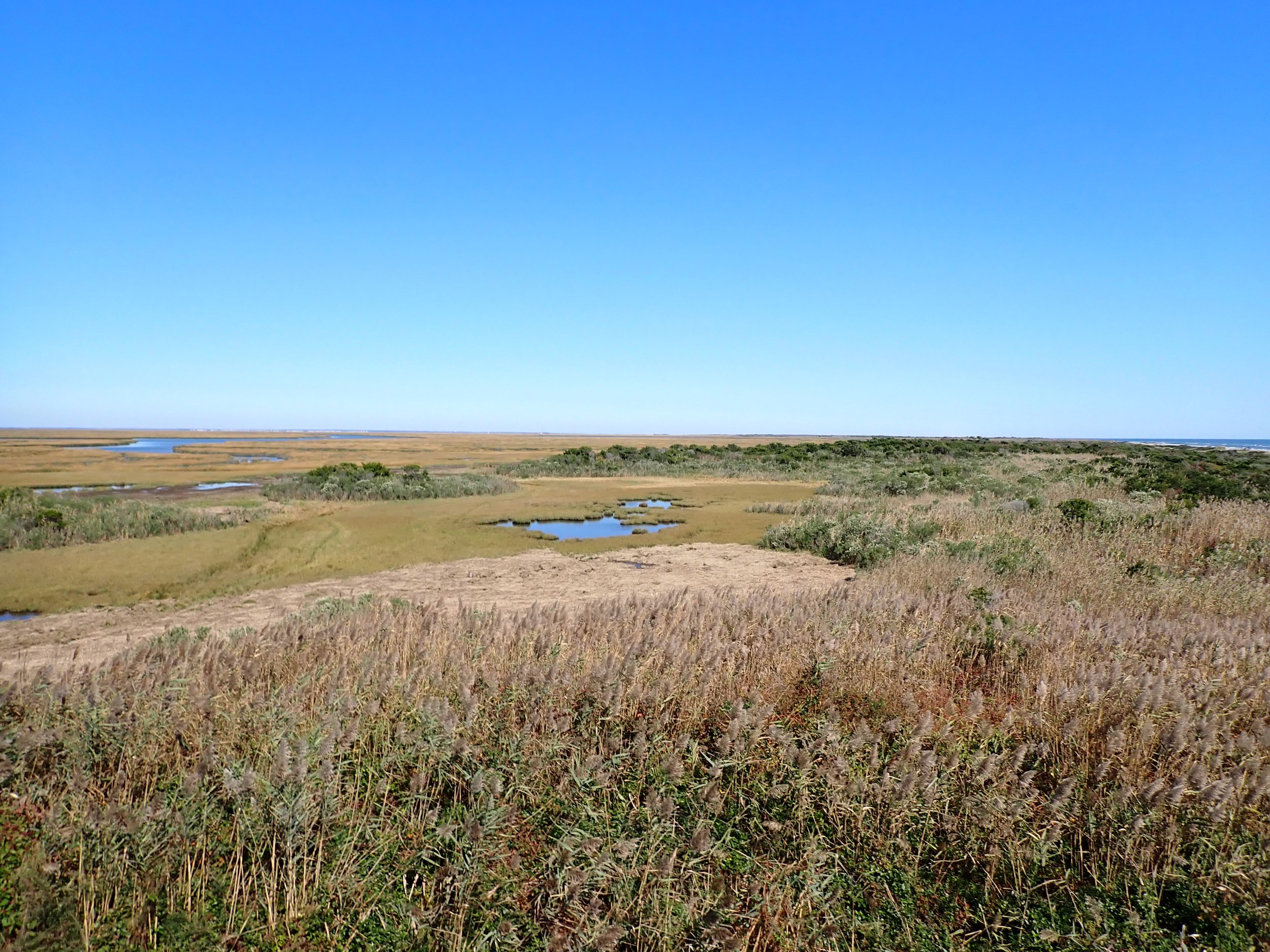
Went for a long walk down the beach in Cape May to this observation platform. Ellen said it needed to be taller but it did provide beautiful views of the marshes. The New Jersey seashore is beautiful.

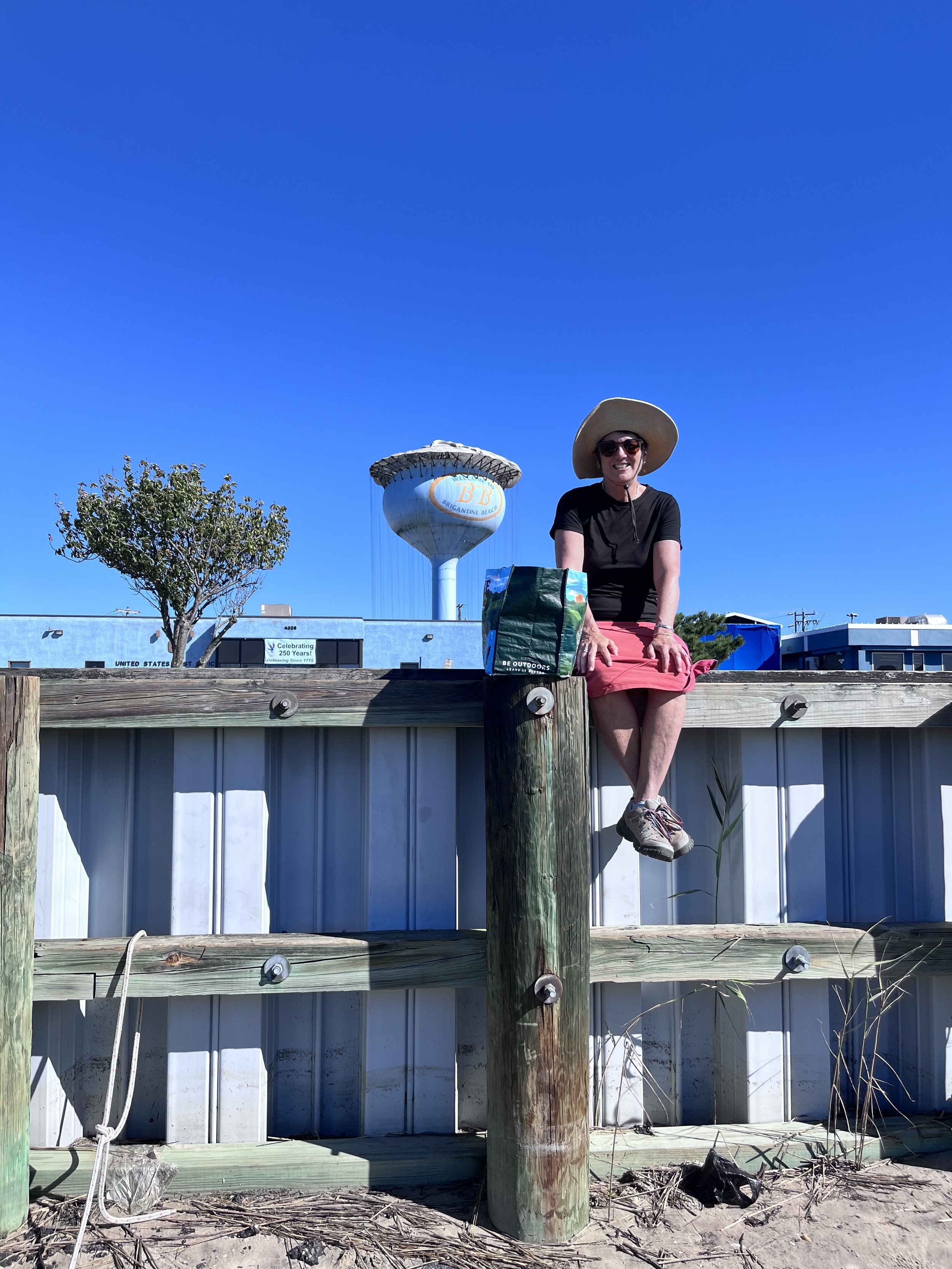
Hat models.

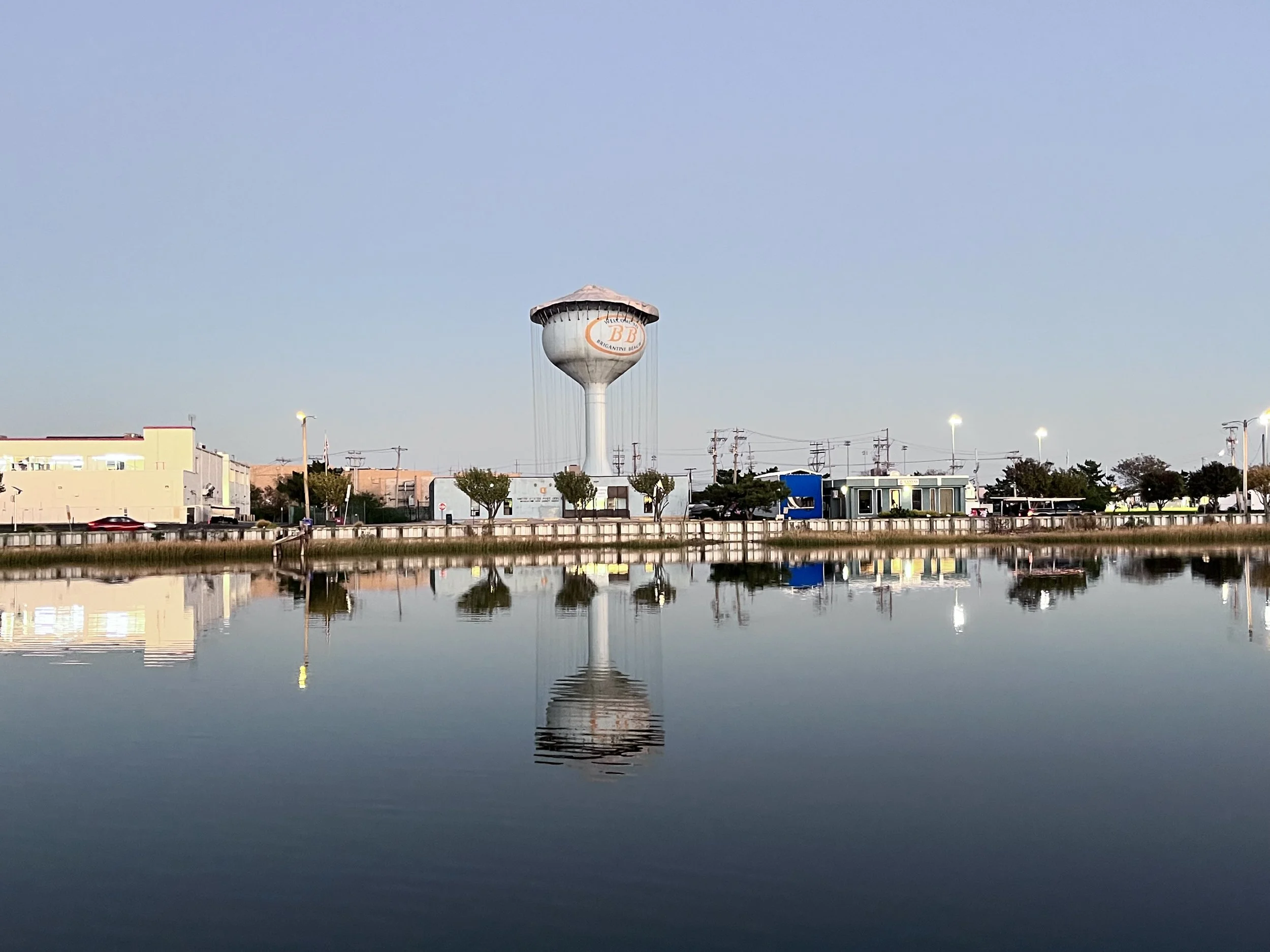
We aren’t sure why the city put this hat on the water tower. Maybe it’s an early Halloween costume – this part of the country seems to be getting very excited for the holiday.

Cape May is a surprisingly lovely town. It claims to be the oldest (first?) seaside resort in the US, yet it somehow manages to avoid being tacky and garish like just about every other seaside resort. (Looking at you Atlantic City/Ocean City, NJ/Ocean City, MD.) We went for a nice long walk through town but neglected to bring a camera so you will either have to take our word for it or book a trip and see for yourself.

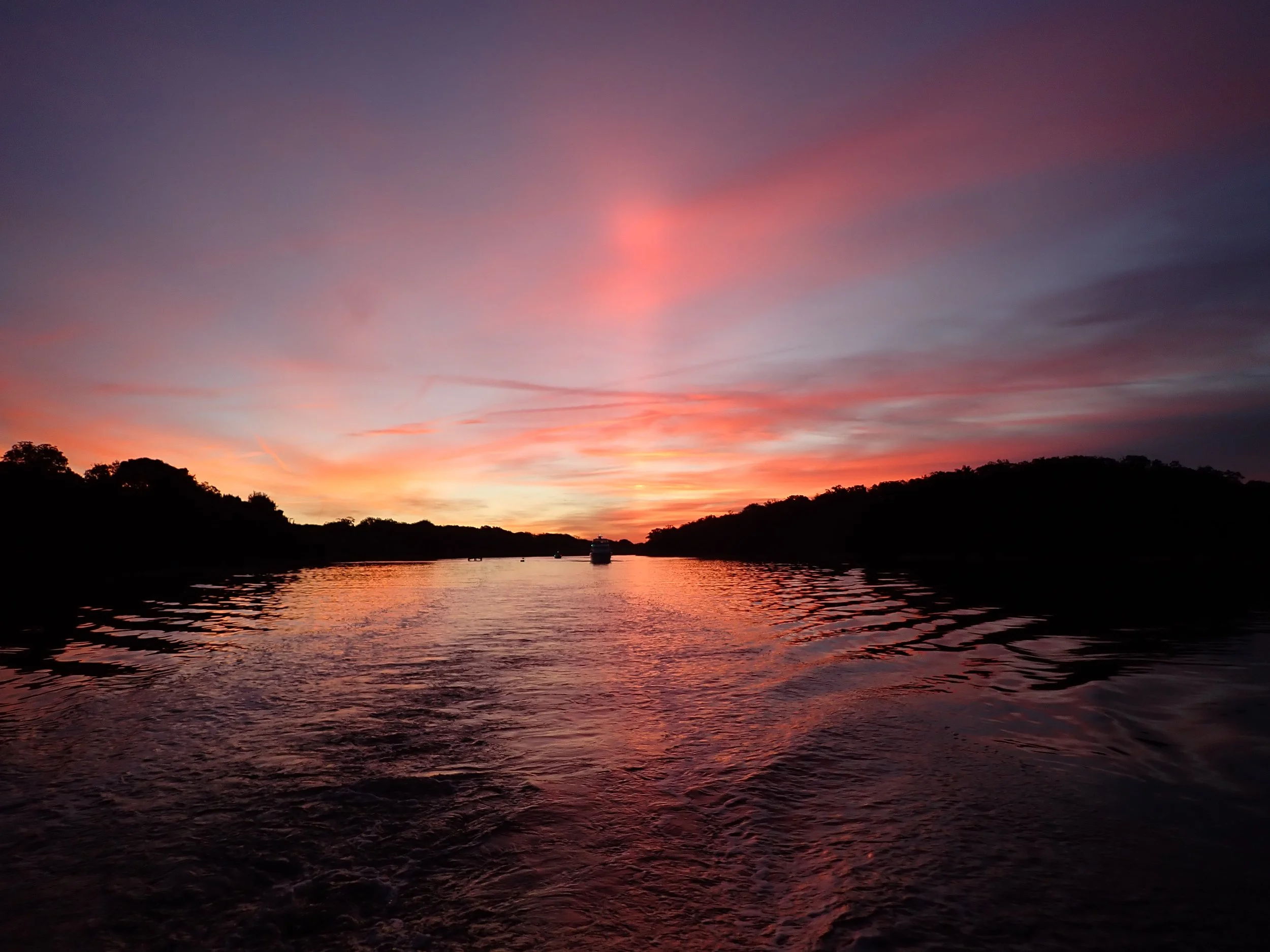
The tide turned upriver early in the morning, so we raised the anchor at Cape May and headed down the channel and Cape May Canal in the dark. It was not so much scary as intense – lots of very close concentrating and double-checking our route. Went without a hitch, and we got this lovely sunrise to see us out of the canal and out into the mouth of the Delaware River.

Sunrise over the Cape May Canal.

NJ has plenty of bucolic loveliness.

We caught the tide in the river and had a boost of 2-3 knots the whole way. The journey was uneventful, although we really enjoy these long days underway. As I mentioned before, it is tons of fun seeing the country by tugboat.

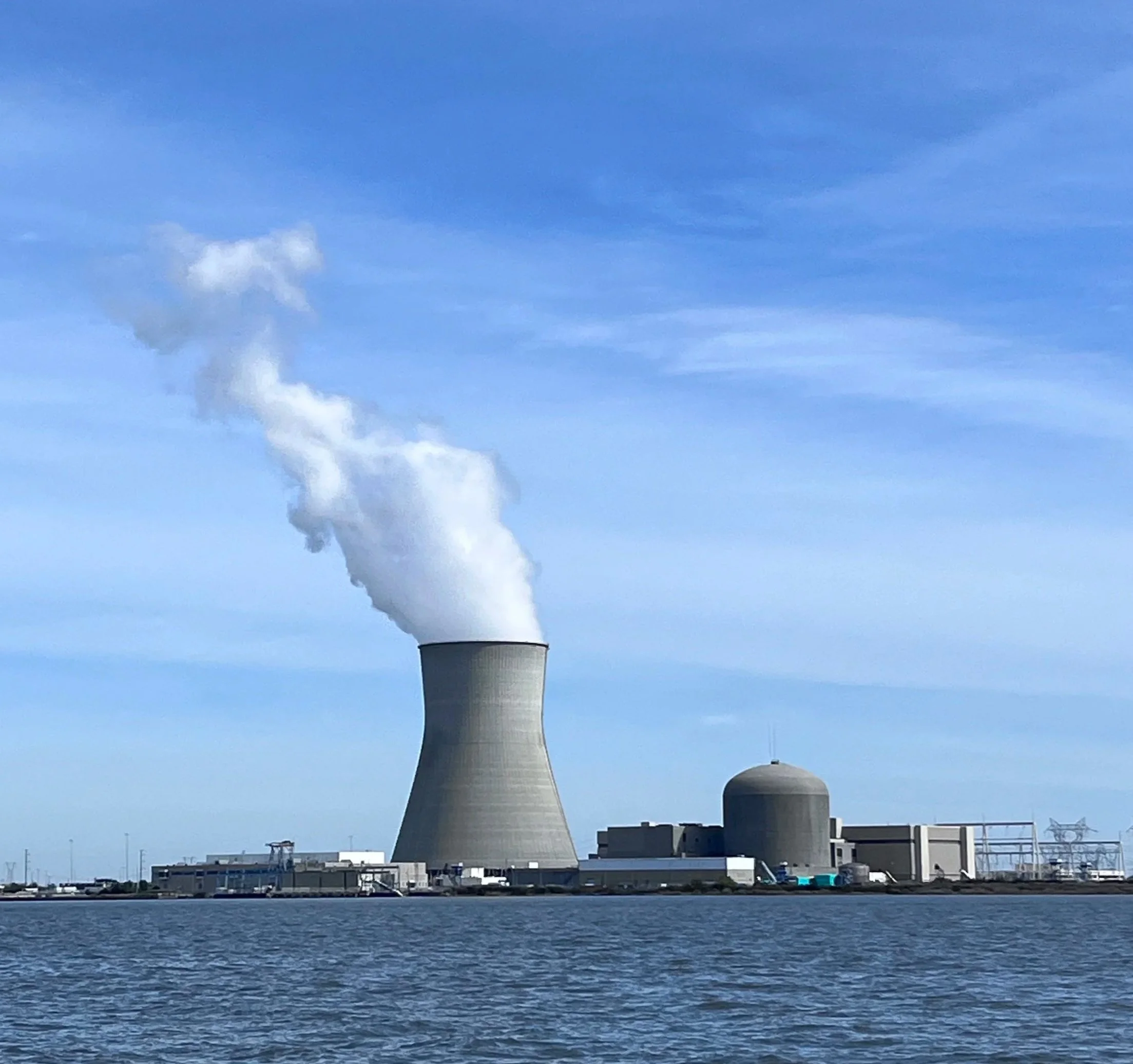
Salem Nuclear Power Plant on the Delaware River.

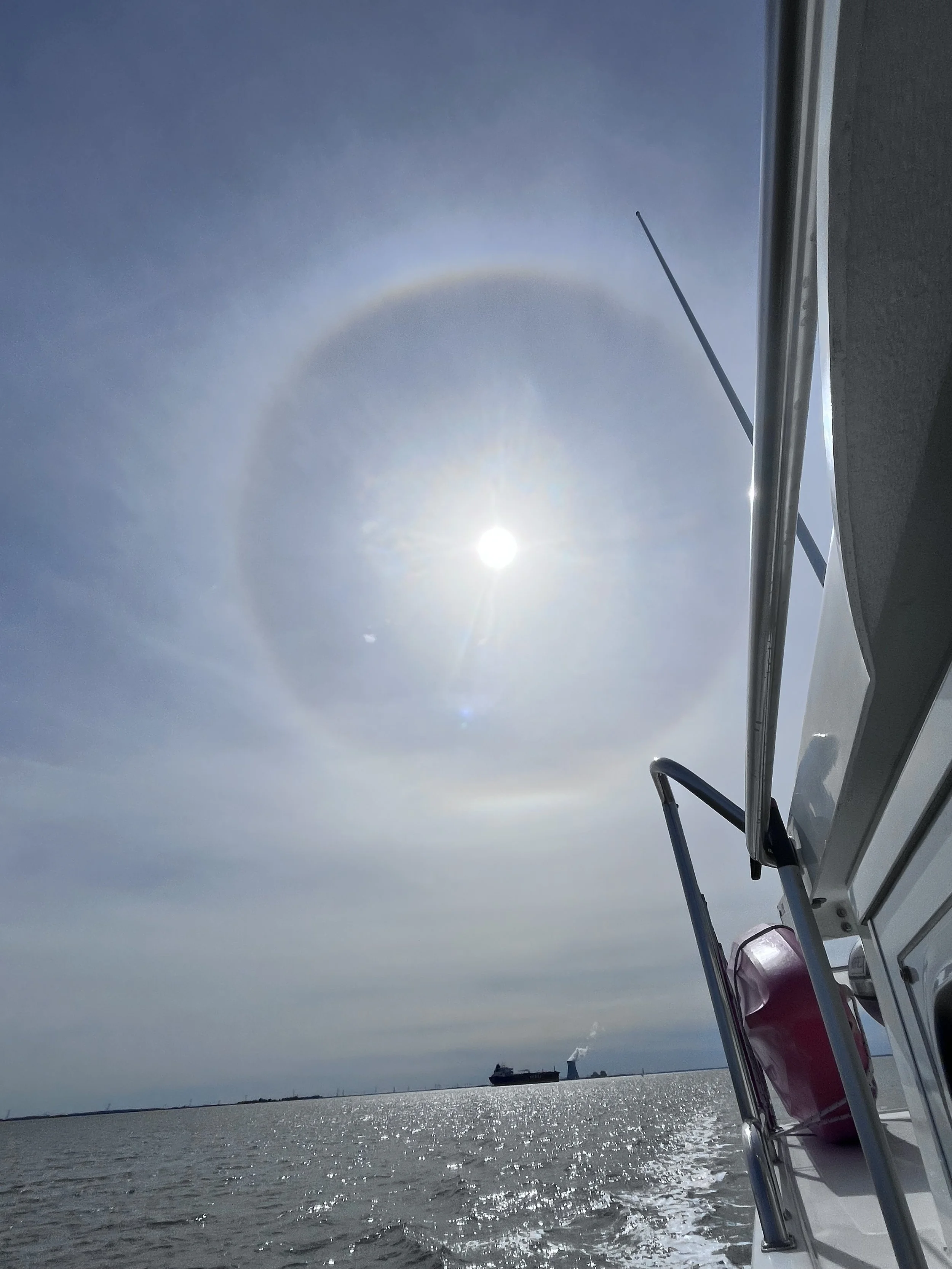
A fellow mariner got on the VHF to advise everyone to take a look at the delightful sun dog.

We got to the C&D Canal by early afternoon and made our way to Chesapeake City. We expected a sleepy little basin where we could anchor and ride out the wet and windy remnants of Hurricane Isaias. What we got was a tiki-bar, Donzi-boat, jet-ski, muscle-shirt paradise. Fun to observe, and it will not sadden us too much to leave tomorrow morning and find ourselves a quiet anchorage up some little creek in the Chesapeake Bay.

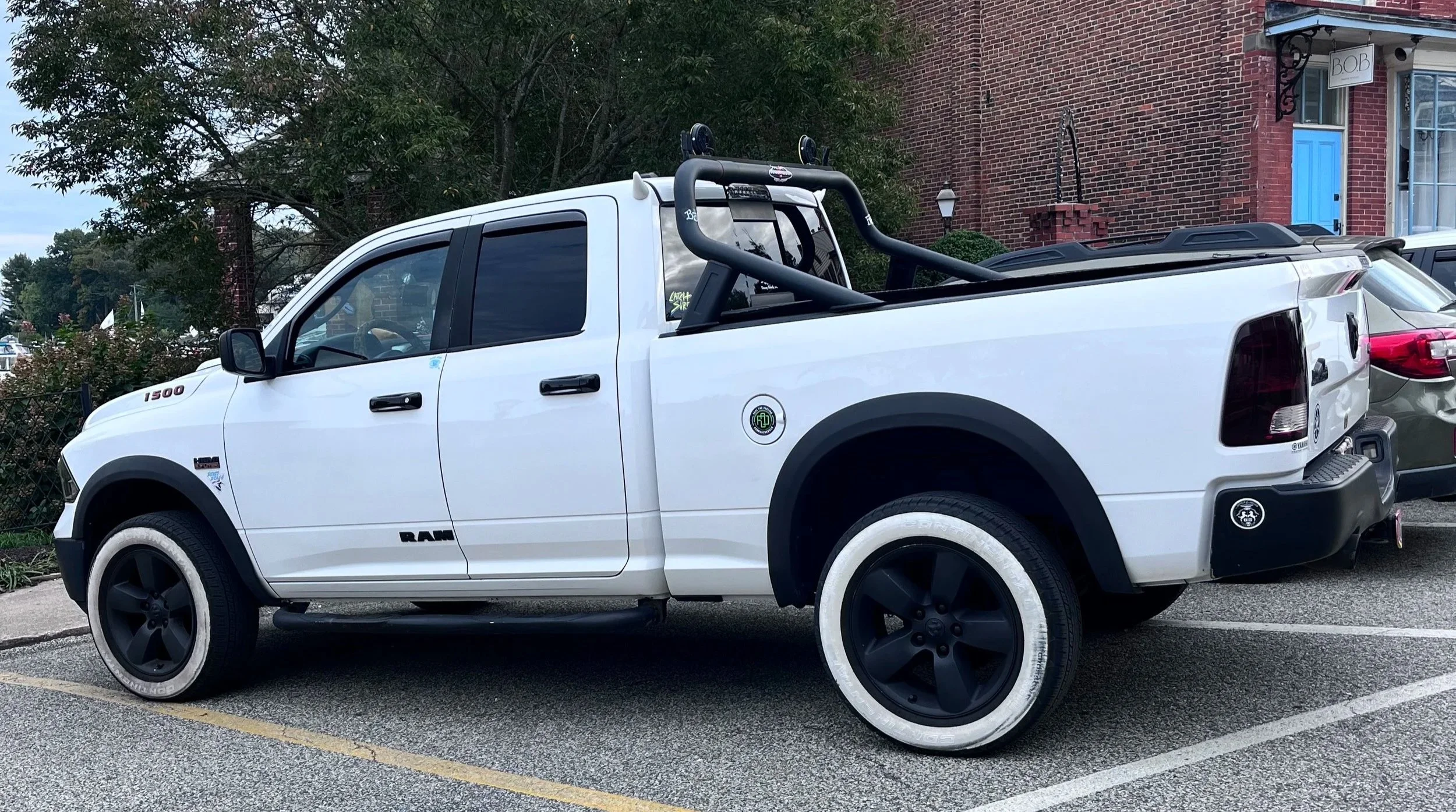
The fat whitewalls are an aesthetic choice, to be sure. But why go to all that expense and not bother to keep them clean? (The crooked parking job is likely a skill issue.)

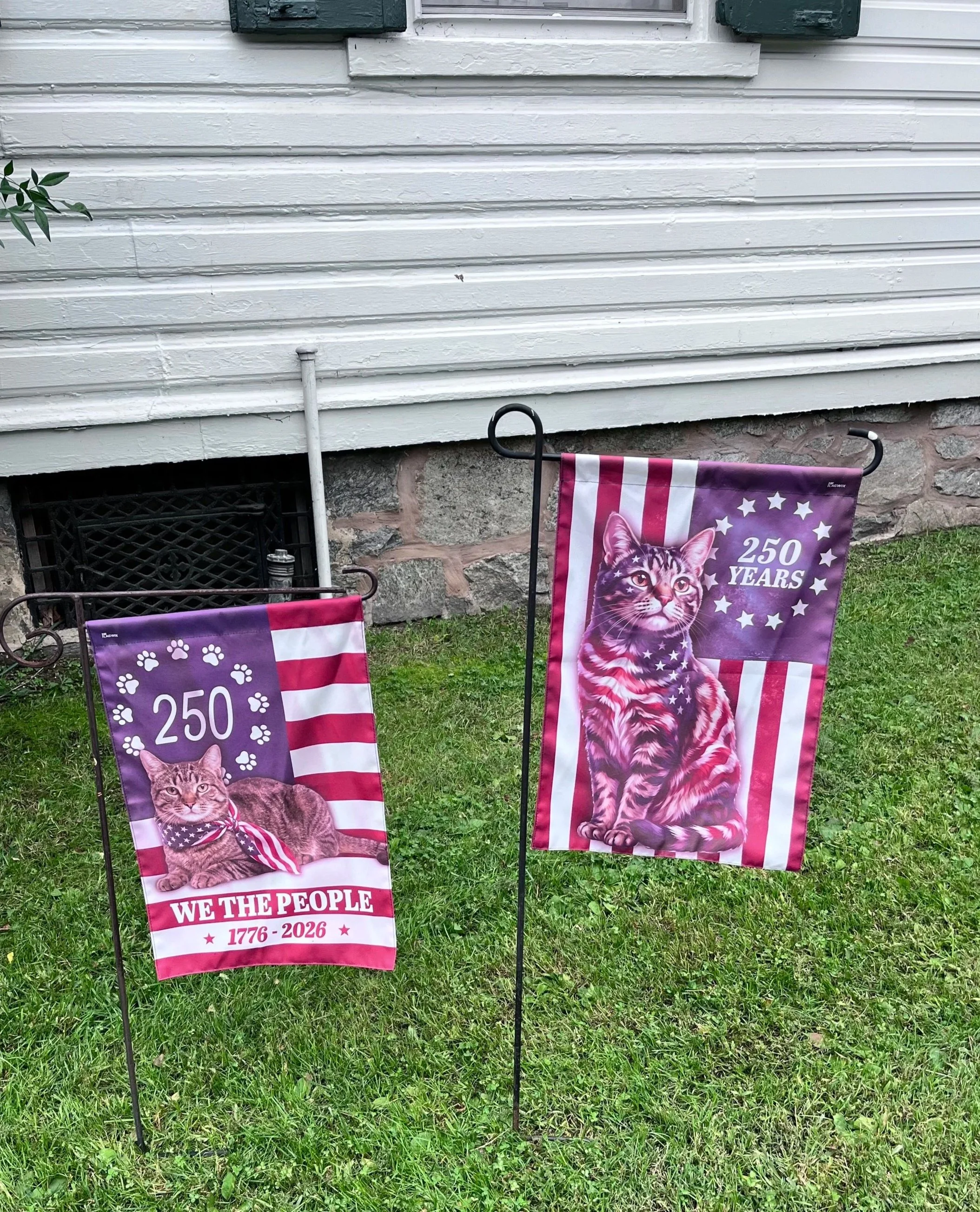
We the people? Those are not people.
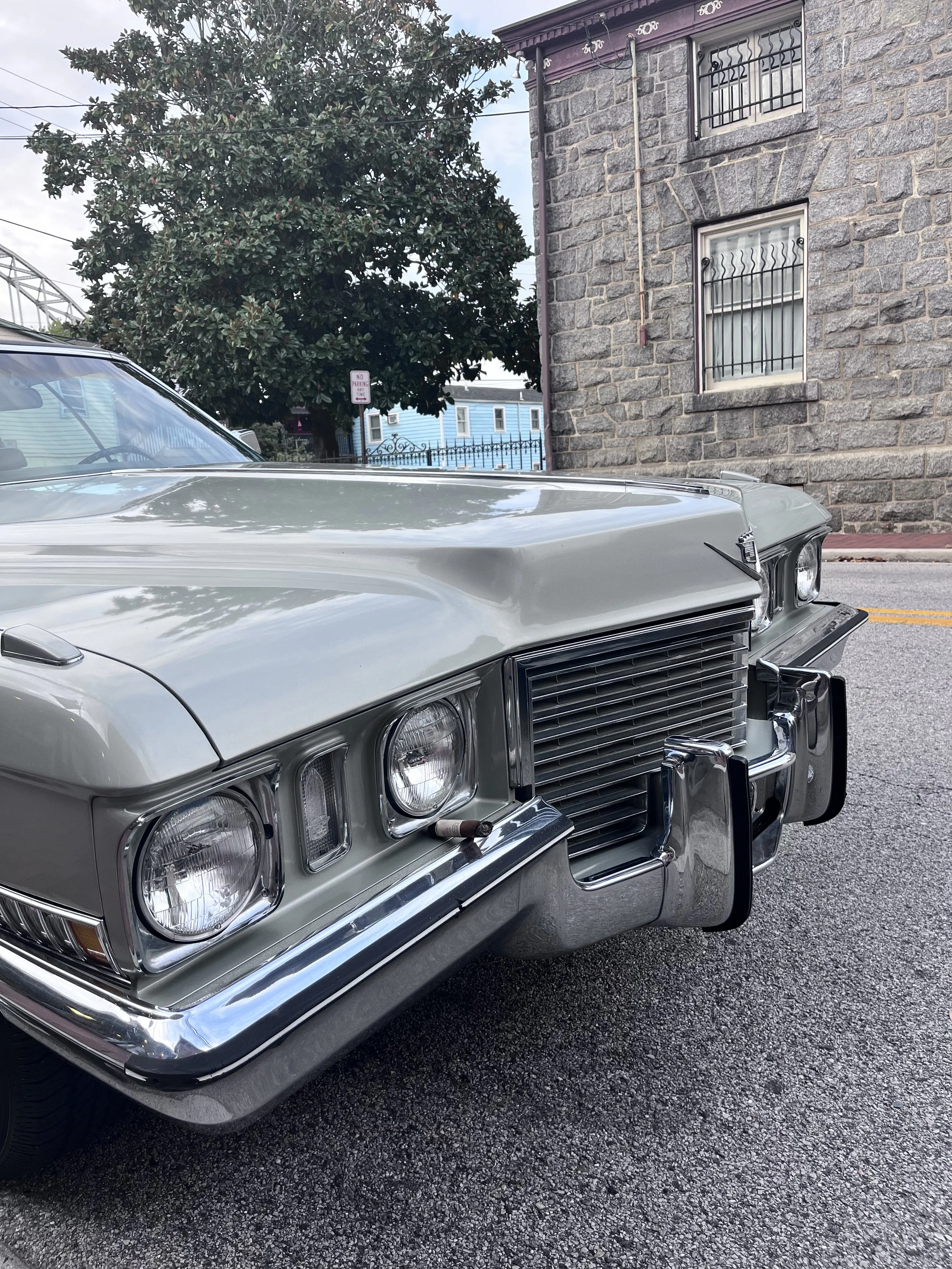
Sedan DeVille, baby!

These two boats had questionable anchoring skills. The white one put out about 20’ of chain in 11’ of water. We let out closer to 80’ and were so concerned they would drag anchor and hit us in the night that Ellen went over by kayak with some friendly advice. Both boats ended up moving out of the anchorage to spread their chaos elsewhere. Friday was so overcome by the whole situation she collapsed.
Cul-de-sac

Well, we ended up leaving Great Kills Harbor before first light yesterday and had a perfect run down to Atlantic City. This leg of the coast is the one that was giving us the most to think about because it is a long long day - 86 miles, and has the fewest options to bail out if the weather deteriorates. But we’ve been watching the forecast and tides for over a week, and yesterday turned out to be the day. We had both the wind and the waves at our back, and they made for an easy and speedy passage.

Once at Atlantic City the options are basically to drop the anchor at the side of the channel or to head into a narrow shallow passage that dead ends in a nautical cul-de-sac. We decided to risk the shallow water because we were coming in on a high tide. Now we are securely anchored in a basin that’s about 100 yards across, ringed by houses, and affords complete protection from wind and waves.

There is a grocery store, Post Office, laundromat, hardware store, nail salon, and all the NJ strip mall excitement you would imagine right near where we land the dinghy. Extremely convenient.

This morning we dinghied about two miles to Atlantic City itself and went for a fantastic run down the Boardwalk. Afterwards we showered and I had a quick court Zoom. Now it’s off to the laundromat for the afternoon’s entertainment.

We plan to stay here for another two nights or so, waiting for another fine day for the ride down to Cape May. That schedule sets us up for a fair tide to take us up the Delaware River to the Chesapeake & Delaware Canal on Sunday.