Rainy day

I used this rainy Sunday we are having to take care of several pressing issues. Slept late. Made breakfast for everyone. Wired the propane gas detector. Rigged the umbrella.

The wiring was a little daunting before I read the instructions (go figure). But after some reading and thinking, it all made sense. Then I tried to figure out where to tap into the solenoid wires but couldn’t trace where they ran from the solenoid in the stern to the fuse panel in the cabin. 

Spaghetti mess.JPG

Then I realized all I needed to do was find the power wire to the solenoid (easy) and isolate the ground from the solenoid (challenging). In a thick bundle coming into the back of the panel, there were at least six identical-looking ground wires, any one of which could have been the wire I sought. Had to figure out which was the one from the solenoid by trial and error. “HEY! Why did the lights just go out? Is that lightning?” “No, it’s just Daddy.”

Now that the wires are all squared away, the sensor works properly: it won’t allow the gas valve (solenoid) to turn on and let gas flow from the tanks to the stove if it detects propane at the sensor, which is installed in the bilge.

Gas Valve.JPG

I also rigged the hatch umbrella. It’s a simple canvas construction that we can set up over an open hatch. The umbrella (like all umbrellas) keeps the rain off while letting fresh air into the boat. In the past we have had to close all the hatches and ports when it rains. That leads to a muggy, stuffy cabin. No longer! 

(Hatch Umbrella is to Wind Scoop as Foul Weather Gear is to Sunglasses)

Rain umbrella.JPG

Met Simon and the in-laws and brother-in-law Richard for dinner tonight at the Broad Arrow Tavern in Freeport. Now we are all feeling a little overloaded on delicious food. 

Cruising tip of the day: There’s no point in bringing magnets. I got a great little LED light with a bendy gooseneck and a magnetic base. But because everything on a boat is aluminum or stainless steel, there’s nothing to which it will stick. Also, the compass and computer don’t really like magnets. So keep that stuff ashore.


Sunny day fun

Wind scoop 2.JPG

Practiced with the wind scoop yesterday. It sends a delightful breeze through the boat. Yesterday was a good day for getting a breeze because I was fixing a leak in the head vent hose. The composting toilet works great and is actually pretty fun to use. But it has a little computer-type fan pulling air through the compost bin (shit box) and exhausting it out the transom. 

Rubber gasket.JPG

I installed the fan on a bulkhead in the aft-lazarette in an attempt at keeping it away from seawater. But installation #1 had some air leaks so that locker filled up with some pretty impressive odor. And then because of the fact that the aft-cabin where Moss keeps her pig-sty is right by the stinky locker, that space was pretty ripe. 

Anyway, I resealed the hose and housing for the fan and all is well. My new favorite product is contact cement. And old rubber truck inner tube. Great for gaskets, easy to cut with scissors, and free.

Head vent.JPG
Locker junk.JPG

One of the things we need to re-accustom ourselves to on Cupcake-as-a-cruising-boat is that to get to stuff buried deep in that aft-locker, we need to take out all the crap that was piled on top of it first. With a weekend sailboat, there is less gear and much less need to be ready to fix anything with the materials on hand. It's not such a big deal, but it makes project planning a little more involved.

First days

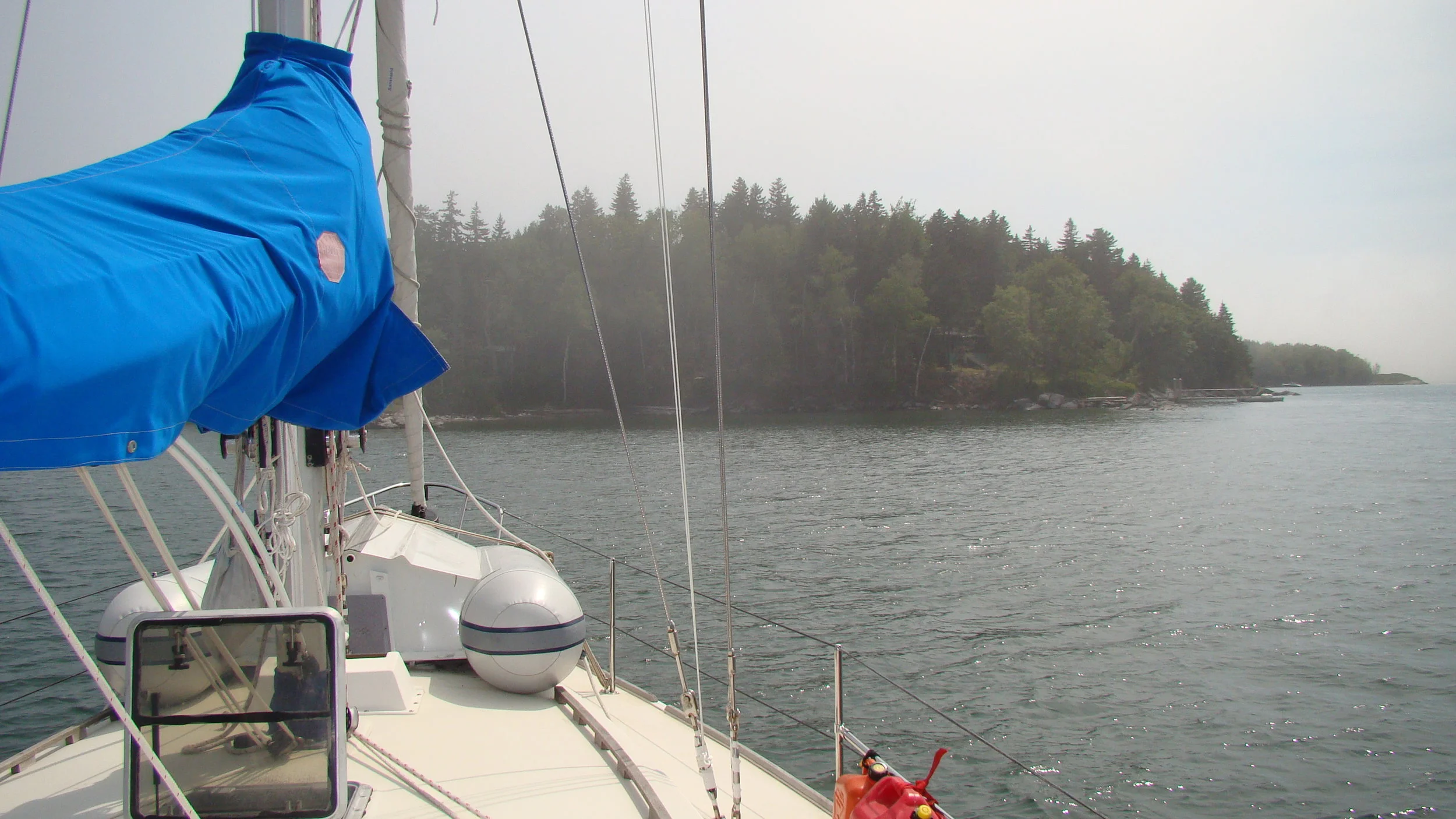
Today feels like our first real day living aboard Cupcake. We moved out of the house, handed the keys over to the tenants, walked down the steps to the beach, and sailed away from the mooring on Monday. Anchored about two miles from the house in thin fog. When we awoke on Tuesday we were in thick fog but still needed to get back to shore to take Moss to an appointment at the orthodontist. 

Turkey Cove first night.JPG


We had forgotten we needed a vehicle. We had forgotten we needed the child’s headgear. We had forgotten about the boat/shore logistics involved. Ellen didn’t want to bother launching the dinghy and motor from on deck, so Moss and I got Cupcake as close to shore as the low tide would allow, and Ellen jumped in and swam to the house towing a dry bag with her wallet, towel, and change of clothes (Turns out the 20 year old dry bag leaked. Not so dry after all.)


Ellen got the truck and drove to the boatyard (Brewer South Freeport Marine) where Moss and I met her to load the final big bunch of gear aboard. Turned out there were no moorings available for rent but a buddy of Simon’s is letting us use his family mooring for the time being. Thank you Christian!


While the girls were doing shore projects, I stayed aboard and tried to solve the Rubiks Cube puzzle of where to stow everything. (My father’s expression is “trying to stuff 10 pounds of shit into a 5 pound sack.”) Then the thunderstorms moved in with their rain and wind. The awesome staff at Brewer was willing to deliver Moss and Ellen back to the boat in the afternoon, despite the rough weather.

Moss aft cabin.JPG


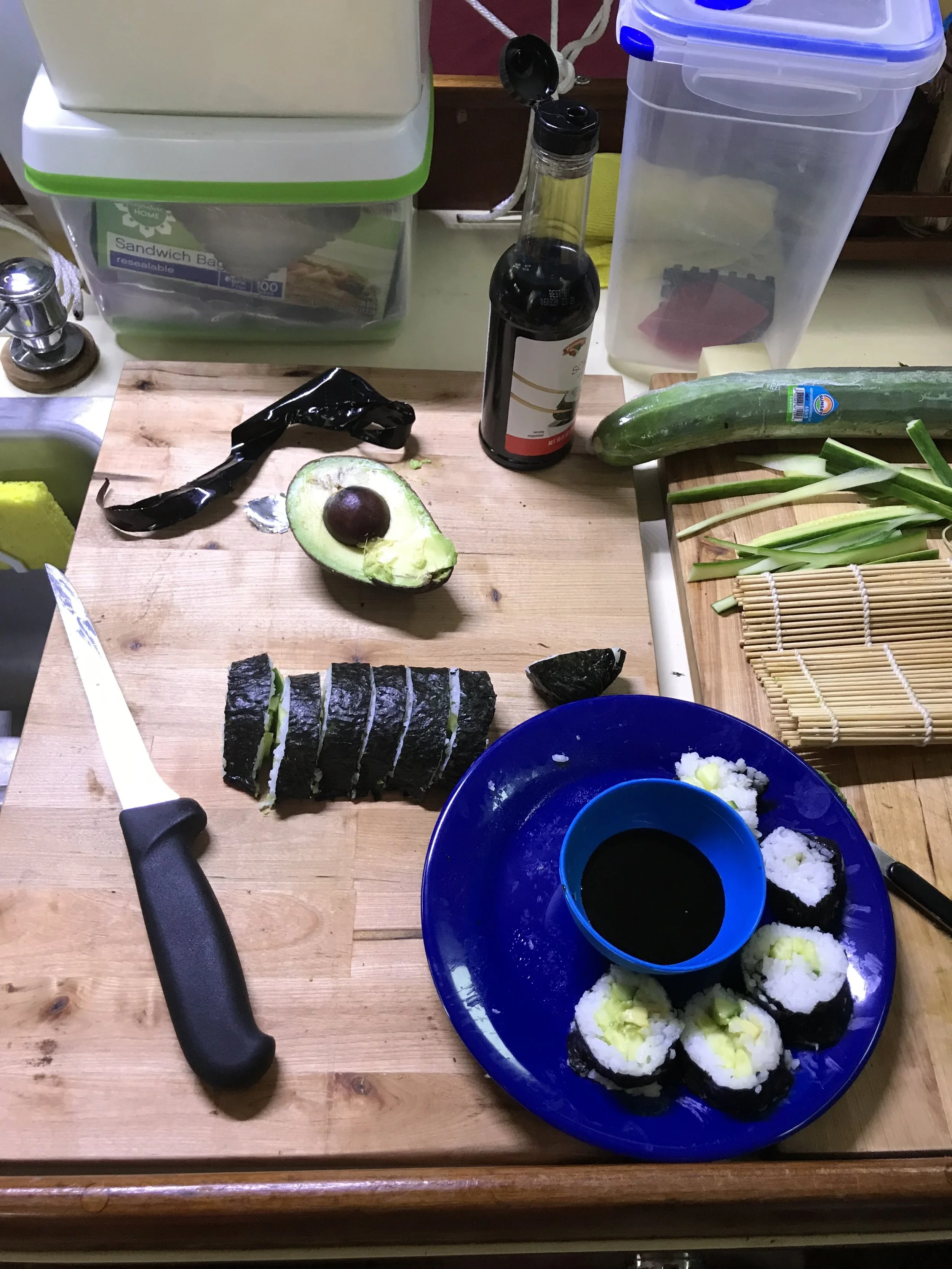
For lunch, we learned how to roll sushi. Delicious. Had it again today.

IMG_5233.JPG


Because of the storm, we decided it was prudent to abort dinner plans with our friends Jim and Sherry. Nevertheless, Simon came to visit us in the evening and the four of us had tacos together. 


So Tuesday didn’t feel normal. It felt hectic. And damp. We did watch The Incredibles on the laptop in the evening. Yay Pixar!

But now it is Wednesday. I had a dentist appointment this morning, we ran a few errands, and then we spent the afternoon aboard together getting used to life on a boat again. Ran the watermaker, discovered the source of the unpleasant odor in the aft lazarette, made more sushi. The solar panels were generating. And boy was the wind blowing.

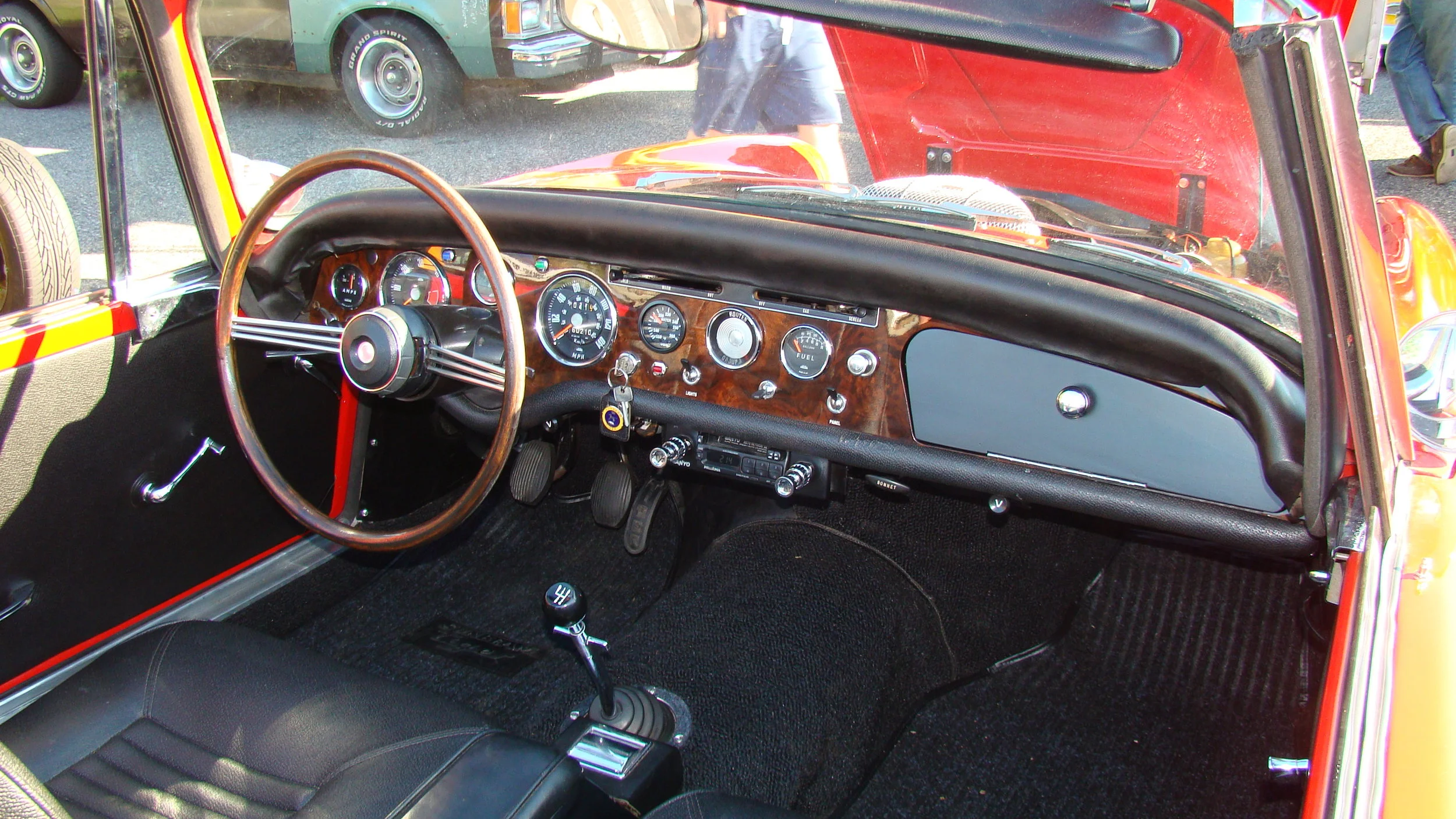
In the evening we went to the local old car show at the Mainely Custard. Saw some lovely cars including a super cool Sunbeam Tiger. The interior was great and I particularly liked the sweet two spoke, banjo steering wheel and the 13” Panasport wheels. Nice.

Tiger interior.JPG
Bel Aire fin.JPG

After some hamburgers and ice cream, Moss and I met up with Simon and had a second dinner with him at Little Tokyo in Brunswick. Simon has been connecting with us pretty regularly and it’s nice to spend these little bits of time together with our favorite boy.

That’s the update. I’ll be uploading this at Brewer, probably with pictures, when we go ashore Thursday morning. The plan is to go for a run in the morning, wash some cars and get them ready for their 12-month hibernation, and maybe spend a little time in the woodshop finishing some projects.

Car show 7:18:18.JPG

Weather fax

A few weeks ago I learned about weather fax. We used a little shortwave receiver listen to Chris Parker's Bahamas weather broadcasts for sailors in 2012 when we were in the Bahamas. But it has been a while since I used that radio and I wanted to start practicing and thinking about what our shortwave-needs were likely to be over the coming year. 

After talking with my friend Tom Budka* I decided to try running a wire up the mast to connect to the radio. The radio came with a wire that, six years ago, I used to string up on a flag halyard each evening so I would be ready at 6:30am to hear the Bahamas forecast. Reception was generally somewhere between "staticky as can be" to "actually that's very good," but at all times the system was the essence of jury-rigged.

In an attempt to improve quality of the reception and ease of daily set-up, last week I ran a wire from the second spreader, with enough slack to run down the mast, under the cabin sole, and into the portside cabinet in the v-berth (that's where the radio listening happens in the morning). When the mast was stepped on Monday I pulled the end of the antenna wire through the secret spaces of Cupcake using a cleverly and previously installed messenger string.

Tomorrow I will get aboard to try out the reception.

What I'm particularly interested in trying is receiving weather faxes.  (My instinct is to type "weatherfaxes" as all one word. The autocorrect doesn't seem to think that's the correct way, and I'm not going to spend the next 12 months fighting that grammar battle. Plus, I'm probably wrong anyway.)

So tonight I tested a couple of applications for receiving and displaying weather fax images on the iBook. After a bit of previewing, I ended up purchasing the alluringly-named HFFAX for $8.99. The program (itself as bare-bones as a weather fax) listens through whatever input source I specify (headphone jack in my case) and if I feed it weather fax sounds from the shortwave receiver, it will generate a greyscale image of the raw weather data broadcast by NOAA (transmitted at specific times on specific frequencies for specific areas of the world).

I ran a test using as input some prerecorded weather fax audio I found on youtube. Although not coming from the radio, this input let me test the system and experiment with settings. The results are astounding to me. I know the sound I used was super clean, nothing like the shortwave I anticipate receiving, but the fact that the whistles of a fax machine played over the radio can be turned into an image with crucial weather information when we are not connected to the rest of the world by internet or cell phone or even VHF seems magical.

This is what my iMac drew when it heard the dolphin squeaks from youtube.

test fax.JPG

This next image is what a shortwave-to-HFFAX looks like on the site that sells the software I bought (blackcatsystems.com). As soon as I get a weather fax image of my own, I will post it. Might be a few weeks though, so please...try to contain yourself/selves.


*Tom and I met in third grade, he holds a PhD in electrical engineering, and he designs tiny antennas for a living. The last time we saw him he gave us a little device that detects radiation leaking from microwave ovens. Sells them for $20 each to t…

*Tom and I met in third grade, he holds a PhD in electrical engineering, and he designs tiny antennas for a living. The last time we saw him he gave us a little device that detects radiation leaking from microwave ovens. Sells them for $20 each to the tinfoil-hat types.

Home waters

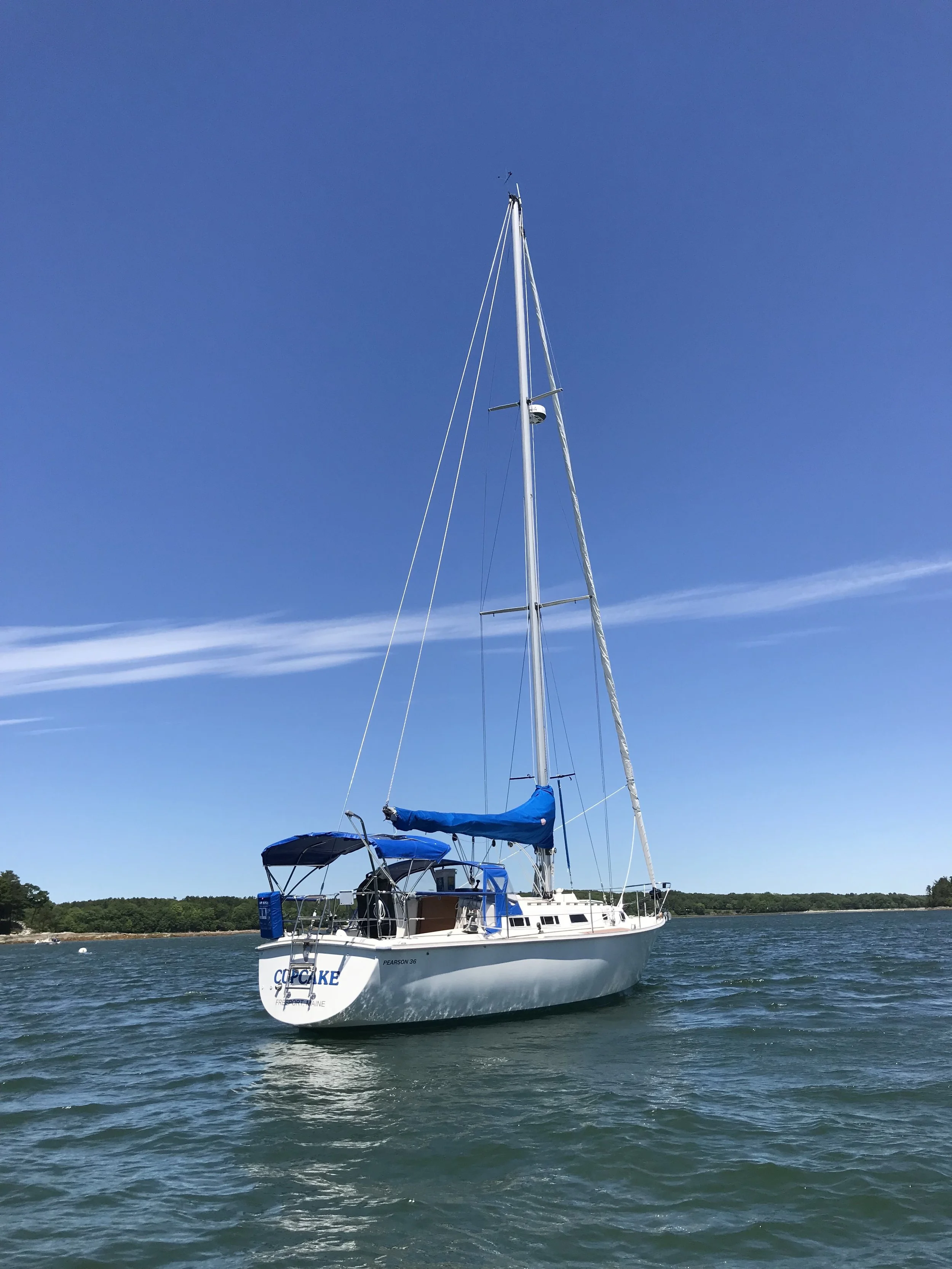
Cupcake had her mast stepped yesterday. After bending on the sails, I brought her home. I was pleased to see her make 6.5 knots through the water in about 15 knots of breeze. That's with just the genoa flying and the dinghy dragging behind. 

In other news, the dinghy engine hoist I installed (easy-peasy) works great. I was able to get the motor from dinghy to mother ship by myself and then from mother ship back to dinghy by myself (although in a bouncy mooring field it was a challenge I would prefer to have some help with in the future).

For those of you keeping score, the hoist is a Nova Lift II by Forespar. 

One mystery I encountered is that the masthead light shows red, green, and white instead of just white. Don't really understand how three wires, properly connected, can give such a different result from last year. But I'll get to the bottom of it all. It is supposed to show white at anchor and colors underway but I didn't flip the underway switch. Curious.

The boat doesn't leak any saltwater. And after yesterday evening's heavy thunderstorm and rain, I was pleased today to see there were no wet cushions or wet portholes, so the rebedded portlight seems to be doing well. There was some rainwater in the bilge. No big deal.

IMG_5209.JPG

Launched and Loaded

Cupcake was launched last week. Right now she is floating at the dock at Brewer's South Freeport Marine waiting to have her mast stepped.

IMG_5166.JPG

We spent the weekend loading the boat and chipping away at projects. Got the head fully installed, including the exhaust fan. The tricky bit about that exhaust fan is that the little fan (a computer fan, I think) is designed to sit in a manifold right under the dorade. My concern was that any spray or moisture would quickly kill the fan. So I figured out a way to mount the fan well inboard of the thru-hull exhaust port I put into the transom.

I've run a vent line from the transom thru-hull to a bulkhead in the aft-lazarette, and the fan manifold attaches there. Since the hose from thru-hull goes up before it goes down to the fan housing, the theory is that any water will run out and not in. We will see how that works out. In the meantime, I am ordering a replacement fan, just in case.

IMG_5174.JPG

At this point in the preparations, it is standard practice for cruisers to show a shot of the crowded interior and say something like "I don't know where we are going to put all this stuff." We are actually pretty sure we know where everything will go, and we are pretty sure it will all fit. The last time we went on a multi-month voyage, we had one additional person, lots of unnecessary equipment (eg. four anchors, two of which had no rode or place to be stored other than a hanging locker), and no idea about all the hidden spaces aboard. I've opened up previously inaccessible space aft of the aft cabin, we don't have a holding tank, and we will be storing non-perishables in the bilge.

Nevertheless, here is one obligatory crowded-boat pictures as well as a shot of an un-crowded cabin and a shot of truckload #1 of 4 (and the Angus sticker Simon slapped on the bumper).


Also you can see the new cushions in place. Ellen noticed that only some of the cushions hav the new foam we requested (and paid for). She thinks when the inmates did the work, they used new foam when a supervisor was watching but used old foam when nobody was watching. Ellen now has a dim opinion of convict labor. She is also going to call the prison and demand a discount.

Nitty-gritty

Ok, if you are checking on the site to see pictures of cocktails and sunsets, you're going to have to wait about two months.

If you are looking for down and dirty maintenance and repair details, you have come to the right place. Here are, literally, the nuts and bolts of the hardware installation I just finished.

To install new hardware in the deck (I decided the winch on the starboard side of the cabin needed to move so the new clutches would fit) I drilled out the holes with a bit bigger than the 1/4" bolts used to hold the parts to the boat. Then I filled those holes with epoxy (the cabin top is perhaps the one place on the boat where the fiberglas core is actually still dry). Then I marked the holes and drilled them for the 1/4" stainless steel bolts.

Then I made a template showing where the bolts came through into the cabin so I could cut and drill stainless steel backing plates. Then I put the whole thing together with bedding compound so nothing leaks.